skip to Main Content
France Teacher Attack: Students 'paid' To Identify Samuel Paty

France teacher attack: Students 'paid' to identify Samuel Paty

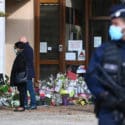
Two students were paid to identify a teacher to the man who beheaded him last Friday in an attack that shocked France, prosecutors have alleged. People look at flowers laid outside the Bois d'Aulne secondary school in homage to slain history teacher Samuel Paty. Photo: AFP or licensors Samuel Paty was targeted close to his school near Paris for showing cartoons of the Prophet Muhammad in class. His killer, 18-year-old Abdullakh Anzorov, was shot dead by police shortly after the attack. On Wednesday, prosecutors said Anzorov had paid two teenage students around €300 (NZ$534 ) to identify Paty. The killer told the students he wanted to "film the teacher [and] make him apologise for the cartoon of the Prophet [Muhammad]", anti-terrorism prosecutor Jean-François Ricard said at a press conference. He said Anzorov had told them he wanted "to humiliate him, to hit him". The students, aged 14 and 15, are alleged to have described Paty, 47, to Anzorov and stayed with him for more than two hours outside the school until the teacher appeared, Ricard said. The pair, who cannot be named for legal reasons, are two of seven people the French authorities are seeking to prosecute over the brutal attack. Online hate campaign The prosecutor also said there was a "direct causal link" between the killing and an online hate campaign that was orchestrated against Paty. The campaign was allegedly launched by the father of one of his pupils. The man, 48, who has been named in French media only as Brahim C, is accused of issuing a "fatwa" against the teacher. On Wednesday, Ricard confirmed reports that Brahim C, who is also facing prosecution, had exchanged a number of text messages with Paty's killer prior to the attack. He also posted videos denouncing Paty after he showed the cartoons in two lessons about free speech earlier this month But Ricard said the father's anger and statements in the videos were based on "inaccurate facts" because his daughter had not been in the relevant lessons. Macron to attend national memorial The prosecutor's revelations come ahead of a national memorial service in Paris for Paty. President Emmanuel Macron will attend the event at the Sorbonne University on Wednesday evening, along with the teacher's family and some 400 guests. He is expected to posthumously give Paty France's highest award, the Legion d'Honneur, Earlier, the president held a call with Russian President Vladimir Putin and urged co-operation in fighting terrorism. Putin described the attack as a "barbarous murder". French president Emmanuel Macron. Photo: AFP Paty's killer, Anzorov, was born in Moscow and his family is from Russia's Muslim-majority Chechnya region in the North Caucasus. He had lived in France since 2008. Macron said he wanted to see a "strengthening of Franco-Russian co-operation in the fight against terrorism and illegal immigration", the French presidency said. Russia has played down any association with the attacker. "This person had lived in France for the past 12 years," a spokesman for the Russian embassy in Paris told the Tass news agency on Saturday. Mosque closed amid mass raids Police have raided some 40 homes following the attack, and the government also ordered a mosque to close for six months. The Pantin mosque, just north of Paris, was closed after it emerged it had shared videos on Facebook calling for action against Paty. In one clip, posted just days before the attack, it also shared his school's address. The mosque later expressed "regret" over the videos, which it has deleted, and condemned the teacher's killing. Meanwhile, mosques in the south-western cities of Bordeaux and Beziers were put under police protection after they reported threats. "Such actions are unacceptable on the soil of the Republic," Interior Minister Gérald Darmanin said in a tweet on Wednesday. On Tuesday, President Macron said the Sheikh Yassin Collective - an Islamist group named after the founder of the Palestinian militant group Hamas - would be outlawed for being "directly involved" in the killing. He said the ban was a way of helping France's Muslim community from the influence of radicalism. Why was Samuel Paty targeted? Ricard said Paty had been the target of threats since he showed the cartoons of the Prophet Muhammad during a class on 6 October. The history and geography teacher advised Muslim students to leave the room if they thought they might be offended. Depictions of the Prophet Muhammad can cause serious offence to Muslims because Islamic tradition explicitly forbids images of Muhammad and Allah (God). The issue is particularly sensitive in France because of the decision by satirical magazine Charlie Hebdo to publish cartoons of the Prophet Muhammad. A trial is currently under way over the killing of 12 people by Islamist extremists at the magazine's offices in 2015 following their publication. France's Muslim community, which is Europe's largest, comprises about 10 percent of the population. Some French Muslims say they are frequent targets of racism and discrimination because of their faith - an issue that has long caused tension in the country. - BBC
Eleven Women Killed In Afghanistan Visa Stampede

Eleven women killed in Afghanistan visa stampede

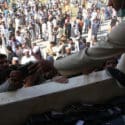
At least 11 women have been killed and many more injured in a stampede in a stadium in Afghanistan where people were applying for visas, officials say. Afghans gather to collect token needed to apply for visas to Pakistan near the Pakistani consulate at an open stadium in Jalalabad city, Afghanistan. Photo: AFP / 2020 Anadolu Agency The incident happened after "thousands of people" gathered to request permits to Pakistan, a local spokesman said. The crowd had been redirected to a sports stadium instead of the usual visa centre in the city of Jalalabad. Visa applications to Pakistan have just resumed after a seven-month pause due to the pandemic. "The visa applicants jostled to secure their token from the consulate officials," an official in Jalalabad said, according to Reuters. "The crowd got out of control, leading to a stampede." Pakistan's ambassador to Afghanistan, Mansoor Ahmad Khan, said he was "deeply saddened" by the incident and that his country was "engaged with Afghan authorities for better facilitation of visa applicants". In the conservative Muslim society of Afghanistan, it is common that women and men queue separately. It is thought a number of other women and elderly people have also been injured. Many Afghans travel each year to neighbouring Pakistan to visit relatives, seek medical treatment, find jobs or escape the ongoing violence in their own country. Expecting a large number of applicants after the long pause of the visa service, the Pakistani consulate in the eastern province of of Nangarhar, directed the crowd to a nearby football stadium. "Unfortunately this morning tens of thousands of people had come to the football stadium which led to the tragic incident," the provincial governor's spokesman Attaullah Khogyani told AFP news agency. - BBC
Europe's Hospitals Under Major Stress As Coronavirus Cases Surge

Europe's hospitals under major stress as coronavirus cases surge

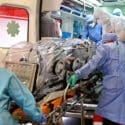
By Bart H. Meijer and Luis Felipe Castilleja Europe's hospital systems are at risk of buckling under the strain of soaring numbers of Covid-19 infections that have put the continent once again at the centre of the global pandemic. Medical staff transfer from the Garbagnate Milanaise hospital a patient with Covid-19 in a bio-containment stretcher for infectious diseases to Varese hospital. Photo: AFP or licensors With case numbers that were brought largely under control by the unprecedented lockdowns in March and April now resurging relentlessly, authorities in countries from Poland to Portugal have expressed mounting alarm at the renewed crisis confronting their health infrastructure. Belgium, struggling with what its health minister called a "tsunami" of infections, is postponing all non-essential hospital procedures, and similar measures are looming in other countries where case numbers have been rising relentlessly. "If the rhythm of the past week continues, rescheduling and suspending some non-priority activities will become unavoidable," said Julio Pascual, medical director at Barcelona's Hospital del Mar. To complicate the situation, widespread coronavirus fatigue and the frightening economic impact of the crisis have eroded broad public support for the lockdowns ordered earlier in the year to stop health services from being overwhelmed. Unwilling to shut down their countries again, governments have sought less drastic measures to limit public gatherings and balance the need to keep their economies turning with holding back the pandemic. According to data from the European Centre for Disease Prevention and Control (ECDC), Europe has registered more than 5 million cases and 200,000 deaths, with new cases beginning to spike sharply from the end of September. While well below levels at the peak of the crisis six months ago, Covid-19 hospital admissions and occupancy are again high - defined as at least 25 percent of the peak of the pandemic - or rising in 20 countries, its latest weekly summary said last week. European countries boast some of the world's best health services and doctors say that with the benefit of almost a year's experience with the new coronavirus, they are much better equipped to treat individual patients clinically. But the capacity of hospitals to handle a wave of Covid patients, as well as people suffering from cancer, heart disease and other serious conditions, is still vulnerable. Dutch health authorities said that if the number of Covid patients in hospital wards continues to grow, three quarters of regular care may have to be scrapped by the end of November, and there were similar warnings from Czech authorities. "We have hit a wall on clinical beds," said Wouter van der Horst, spokesman for the Dutch hospital association NVZ. 'We couldn't get to everyone' As hospital admissions have spiralled, much attention has been focused on intensive care units, which came close to being overwhelmed in many areas during the first wave of the crisis. Authorities in Lombardy, the Italian region at the centre of the earlier wave, on Wednesday ordered the reopening of special temporary intensive care units set up in Milan and Bergamo that were shut down as case numbers receded. Already, a number of regional health authorities in Germany, one of the countries that dealt with the first wave most effectively, have agreed to take in intensive care patients from other countries. The ECDC said that some 19 percent of patients diagnosed with Covid-19 are estimated to have ended up in hospital and 8 percent of those could require intensive care, but variations are wide both across Europe and within individual countries. On Wednesday, Poland's health minister said up to 30 percent of new cases there could end up being hospitalised. There has also been concern over the track and trace systems meant to keep local outbreaks of the disease under control but which have proven ineffective in many areas. On Wednesday, authorities in Ireland, where the five-day case average has tripled since the start of October, said there were no longer enough officials to keep the system working. Niamh O'Beirne, national lead for testing and tracing, told RTE radio that contact tracing centres had seen "unprecedented demand" with exponential growth in the number of cases, "and over the week we simply couldn't get to everyone." - Reuters
Pope Francis Indicates Support For Same-sex Civil Unions

Pope Francis indicates support for same-sex civil unions

Pope Francis has said that he thinks same-sex couples should be allowed to have "civil unions". Photo: AP He made the comments, which observers say are his clearest remarks yet on gay relationships, in a documentary directed by Evgeny Afineevsky. "Homosexual people have a right to be in a family," he said in the film, which premiered on Wednesday. "They are children of God and have a right to a family. Nobody should be thrown out or made miserable over it. "What we have to create is a civil union law. That way they are legally covered." He added that he "stood up for that", apparently referring to when he was Archbishop of Buenos Aires and, although opposing same-sex marriages in law, he supported some legal protections for the rights of same-sex couples. The film Francesco, about the life and work of Pope Francis, premiered as part of the Rome Film Festival. As well as the Pope's comments on civil unions, the film also shows him encouraging two gay men to attend church with their three children. Under current Catholic doctrine, gay relationships are referred to as "deviant behaviour". In 2003, the Vatican's doctrinal body, the Congregation for the Doctrine of the Faith, said that "respect for homosexual persons cannot lead in any way to approval of homosexual behaviour or to legal recognition of homosexual unions". What has he said about homosexuality in the past? The Pope's comments, and actions, are a departure from previous statements he has made on LGBTQ rights. In 2013, in the book On Heaven and Earth, the Pope said that legally equating same-sex relationships to heterosexual marriages would be "an anthropological regression". He also said then that if same-sex couples were allowed to adopt, "there could be affected children... every person needs a male father and a female mother that can help them shape their identity". That same year, he reaffirmed the Church's position that homosexual acts were sin, but said homosexual orientation was not. "If a person is gay and seeks God and has good will, who am I to judge?," he asked. In 2014 it was reported that Pope Francis had expressed support for civil unions for same-sex partners in an interview, but the Holy See's press office denied this. Then in 2018, Pope Francis said he was "worried" about homosexuality in the clergy, and that it was "a serious matter". - BBC
Attenborough Polar Ship To Aid Study Of Climate Change

Attenborough polar ship to aid study of climate change

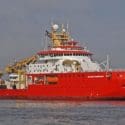
By Jonathan Amos, BBC science correspondent Britain's new polar ship, the Sir David Attenborough, is all set to leave its Merseyside construction yard. If sea trials go well, the Attenborough will make her first cruise to the Antarctic in November 2021. Photo: BBC screenshot Four years in the making, the £200 million ($NZ394m) vessel is about to venture out on a series of sea trials. Sirens, tugboats and water cannon are expected to mark the Attenborough's departure from builder Cammell Laird's wet dock at Birkenhead. Initially, the ship will only travel a few hundred metres down-river to Liverpool city's cruise terminal. But in the coming days she will sail across the north Wales coast to Holyhead, which will be her base for the next year. "This vessel is a true celebration of British expertise - from the team who built it right through to the scientific community that will call this ship home," the company's David McGinley said. "The RRS Sir David Attenborough is the single biggest and most ambitious build in the history of Cammell Laird and it's an incredibly proud moment to see her embark on sea trials." The naming ceremony and launch of the ship in Birkenhead in September 2019. Photo: AFP Engineers need to run the rule over all the vessel's systems and equipment before it can be released to support UK scientists in the Arctic and the Antarctic. These trials will include an assessment of the Attenborough's ice-breaking capabilities. The design specifications called for a ship that could crunch through frozen floes with a thickness of up to 1 metre and at a speed of 3 knots. If all goes well with the tests, the Attenborough will make her first cruise to the Antarctic in November 2021. Professor Jane Francis, the director of the British Antarctic Survey (BAS), said the new vessel represented a huge investment in the science of climate change. "We've all heard about how the Arctic sea-ice is melting very fast, but the great ice sheets, such as Antarctica, are also melting in a warming world. The RRS Sir David Attenborough is going to allow us to get right up to the edge of the ice sheets, to deploy its new technologies, to really understand what's going on," she said. BAS will operate the ship on behalf of its funding agency - the Natural Environment Research Council (Nerc). The acquisition of the Attenborough completes Nerc's fleet upgrade programme, which has already seen the introduction of two new "blue water" research vessels - RRS Discovery and RRS James Cook. The 129m-long, 15,000-tonne Attenborough is the largest commercial ship built in Britain in three decades. State-of-the-art features The Attenborough is a state-of-the-art polar research ship. She has a helipad (helicopters are essential for exploration and safety), cranes and onboard labs, and she has an enhanced ability to deploy subs and other ocean-survey and sampling equipment. One of her key features is an enclosed "moon pool". "This is basically a hole in the ship that goes all the way down to the surface of the ocean, through which you can deploy different instruments, whether that's a biological net, or something to sample the ocean water," BAS marine geophysicist Dr Kelly Hogan said. Colleague Dr Rob Larter is excited by the sediment-coring capabilities offered by the Attenborough. The muds around Antarctica retain a record of its past climate, and the new ship will be able to investigate this history over longer time periods and in more detail. "The Attenborough will be equipped with a giant piston corer capable of collecting cores over 40m long," Dr Larter said. "This became an option because the size of the ship makes it possible to deploy and recover such a long core barrel length over the starboard side of the ship between the stern and the midships A-frame." The Attenborough came to the UK public's attention, in an online initiative in which the public was asked to suggest a name. "Boaty McBoatface" was the suggestion that garnered most support. Ministers, however, rejected this as inappropriate, and ordered that one of the country's most recognisable TV personalities, with a lifetime's association with the natural world, be honoured instead. Sir David Attenborough, left, with the Duke and Duchess of Cambridge at the launch of the ship in September 2019. Photo: AFP With the Attenborough undergoing sea trials for a year, polar operations will continue to be supported for the time being by the James Clark Ross. The JCR is currently at Harwich, waiting to depart for the British Rothera base on the Antarctic Peninsula. When the ship returns to the UK at the end of the southern polar summer season in 2021, it will be sold. - BBC
Catastrophic Floods Hit Vietnam And Cambodia

Catastrophic floods hit Vietnam and Cambodia

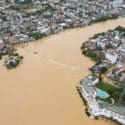
Hundreds of thousands of homes are submerged and at least 132 people have been killed as some of the worst flooding in decades hits Vietnam and Cambodia, affecting more than 5 million people. An aerial picture shows Hue city, submerged in floodwaters caused by heavy downpours, in central Vietnam, earlier in October. Photo: AFP Flooding and landslides caused by seven consecutive tropical storms and torrential rainfall killed 105 people in Vietnam alone and washed away homes, livestock and crops, according to the US Agency for International Development (USAID), which is currently providing humanitarian aid to the region. Viet Nam Red Cross told the ABC that 690,000 poultry and livestock had been killed or swept away, and nearly 200,000 homes were completely submerged. "These devastating floods are some of the worst we have seen in decades, and they are dealing a staggering blow to the livelihoods of millions of people already reeling from hardships caused by the COVID-19 pandemic," said the organisation's president Nguyen Thi Xuan Thu. "Everywhere we look, homes, roads and infrastructure have been submerged." He said the Red Cross was ramping up relief operations, working alongside authorities to provide "immediate relief to people by boat, by air and on land, including food, safe water, tarpaulins and other essentials". The group told the ABC that conditions were very difficult, with roads cut off and infrastructure destroyed. Tropical Storm Saudel is predicted to make landfall this weekend, bringing more torrential rain to areas of central Vietnam that are still experiencing heavy flooding. "We have grave fears that the flooding will go from bad to worse and that it [will] be overwhelming for even the most prepared and resilient communities, with many more typhoons and storms predicted in the next month," Viet Nam Red Cross told the ABC via email. The International Federation of the Red Cross (IFRC) said the flooding was a "deadly double disaster" following COVID-19. "These floods are the last straw and will push millions of people further towards the brink of poverty," Red Cross official Christopher Rassi said. "Hundreds of thousands of people are in urgent need of emergency shelter, safe drinking water, food, and income support in the coming days and weeks to prevent a larger humanitarian crisis." The IFRC added that it had provided about US$325,000 ($460,000) in aid relief so far. Nguyen Thi Tham lives in Hai Duong City, an area unaffected by the floods, but worries for her family in the Thach Ha district of the hard-hit Ha Tinh province. "One of my girls had just had a baby and they returned a few days before the floodwaters passed," she said. "I'm really scared. "When they were able to use the phone, they called me on the rooftop waiting for the rescue team. "It's really awful, the weather is very cold and everywhere is water. There are many people trapped in their home when the water spills in." In neighbouring Cambodia, flash floods have killed at least 27 people since October 19 and adversely affected more than 532,000, cutting access to many hard-hit communities, USAID said. Video footage showed submerged homes and shops, people wading in neck-high water, and families attempting to salvage their possessions by boat or makeshift rafts. Conditions are predicted to get worse for residents living close to the Mekong River. Cambodia's Ministry of Water Resources and Meteorology said the water level in the Mekong would continue to rise over the next six days, causing additional severe flooding in many areas. - ABC
US Marine Says Australian Soldiers Made 'deliberate Decision To Break The Rules Of War'

US marine says Australian soldiers made 'deliberate decision to break the rules of war'

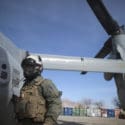
A United States Marine Corps (USMC) helicopter crew chief says Australian special forces shot and killed a bound Afghan prisoner after being told he would not fit on the US aircraft coming to pick them up. A Marine corps helicopter crew member waits as a helicopter lands at Musa Qala District centre base in Helmand province on January 27, 2011. Photo: AFP / Dmitry Kostyukov Josh* flew 159 combat missions for the USMC's Light Attack Helicopter Squadron 469 (HMLA-469). He has allowed the ABC to publish pictures of him but has asked that his real name not be used because he fears retribution. He has told ABC Investigations he was a door gunner providing aerial covering fire for the Australian soldiers of the 2nd Commando Regiment during a night raid in mid-2012. The operation took place north of the HMLA-469 base at Camp Bastion in Afghanistan's Helmand Province. It was part of a wider joint Australian special forces-US Drug Enforcement Administration (DEA) campaign targeting illicit drug operations that were financing the Taliban insurgency. "We had done the drug raid, the Aussies actually did a pretty impressive job, wrangling all the prisoners up," Josh said. "We just watched them tackle and hogtie these guys and we knew their hands were tied behind their backs." He says the commandos then called up the US aircraft to pick them and about seven prisoners up. He says the Americans only had room on the aircraft for six. "And the pilot said, 'That's too many people, we can't carry that many passengers.' And you just heard this silence and then we heard a pop. And then they said, 'Okay, we have six prisoners'. "So it was pretty apparent to everybody involved in that mission that they had just killed a prisoner that we had just watched them catch and hogtie," he said. Josh says neither he nor any of his crew spoke about what had just happened. "We were all being recorded on our comms," he said. "All of us were pretty aware of what we just witnessed, and kind of didn't want to be involved in whatever came next." Josh says he later discussed the incident with his crewmates after returning to Camp Bastion. "This was the first time we saw something we couldn't morally justify, because we knew somebody was already cuffed up, ready to go, taken prisoner and we just witnessed them kill a prisoner," he said. "This isn't like a heat of the moment call where you're trying to make a decision. It was a very deliberate decision to break the rules of war. "I think that was the first thing that happened that didn't quite sit right with us, where we were like, 'Okay, there's no excuse, there's no ambiguity, there's no going around this one'." 'Lots of fire and bodies were often left in their wake' ABC Investigations understands that - as part of its inquiry into alleged special forces war crimes in Afghanistan - the Inspector-General of the Australian Defence Force (IGADF) is investigating the killing of at least one prisoner by Australian commandos. Australian soldiers from the Special Operations Task Group using their rifle scopes to investigate the surrounding mountains during an operation in southern Afghanistan on 21 October, 2009. Photo: AFP / Australian Department of Defence / Stu Dood It is unclear if this alleged killing is one of those being investigated. When contacted for a response to this story, an Australian Defence Force spokesperson said: "It is not appropriate for Defence to comment on matters that may or may not be the subject of the Afghanistan Inquiry." Josh says he did between one and two dozen drug missions with the Australians from 2nd Commando in 2012, mainly providing aerial cover fire and sometimes dropping sniper teams on overwatch positions. "A lot of us wanted to work with the Australians because we were all like - I don't know if bloodthirsty is the right term - but we wanted action. They wanted to shoot. And when you worked with the Aussies you get involved pretty often," he said. "Lots of breaching of walls with explosives and lots of fires and bodies were often left in their wake." He says on a mission early in his 2012 deployment, one of his USMC comrades was shocked by what he witnessed the commandos do on a joint drug operation. "They go down for a landing. As soon as the Aussies exit, there was somebody just sitting on a wall watching them land. They got off and popped the guy a few times in the chest." Josh says his fellow marine later confronted the commandos about the killing. "My buddy came and asked, 'Hey, what happened to that guy?' And he said, 'Oh, he's dead mate.' And he's like, 'Why? He wasn't even armed. What happened there?' He said, 'Oh, he was armed when we got through with him.'" 'We're not going to work with those f***ing guys' A member of 2nd Commando's Oscar platoon who served on that deployment has confirmed that the Americans were unhappy with the conduct of some of his comrades. Australian soldiers in southern Uruzgan province's Mirwais on January 20, 2010. Photo: AFP / Deshakalyan Chowdhury "Our platoon commander pulled our platoon together and said that the [DEA] has said in no uncertain terms that they won't operate with [2nd Commando] November platoon any more due to their behaviour in the field," he said. Another commando from Oscar platoon who was on that deployment confirmed to ABC Investigations that November platoon had a bad reputation among the Americans. "I remember talking to [DEA agent] afterwards, and he said, 'We're not going out with those f***ing guys ever again'. Every DEA team that went through there loved working with us and had no problem, but November platoon was the first platoon that the DEA said they wouldn't work with," the former commando said. "Something obviously went down." Former USMC helicopter crew chief Josh says he flew dozens of missions with other special forces, including USMC special operations and the British SAS. "The [British] SAS always had an incredible restraint, at least in the times when me and my friends worked with them. Sometimes a frustrating amount," he said. "Everybody else would step on the lines, but the Aussies would just see the line and just hop right over it." * Name has been changed - ABC
Elation As Nasa's Osiris-Rex Probe Tags Asteroid Bennu In Sample Bid

Elation as Nasa's Osiris-Rex probe tags asteroid Bennu in sample bid

America's Osiris-Rex spacecraft has completed its audacious tag-and-go manoeuvre designed to grab surface rock from an asteroid. Bennu contains chemistry preserved from the dawn of the Solar System. Photo: NASA/GODDARD/UOA Radio signals from 330 million km away confirm the probe made contact with the 500m-wide object known as Bennu. But the Nasa-led mission will have to wait on further data from Osiris-Rex before it's known for sure that material was actually picked up. The aim was to acquire at least 60g, perhaps even a kilo or more. Because Bennu is a very primitive space object, scientists say its surface grit and dust could hold fascinating clues about the chemistry that brought the Sun and the planets into being more than 4.5 billion years ago. "The team is exuberant; emotions are high; everyone is really proud," said principal investigator Dante Lauretta from the University of Arizona, Tucson. "This was the key milestone of this mission. Now it's a few days to figure out how much of this amazing sample we got that we've been thinking about for decades," added Thomas Zurbuchen, Nasa's associate administrator for science. Both men were following events from mission control at spacecraft manufacturer Lockheed Martin. Assuming there is a suitable sample safely aboard, the probe will be able to package it for return to Earth, scheduled for 2023. If not, the mission team will have to configure Osiris-Rex for another go. The spacecraft made its sample bid in a narrow patch of northern terrain on Bennu dubbed Nightingale. Artwork: Osiris-Rex approaching the surface of Asteroid Bennu. Photo: NASA/GODDARD/UOA The probe descended slowly to the 8m-wide target zone over a period of four-and-a-half hours, squeezing past some imposing boulders on the way, including a two-storey-high block that had been dubbed Mount Doom. Osiris-Rex used what some have described as a "reverse vacuum cleaner" to make its surface grab. More properly called the Touch-and-Go Sample Acquisition Mechanism, or Tag-Sam, this device is a long boom with a ring-shaped collection chamber on the end. The idea was to push the ring into the surface and at the same moment express a stream of nitrogen gas to kick up small fragments of rock. Sensors on Osiris-Rex reported back to mission controllers that all the actions in the sampling sequence had been completed successfully, and that the spacecraft had backed away from Bennu as planned after a few seconds of contact. But the science and engineering team will need time to assess what exactly might have been caught in the collection chamber. One way to do this is to photograph the ring head. This will be done in the coming days. But controllers will also command the spacecraft to spin itself around with the boom and Tag-Sam ring outstretched. Any extra mass on board will change the amount of torque required to turn the probe, compared with the amount needed to perform the same rotation exercise prior to sample acquisition. This measurement technique will give a quantity precise to within a few 10s of grams. Osisris-Rex took pictures all the way through its descent but could not send any of these home at the time because its high-gain antenna was not pointed at Earth. Once the probe has re-established this connection, the data can be downlinked. "Those images are going to tell us an enormous amount of information about how the events of today went," said Prof Lauretta. "For one thing they will tell us about the likelihood of sample collection, a kind of probabilistic assessment." Nasa promises to release some of these pictures on Wednesday. Numerous scientists, including in the UK, are hoping to get the chance to analyse any materials brought back from Bennu - among them Sara Russell from London's Natural History Museum. Asteroids like Bennu formed in the very, very earliest times of the Solar System. They are basically the building blocks of the planets - a time capsule that will tell us how the Sun and the planets came into being and evolved. Bennu can really help us to drill down into how that process actually happens," she told BBC News. - BBC
Fiancée Of Khashoggi, Human Rights Group Sue Saudi Crown Prince In US

Fiancée of Khashoggi, human rights group sue Saudi crown prince in US

The fiancée of slain Saudi journalist Jamal Khashoggi and a human rights group that he founded filed a lawsuit in a US court with allegations that Saudi Arabia's crown prince ordered him killed. Photo: AFP / Saudi Royal Palace/ Bandar al-Jaloud The civil lawsuit, which seeks unspecified damages against Crown Prince Mohammed bin Salman, also named more than 20 other Saudis as defendants. It coincides with complications in the US-Saudi relationship over the 2018 slaying of Khashoggi, Riyadh's human rights record, its role in Yemen's civil war and other issues. The Saudi embassy did not immediately respond to a request for comment on the lawsuit. The crown prince - known by his initials MbS - has denied ordering Khashoggi's murder. Saudi journalist Jamal Khashoggi Photo: AFP / Mohammed Al-Shaikh Khashoggi, who criticised the policies of the crown prince, Saudi Arabia's de facto ruler, in Washington Post columns, was killed and dismembered in the Saudi consulate in Istanbul. He went there to obtain papers he needed to marry Hatice Cengiz, a Turkish citizen. Cengiz and Democracy for the Arab World Now (DAWN), a US-based human rights group founded by Khashoggi, a legal resident of Virginia, filed the lawsuit in US District Court for the District of Columbia. It names several of the crown prince's aides and officials who were convicted in Saudi Arabia of the murder. The prosecution declared the Saudi case closed. Hatice Cengiz Photo: Anadolu Agency / Elif Ozturk The lawsuit charged that MbS, his co-defendants and others carried out a plot to "permanently silence Mr. Khashoggi" no later than the summer of 2018 after discovering his "plans to utilize DAWN as a platform to espouse democratic reform and promote human rights." A lawsuit was filed in August in a US court by a former top Saudi intelligence official who accused the crown prince of sending a hit team to kill him in Canada, where he lives in exile. Both lawsuits were brought under a law allowing US court actions against foreign officials over allegations of involvement in torture or extrajudicial killings. - Reuters
Cathay Pacific Axes Regional Carrier And 8500 Jobs

Cathay Pacific axes regional carrier and 8500 jobs

Cathay Pacific has announced it is closing its subsidiary Cathay Dragon and cutting 8500 jobs. Photo: 123RF Cathay Dragon was a full service regional carrier flying mainly to mainland China and other Asian destinations. Hong Kong-based Cathay Pacific says it hopes to retain most of Cathay Dragon's routes. Many other airlines are on the brink of survival as the Covid-19 pandemic batters travel and tourism. The cutbacks at Cathay Pacific are part of the airline group's attempt to reduce costs during travel restrictions that governments have imposed to limit the pandemic. Cathay says it has already tried to cut costs by deferring aircraft deliveries, implementing special leave schemes and cutting executive pay. It also received a $US5bn ($NZ7.6bn) bailout from the Hong Kong government in June. But the airline group is still losing as much as $260m a month. Staff cutbacks Although the restructure will itself cost $284m, the airline said it will reduce costs by $64m a month in 2021. Of the 8500 positions that will be eliminated, 5300 jobs will be from Hong Kong and a further 600 from overseas. A total of 2400 of positions are currently unfilled because of a hiring freeze and the closure of some overseas operations. The job losses account for about 24 percent of the Cathay Pacific's total staff. The airline will also ask Hong Kong-based cabin and cockpit crew to agree to changes in their employment conditions "to match remuneration more closely to productivity". Cathay said this week that it expects to run at half capacity through next year. Dragon down Cathay Dragon originally operated as Dragonair when it was established in 1985. It had the financial backing of Hong Kong as well as mainland Chinese investors. Initially it operated charter flights to China and also flew to a handful of cities in South East Asia. After adding new routes to its network, Cathay Pacific acquired a stake in the airline in 1990, and then bought it outright in 2006. Cathay Pacific changed the brand name to Cathay Dragon in 2016. - BBC
Back To Top