Fourteen passengers have been detained in Melbourne after they arrived from New Zealand under the trans-Tasman bubble arrangements.
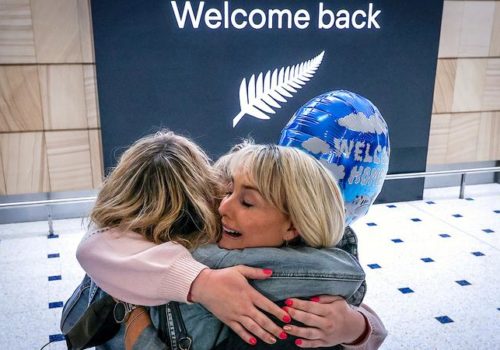
Loved ones reunite after the first flights from New Zealand arrive in Sydney. Photo: AFP
The ABC understands the passengers flew to Sydney and got a connecting to flight to Melbourne.
Melbourne is currently not accepting international travellers.
Australian Border Force (ABF) has been contacted for comment.
Three flights from New Zealand touched down at Sydney Airport earlier today carrying international passengers who, for the first time in seven months, will not need to quarantine upon arrival.
At Sydney Airport there were tears and hugs as loved ones reunited, with many passengers flying one-way.
NSW Health Minister Brad Hazzard described it as a "great day", but pointed out New Zealanders arriving today would need to prove they are symptom-free and satisfy other health requirements.
There will be a total of 16 flights between the two countries each week, with Jetstar and Qantas joining Air New Zealand and Qatar Airways in advertising the trans-Tasman flights.
- ABC
Japan's government has decided to release radioactive water from the destroyed Fukushima nuclear plant into the sea, with a formal announcement expected to be made within this month, Kyodo news agency and other media reported.
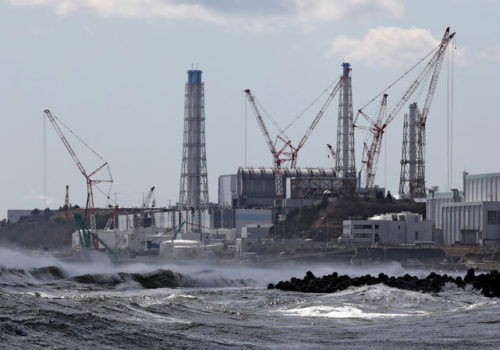
The Tokyo Electric Power Company's Fukushima Daiichi nuclear power plant is seen from Futaba Town, Fukushima prefecture on March 11, 2020. Photo: STR / JIJI PRESS / AFP
Tokyo Electric Power Company Holdings Inc has collected more than one million tonnes of contaminated water since the Fukushima Daiichi nuclear plant was crippled by an earthquake and tsunami in 2011.
Japanese Industry Minister Hiroshi Kajiyama said no decision had been made yet, but the government aimed to make one quickly.
"Decommissioning of the Fukushima Daiichi plant is a major premise for a restoration in Fukushima from the nuclear disaster. To prevent any delays in the decommissioning process, we need to make a decision quickly," he told a news conference.
He did not give any further details, including a time-frame.
The build-up of contaminated water at Fukushima has been a sticking point in the clean-up, which is likely to last decades, especially as the Olympic Games are due to be held in Tokyo next summer with some events less than 60km from the wrecked plant.
A possible release is expected to antagonise Japanese fishermen and raise concerns in neighbouring countries.
Last week, Japanese fish industry representatives urged the government not to allow the release of tonnes of contaminated water from the Fukushima plant into the sea, saying it would undo years of work to restore their reputation.
South Korea has retained a ban on imports of seafood from the Fukushima region that was imposed after the nuclear disaster and summoned a senior Japanese embassy official last year to explain how the Fukushima water would be dealt with.
Early this year, a panel of experts advising Japan's government on the disposal of radioactive water from the destroyed Fukushima plant, recommended releasing it into the ocean.
Japan's industry ministry has been hearing views from various parties since April, including fishery representatives.
A few fishery representatives also visited Kajiyama on Thursday, opposing a release of the contaminated water into sea.
-Reuters
Twitter has experienced a major outage, with users across the world affected.
Photo: 123rf
The social media giant said the issue was caused by an "inadvertent change" it made to its internal systems.
Users in countries including New Zealand, the US and UK were unable to use the platform for more than an hour, with many receiving error messages.
The service was later largely restored, and the California-based company said the site should soon be working for all of its users.
According to DownDetector.com, reports of problems with Twitter began to spike at about 10.30am in New Zealand time.
It said users from around the world - including Japan, Australia, Argentina and France - had reported being unable to use the platform.
In the US, there were tens of thousands of reports of problems.
Users were sent error messages including "something went wrong" and "Tweet failed: There's something wrong. Please try again later."
Twitter said there was no evidence of a security breach or hack.
Internet monitoring group NetBlocks confirmed the incident was "not related to country-level internet disruptions or filtering".
In July, hackers accessed Twitter's internal systems to hijack accounts owned by some of the platform's most prominent users.
The breach saw the accounts of Barack Obama, Elon Musk, Kanye West, and Bill Gates among other celebrities used to tweet a Bitcoin scam.
- BBC
Disgraced New South Wales MP Daryl Maguire has made a string of admissions to the state's corruption investigator this week - but a legal prosecution is no certainty.
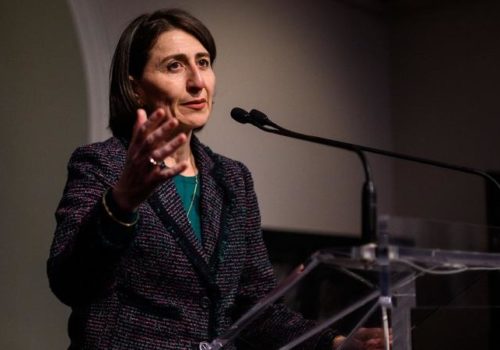
New South Wales MP Daryl Maguire was in a secret relationship with New South Wales Premier Gladys Berejiklian (pictured). Photo: AFP
The former member for Wagga Wagga has been frank about his involvement in a "cash-for-visa" scam for Chinese nationals, failing to disclose business interests in line with MPs' obligations and "monetising" his office to benefit both himself and associates.
The inquiry has also heard Maguire discussed property deals with New South Wales Premier Gladys Berejiklian during 2017, when they were in a secret relationship, and facilitated a "drop-in" meeting between the Premier and a property developer.
But what unfolds after an Independent Commission Against Corruption (ICAC) inquiry is often more of political consequence than legal significance.
The Premier has faced what she described as a "personal nightmare", as her secret five-year relationship with Maguire was publicly revealed. She also copped a grilling in Question Time over what she did or didn't know about his conduct.
But it remains to be seen whether Maguire will face prosecution over his evidence to the corruption watchdog.
In general, ICAC can make findings of serious corrupt conduct and refer evidence to the Director of Public Prosecutions to consider prosecution, disciplinary action, or further investigation.
In the past, it has also referred matters to the Australian Federal Police, Security Intelligence Organisation, Taxation Office, Border Force and other states' police forces.
The commission's annual reports provide an insight into where past investigations have landed.
ICAC's high-profile casualties
In 2018 to 2019, ICAC made 57 findings of serious corrupt conduct and asked for the Director of Public Prosecutions' advice on eight people.
But past inquiries tell us the process of investigation and public hearing can cause more waves than the outcome itself.
Arguably the most high-profile result was the 2014 resignation of former premier Barry O'Farrell, over the now-infamous $3,000 bottle of Penfolds Grange.
During his evidence to ICAC, O'Farrell denied receiving the gift from Australian Water Holdings executive Nick Di Girolamo, but when the commission uncovered a handwritten thank you note, he resigned citing a "massive memory fail".
However, when the ICAC report was published three years later, no adverse findings were made against O'Farrell.
Instead, former Labor ministers Eddie Obeid Snr, Joe Tripodi and Tony Kelly, along with political staffer Gilbert Brown, were found to have engaged in serious corrupt conduct.
Another former premier, and ironically the "father" of the ICAC, Nick Greiner, also fell victim to the corruption watchdog,
It shone the spotlight on his decision to give a job to former education minister Terry Metherell.
While findings against Greiner were later overturned by the Court of Appeal, he was forced to resign after it was clear he had lost the support of key independents.
Spotlight turned on ICAC
The watchdog has previously faced criticism for airing evidence in public hearings that would not be admissible in court.
Probes have unravelled on appeal, including an attempted public hearing into then-prosecutor Margaret Cunneen SC over allegations related to a drink-driving test conducted on her son's girlfriend.
Cunneen had her name cleared in the High Court, which ruled the ICAC exceeded its authority by misinterpreting its own governing act.
But weighing up the number of convictions secured as a result of ICAC probes has been described as an "imperfect indicator" of the commission's performance, because of its investigative nature.
In a 2015 review of the ICAC, barrister Bruce McClintock SC wrote that the proportion of corrupt conduct findings ultimately reflected in criminal convictions was "relatively low".
"The discrepancy between convictions and findings of corrupt conduct, in fact, provides an eloquent demonstration of the fundamental distinction between an ICAC investigation and its function and the criminal justice system and its purpose and that of the criminal trial," he wrote.
The public spectacle created by Maguire's case may be drawing to a close, but the process is far from over.
- ABC
London, the world's international financial capital, will enter a tighter Covid-19 lockdown from midnight Friday as Prime Minister Boris Johnson seeks to tackle a swiftly accelerating second coronavirus wave.
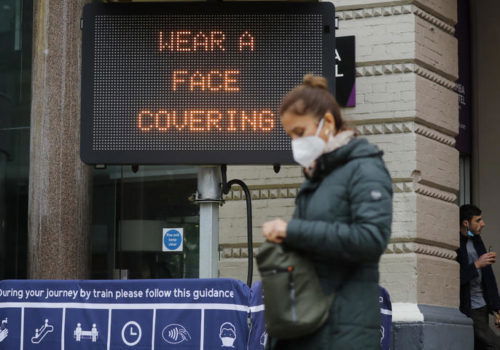
A pedestrian outside Charing Cross station in central London, 14 October. Photo: AFP
The respiratory pandemic is spreading in most parts of Britain, whose official death toll of 43,155 is the highest in Europe.
Anger, though, is rising over the economic, social and health costs of the biggest curtailment of freedoms since WWII. One former government adviser warned some people would have trouble clothing their children soon.
Health Secretary Matt Hancock said London, which has a population of 9 million, as well as the adjacent, heavily populated county of Essex, would be put on "high" alert level, up from "medium", at one minute past midnight (2301 GMT Friday).
The main impact of the move to "high" is that people cannot meet other households socially indoors in any setting, for example at home or in a restaurant. Travel should be reduced where possible, Hancock said.
"Things will get worse before they get better," Hancock said. "But I know that there are brighter skies and calmer seas ahead - that the ingenuity of science will find a way through and until then we must come together."
Britain's move to halt socialising in its capital means that London and Paris - Europe's two richest cities - are shortly to be living under the shadow of state-imposed restrictions as the second wave of the pandemic spreads through Europe.
President Emmanuel Macron announced night curfews for four weeks from Saturday in Paris and other major cities.
London, the centre of international banking and foreign exchange trading, is only rivalled by New York when it comes to financial clout. The worst-hit areas of London are Richmond, Hackney, the City of London, Ealing, Redbridge and Harrow.
London Mayor Sadiq Khan said: "I must warn Londoners: We've got a difficult winter ahead."
Former adviser warns of 'destitution'
Manchester, in the north of England and one of Britain's largest cities, had been tipped to be moved to "very high" alert from "high", but Hancock said talks with local leaders were continuing so no decision had yet been made.
In a show of defiance, Greater Manchester Mayor Andy Burnham said he was unwilling to impose a local lockdown that would sacrifice swathes of the city's economy without proper financial support from central government.
"They are willing to sacrifice jobs and businesses here to try and save them elsewhere," Burnham said. "The north is fed up of being pushed around."
Johnson, who scored a landslide election victory in December, says his government is fighting a war against the virus and that some sacrifices are necessary to save lives.
But opponents say his Conservative government was too slow to act when the virus first struck, failed to protect the elderly in care homes, and bungled the testing system.
In areas put on the high alert level, socialising outside households or support bubbles is not allowed indoors, though work can continue and schools continue to operate.
The "very high" alert level forbids socialising, forces pubs and bars to close and prohibits travel outside the area.
The government's former homelessness adviser, Louise Casey, said Britain faces a "period of destitution" in which some families "can't put shoes on" children.
"Are we actually asking people in places like Liverpool to go out and prostitute themselves, so that they could put food on the table?" Casey told the BBC.
Liverpool in England's northwest is already in the highest-risk tier.
"There's this sense from Downing Street and from Westminster that people will make do," Casey added, referring to the national government's headquarters. "Well, they weren't coping before Covid."
- Reuters
US President Donald Trump and Democratic challenger Joe Biden will hold duelling prime-time town halls instead of a second debate, which was to have been held virtually, as early voters continued to swamp polling places.
Democratic challenger Joe Biden and US President Donald Trump. Photo: AFP
Trump pulled out of the scheduled debate when the commission in charge of organising the event said it would be held virtually after he contracted the coronavirus. A final debate is still scheduled for 22 October in Nashville, Tennessee.
With less than three weeks to go until the 3 November vote, the Republican president is searching for ways to change the dynamics of a race in which Biden has a double-digit advantage in some national polls.
More than 17 million Americans have cast ballots either in person or by mail so far, representing 12.5 percent of the total votes counted in the 2016 general election, according to the US Elections Project at the University of Florida.
Voters are seeking to avoid in-person lines on Election Day to stay safe as coronavirus infections and hospitalizations continue to rise, but are also concerned about the possibility that Trump will challenge widely used mail-in ballots, after he claimed without evidence that they are fraudulent.
North Carolina, a highly competitive state, began more than two weeks of in-person early voting on Thursday.
Video from local media showed large numbers of people waiting for the polls to open in Greensboro and Winston-Salem, and gathering in the pre-dawn hours to vote at two arenas in the state's largest city of Charlotte.
Gerry Cohen, a member of the election board in the county that includes most of the city of Raleigh, reported more than 400 people waiting in line at a community centre before polls opened.
"I've never seen this many in line here," he said on Twitter.
Trump's campaign is counting on a surge of last-minute votes. But Reuters/Ipsos polling conducted between 9 October and 13 October shows there are far fewer undecided likely voters this year - around 8 percent - and they are just as likely to pick Biden as they are Trump.
Four years ago at this stage of the campaign, more than twice as many people were similarly wavering between Trump and his Democratic opponent, Hillary Clinton.
The Reuters/Ipsos polling shows Biden holding a 10 percentage-point lead nationally, with a tighter margin in the battleground states that will help decide the election.
Both candidates have been visiting those states this week, with Trump holding rallies in Florida, Pennsylvania and Iowa and Biden travelling to Ohio and Florida.
Trump has pulled into a statistical tie with Biden in Florida, a key battleground, with 47 percent support versus Biden's 49 percent, and a credibility interval of 4 points, a Reuters/Ipsos opinion poll showed.
Today's town halls, in which each candidate will field questions from voters, will take place at 8pm EDT (1pm NZT).
The Biden campaign said two people involved in the campaign had tested positive for Covid-19, including one on the staff of US Senator Kamala Harris, Biden's running mate.
Although neither Biden nor Harris was in close contact with the people, the campaign said it was cancelling Harris' travel until after Sunday.
"This shows how seriously we take Covid, how we have since March done everything in our power as a campaign to ensure the safety of our staff and volunteers and voters," Biden's campaign manager, Jen O'Malley Dillon, told reporters on a call.
- Reuters
French police have raided the homes of senior government and health officials as part of an investigation into their handling of the Covid-19 pandemic.
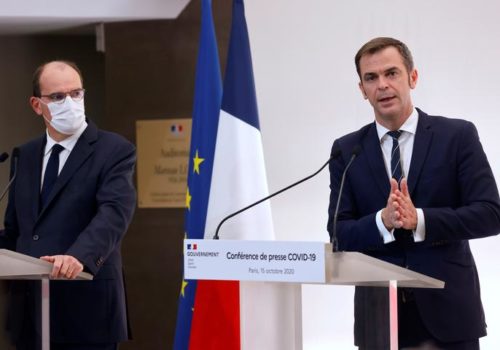
French Health Minister Olivier Veran (right) speaks flanked by French Prime Minister Jean Castex during a press conference on 15 October to present the details of new restrictions aimed at curbing the spread of the Covid-19 pandemic. Photo: AFP
Health Minister Olivier Véran and the director of the national health agency, Jérôme Salomon, are among those whose properties were searched on Thursday.
The raids came after a court launched an inquiry earlier this year into the government's handling of the pandemic.
It has faced criticism over shortages of equipment and slow response times.
Prime Minister Jean Castex is also under investigation, French media report, as is his predecessor Edouard Philippe and Véran's predecessor Agnès Buzyn.
The prime minister and Véran have been at the forefront of France's new policy of imposing night-time curfews in nine cities, including Paris, from Saturday, which will be enforced by 12,000 police.
"This means at 21:00 everyone must be at home and, without exception, every place, business or public service open to the public will be shut," Castex said on Thursday.
See all RNZ coverage of Covid-19
In July, the court launched the inquiry into the government's handling of the pandemic after members of the public, including doctors and relatives of victims, alleged that it had been criminally negligent in its response to Covid-19.
The special court hears cases of alleged wrongdoing by ministers and other government officials in the course of their duties.
But for the claims to be substantiated, there would have to be evidence that officials knowingly failed to take obvious steps that would have saved lives.
Diners at a restaurant in Paris socially distance. Photo: AFP
At a news conference on Thursday, Prime Minister Castex said he had "absolute" confidence in both Véran and Salomon.
How bad is the situation in France?
A further 22,951 cases of Covid-19 were confirmed on Wednesday. "We have to act. We need to put a brake on the spread of the virus," French president Emmanuel Macron said in a television address.
The president added that this wave of Covid-19 was different to the outbreak in the spring, because the virus had spread to all parts of France.
France managed to control the first outbreak by introducing a national lockdown.
It then opened bars and restaurants in the summer, and allowed foreign tourists to visit as part of an effort to boost the ailing economy. Schools reopened and universities began teaching classes in person in early autumn.
But since August the number of reported cases has accelerated quickly.
Wednesday was the third time in six days that France reported more than 20,000 new infections. Macron said the new measures aimed to reduce daily cases to around 3,000.
As with the first wave of Covid-19, there is concern that hospitals and intensive care units will become overwhelmed with patients.
People wearing face masks, to curb the spread of Covid-19 in Nantes, western France. Photo: AFP
What are the new measures there?
The curfew, from 9pm to 6am each day, will apply for at least four weeks to the capital Paris and its suburbs, as well as the cities of Marseille, Lyon, Lille, Saint-Etienne, Rouen, Toulouse, Grenoble and Montpellier.
Affecting around 22 million people, it will be applied for four weeks to begin with, and Macron's government will seek to extend it to six.
President Macron said the virus has spread to all parts of France now. (File photo). Photo: AFP
The measures will stop people visiting restaurants and private homes during the evening and night-time. Private parties will be banned, even in areas not under curfew, from midnight on Friday.
But there is some scepticism over how effective the curfew might be. "People were mainly going out to eat out, which they will continue to do... until 9pm," said Lou Mielot, a student at the University of Lyon.
"This will create restaurants that are full from 7pm to 9pm, [where people] won't be able to keep a safe distance," she added.
Residents will need a valid reason to be outside their homes during the hours of curfew.
President Macron said on Wednesday night he understood a curfew was a "hard" thing to ask people to do.
On Thursday, Castex said travel during hours of curfew was permitted for trips to the hospital or pharmacy, or if work hours required. But a special certificate would need to be produced as proof. Pre-booked tickets for planes and trains that arrive after the curfew will be allowed.
Anyone found breaking the curfew will be fined €135 (NZ$240).
Businesses that suffer financially due to the new measures will be eligible for state aid. Any company with up to 50 staff in the nine cities affected will be eligible for help if their turnover has fallen by over half in the past year.
All companies in curfew areas will be asked to move towards having employees work from home for at least part of the week, and to stagger working hours. President Macron has already suggested "tele-working" for two or three days a week.
Hand sanitiser on the bar of a restaurant in Paris, where a four-week overnight curfew has been announced to fight the rapid spread of Covid-19. Photo: AFP
- BBC
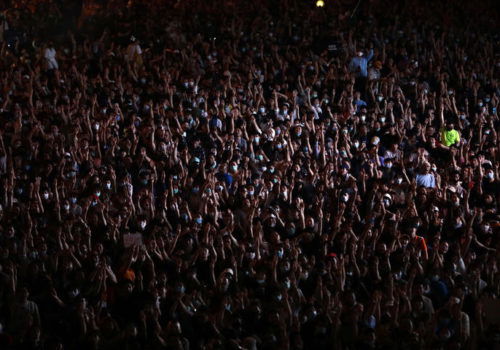
Tens of thousands of Thai protesters cheered and chanted into the night in central Bangkok in a show of mass defiance to a ban on demonstrations designed to end more than three months of anti-government action.
As they dispersed at 10 pm on Thursday protesters pledged to return to the same place every day.
Thousands of pro-democracy protesters rallied in central Bangkok late into the evening, raising the three-finger salute that has become a symbol of the protest movement. Photo: AFP
Growing demonstrations have targeted King Maha Vajiralongkorn as well as Prime Minister Prayuth Chan-ocha, a former junta leader, in the biggest challenge for years to an establishment long dominated by the army and palace.
"Like dogs cornered, we are fighting till our deaths," Panupong "Mike Rayong" Jadnok, one the high-profile protest leaders who remains free, told the crowd. "We won't fall back. We won't run away. We won't go anywhere."
Protesters ignored police appeals to disperse and spilled from the Ratchaprasong Intersection across streets and walkways, their mobile phones shimmering in the night. The location was the scene of bloodshed in 2010, during more than a decade of violence between supporters and opponents of the Thai establishment.
"All protesters will be prosecuted," the deputy head of Bangkok police, Piya Tawichai, told a news conference. "I would like us to warn the children and youth: participating in these protests could impact you in the future."
Police put the number of protesters at 10,000.
Protesters chanted for the release of some 40 activists arrested this week. Some also called out insults against the king - until recently almost unheard of behaviour in a country where the constitution says he must be revered.
A pro-democracy protester faces off against a police officer in Bangkok on Thursday. Photo: AFP
Closing the protest, student leader Jutatip Sirikhan called on people to return at 5 pm on Friday and daily thereafter.
Three months of protests in the country of 70 million have been largely peaceful, as was a march by tens of thousands on Wednesday. But in one incident, police pushed jeering protesters away from a motorcade carrying Queen Suthida.
Overnight the government banned political gatherings of five or more people and the publication of news and online information that could threaten national security. Riot police swiftly cleared a protest camp outside Prayuth's office.
"The measures were necessary to ensure peace and order," government spokesman Anucha Burapachaisri said in a statement.
He rejected accusations from some government critics that the motorcade incident was an excuse to crack down.
Arrests
Thai media reported that arrest warrants had been issued against two people for injuring the queen - which can carry a life sentence, whereas the maximum penalty for insulting the monarch under lese majeste laws is 15 years in jail.
Student leader Panusaya "Rung" Sithijirawattanakul. Photo: AFP
Police said they had arrested protest leaders Parit "Penguin" Chiwarak and rights lawyer Arnon Nampa overnight. Student leader Panusaya "Rung" Sithijirawattanakul was taken away in a wheelchair.
Arnon said on Facebook he was taken to Chiang Mai, where he faces sedition charges over a speech in August. Panusaya and Parit also face sedition charges over comments at previous protests, their lawyer said. They all deny the charges.
In a handwritten note embellished with a rainbow, Panusaya urged protesters to keep fighting.
"You might all see leaders disappearing one by one, but we're actually always with you," she wrote.
The protest movement aims to remove Prayuth, saying he manipulated an election last year to keep hold of power. He says the election was fair.
Those marching on the streets also want a new constitution and have called for a reduction in the powers of the king. They want his role to be clearly subject to the constitution and seek the reversal of orders that gave him control of the palace fortune and some army units.
Anger in Thailand has been exacerbated by the economic impact of the coronavirus - even greater than in other parts of Southeast Asia because of the importance of tourism.
The Chinese government's top diplomat, State Councillor Wang Yi, agreed at a meeting with Prayuth on Thursday to speed up the transfer of people and goods and on future economic cooperation, Chinese state news agency Xinhua said.
The European Union, meanwhile, called on Thailand to respect the rights of detainees and urged restraint from all sides.
- Reuters
Two US hostages held by Houthi rebels in Yemen have been released, seemingly as part of a large prisoner exchange.
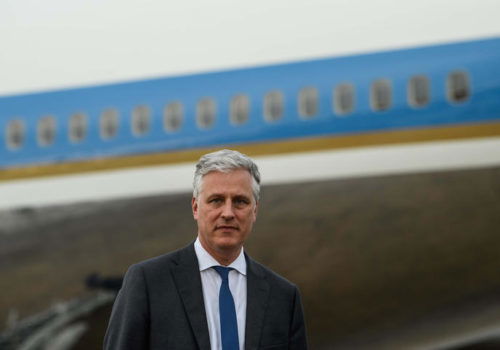
US national security adviser Robert O'Brien. Photo: AFP
Sandra Loli, a humanitarian worker held for about three years, and businessman Mikael Gidada, held for about one, were freed on Wednesday (local time), US officials said.
The remains of a third US captive, Bilal Fateen, were repatriated as well.
It comes after the Houthis reported receiving more than 200 Yemenis from Oman, where many had been stranded after receiving medical treatment.
A much-anticipated swap between Yemen's internationally recognised, Saudi-backed government and the Houthi rebels had been expected to take place on Thursday.
In a statement, the US state department welcomed the release of Loli and Gidada, and extended its condolences to the family of Fateen.
US national security adviser Robert O'Brien thanked Sultan Haitham bin Tariq of Oman and King Salman of Saudi Arabia for their assistance, and credited President Donald Trump for his support.
A Houthi spokesperson, Mohammed Abdulsalam, earlier tweeted that the 240 or so Yemenis who returned to the Yemeni capital, Sanaa, included either people who had been stranded or who were injured and had travelled to the Omani capital Muscat to receive medical treatment.
Abdulsalam added that they included casualties who had travelled to the Gulf state during UN-brokered peace talks between the warring parties in Stockholm in 2018.
"The United Nations did not bring [them] back" in line with the agreement reached, he said.
Abdulsalam also thanked Oman for its "humanitarian efforts" but did not mention the release of US hostages.
The Wall Street Journal, which broke the news about the US hostages, said the state department had been working urgently to secure the deal because Loli was in ill-health. It reported the deal also included delivery of medical aid for Yemen.
The operation was reportedly overseen by the International Committee of the Red Cross.
Yemen has been devastated by a conflict that escalated in March 2015, when the rebels seized control of much of the west of the country and forced President Abdrabbuh Mansour Hadi to flee abroad.
The civil war has also triggered the world's worst humanitarian disaster, with thousands of civilians dying from preventable causes, including malnutrition, disease and poor health.
- BBC
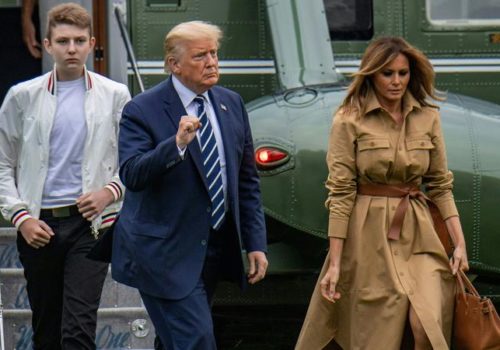
US first lady Melania Trump says her 14-year-old son Barron tested positive for coronavirus but has since returned a negative result.
Photo: AFP
Melania Trump says she also has now tested negative for Covid-19.
The White House initially said Barron Trump had tested negative after both his parents tested positive earlier this month.
However Melania Trump said on Wednesday subsequent test results showed Barron had also come down with Covid-19 but showed no symptoms.
"Luckily he is a strong teenager and exhibited no symptoms," Melania Trump said in a statement.
Melania Trump said her symptoms were "minimal" and that she hoped to resume her duties as first lady "as soon as I can".
"I experienced body aches, a cough and headaches, and felt extremely tired most of the time," she said.
"I chose to go a more natural route in terms of medicine, opting more for vitamins and healthy food," Melania Trump said.
Donald Trump spent three nights in a military hospital after announcing on 2 October that he and Melania had tested positive.
To treat the virus, he received an experimental dual antibody therapy developed by Regeneron Pharmaceuticals Inc and Gilead Sciences Inc's antiviral remdesivir, as well as the steroid dexamethasone.
"In one way I was glad the three of us went through this at the same time so we could take care of one another and spend time together," Melania Trump said.
Meanwhile, President Donald Trump is no longer capable of actively spreading Covid-19 and has been given the all clear to attend an upcoming town hall interview with NBC News without putting others at risk.
Top American public health official Anthony Fauci says he and a colleague at the National Institute of Health have reviewed the Covid tests taken by the president to reach the conclusion that the president is not contagious.
- Reuters