Prince Charles sent a hand-written letter of support to Australia's governor general in 1976, backing his controversial sacking of Prime Minister Gough Whitlam, Australian media reported.
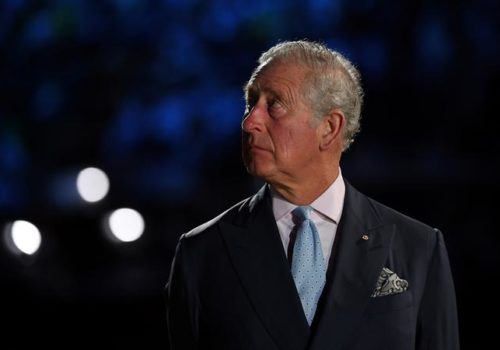
Prince Charles Photo: William West / AFP
The letter, published by The Australian newspaper, is dated four months after Queen Elizabeth's representative in Australia, John Kerr, took the unprecedented step to dismiss Whitlam without first warning the palace or the prime minister.
"Please don't lose heart," the heir to the British throne wrote in the hand-written letter to Kerr on 27 March.
"What you did last year was right and the courageous thing to do - and most Australians seemed to endorse your decision when it came to the point."
The letter was revealed in an extract of a book The Truth of the Palace Letters: Deceit, Ambush and Dismissal in 1975 by Paul Kelly and Troy Bramston, due to be published next month.
Whitlam's firing remains one of the country's most polarising political events because it represented an unmatched level of intervention by the Commonwealth.
Historians say the country was never told the full story behind Whitlam's removal during a political deadlock over the Budget and in 2016, one historian sued Australia's National Archives for access to letters between Kerr and the Queen.
In July, the 211 so-called "palace letters" were published, pulling the veil from one of the great mysteries of Australian politics, and re-igniting a conversation about whether the country should cut ties with Britain and become a republic.
-Reuters
Libya's warring factions signed a permanent ceasefire agreement, but any lasting end to years of chaos and bloodshed will require wider agreement among myriad armed groups and the outside powers that support them.
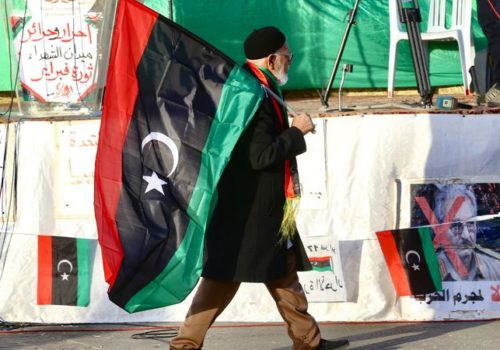
An old man carries a flag of Libya during a protest against the attacks and ceasefire violations in Tripoli on January 24, 2020. Photo: Hazem Turkia / Anadolu Agency / AFP
Acting UN Libya envoy Stephanie Williams said the ceasefire would start immediately and all foreign fighters must quit Libya within three months.
As a first commercial passenger flight in more than a year crossed front lines from Tripoli to the eastern city of Benghazi on Friday (local time), Williams noted Libya's "fraught" recent history, one of numerous broken truces and failed political solutions.
"But we shouldn't let the cynics win," she said, hailing both sides for their "courage" in agreeing a ceasefire and saying they deserved international support.
The agreement was reached after the internationally recognised Government of National Accord (GNA) in June beat back Khalifa Haftar's eastern-based Libyan National Army (LNA) from its 14-month assault on the capital.
Since then, frontlines have stabilised near the central coastal city of Sirte and the LNA has ended its eight-month blockade of Libyan oil output, which was strangling state finances on both sides.
Head of the Government of National Accords military delegation Ahmed Ali Abushahma during a signing ceremony of a Libyan ceasefire agreement, on October 23, 2020. Photo: Violaine Martin / United Nations / AFP
However, Turkey, the main backer of the GNA, immediately voiced scepticism that the ceasefire would hold, with President Tayyip Erdogan saying "it does not seem too achievable".
Turkey, along with the LNA's main foreign backers Russia, the United Arab Emirates and Egypt, has funnelled weapons and fighters into Libya despite a UN arms embargo which they all publicly backed.
There was caution inside Libya too. "We all want to end the war and destruction. But personally I don't trust those in power," said Kamal al-Mazoughi, 53, a businessman sitting in a Tripoli cafe.
"If there is no force or mechanism to apply this on the ground... this deal will only be ink on paper," said Ahmed Ali, 47, in Benghazi.
'Posturing and positioning'
Key details on implementing the ceasefire, including monitoring the departure of foreign fighters and merging armed groups, have been left to subcommittees in future talks.
Both sides have deployed thousands of foreign fighters in Libya, including Syrians, Sudanese, Chadians and European mercenaries brought in by Russia's Wagner group. Since June, they have entrenched along the Sirte frontlines with new weapons and defensive positions.
Members of the self-proclaimed eastern Libyan National Army special forces gather in the city of Benghazi on June 18, 2020. Photo: AFP / Abdullah Doma
Meanwhile, political talks scheduled in Tunisia early next month, with a view to holding national elections eventually, will need to reach agreement on historically elusive issues and overcome widespread mistrust.
"There is still no clear sign that Libyan belligerents are looking at this as anything other than a period of posturing and positioning," said Tarek Megerisi, a policy fellow at the European Council on Foreign Relations.
Libya has enjoyed no political stability since the 2011 NATO-backed uprising against Muammar Gaddafi, and has been split since 2014 between east and west.
Haftar's assault on Tripoli last year was launched as UN Secretary General Antonio Guterres had arrived in Tripoli to prepare for peace talks.
As that assault collapsed this summer, thanks to Turkish backing for the GNA, Egypt threatened to intervene directly, raising the spectre of a bloody regional escalation.
Libya's energy facilities, the biggest prize for both sides, were on the front line as mercenaries marched into ports and oilfields.
However, the United Nations is also pushing an economic track to seek agreement between the major factions on the future management of Libya's wealth and its sovereign institutions.
"What prevails among [Libyan factions] is a desire to re-start the economy," said Jalel Harchaoui, an analyst working on Libya. "That alignment is frail and temporary."
Guterres said he hoped to appoint the current UN Middle East envoy, the Bulgarian Nickolay Mladenov, as the new Libya envoy to replace Ghassan Salame, who quit in March due to stress.
-Reuters
The US probe that collected samples from an asteroid earlier this week retrieved so much material that a rock is wedged in the container door, allowing rocks to spill back out into space, NASA officials say.
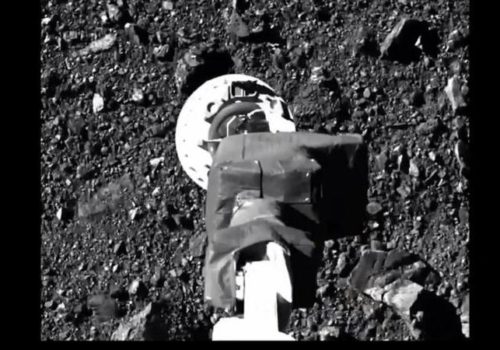
This NASA video frame grab shows the robotic arm from the spacecraft Osiris-Rex making contact with the asteroid Bennu to collect samples. Photo: AFP / NASA TV
The robotic arm of the probe, OSIRIS-REx, on Wednesday (NZ time) kicked up a debris cloud of rocks on Bennu, a skyscraper-sized asteroid some 320 million kilometres from Earth and trapped the material in a collection device for the return to Earth.
But images of the spacecraft's collection head beamed back to ground control revealed it had caught more material than scientists anticipated and was spewing an excess of flaky asteroid rocks into space.
The leakage had the OSIRIS-REx mission team scrambling to stow the collection device to prevent additional spillage.
"Time is of the essence," Thomas Zurbuchen, NASA's associate administrator for science, told reporters.
Zurbuchen said mission teams will skip their chance to measure how much material they collected as originally planned and proceed to the stow phase, a fragile process of tucking the sample collection container in a safe position within the spacecraft without jostling out more valuable material.
Photo: AFP / NASA TV
NASA will not know how much material it has collected until the sample capsule returns in 2023. The troubleshooting also led mission leaders to forgo any more chances of redoing a collection attempt and instead commit to begin the spacecraft's return to Earth next March.
"Quite honestly, we could not have performed a better collection experiment," OSIRIS-REx principle investigator Dante Lauretta told reporters, affirming a hearty sample size.
But with the door lodged open by a rock and the "concerning" images of sample spillage, "we're almost the victim of our own success here", he added.
The roughly $US800m ($NZ1.1 billion), minivan-sized OSIRIS-REx spacecraft, built by Lockheed Martin, launched in 2016 to grab and return the first US sample of pristine asteroid materials. Japan is the only other country to have accomplished such a feat.
Artwork: Osiris-Rex approaching the surface of Asteroid Bennu. Photo: NASA/GODDARD/UOA
Asteroids are among the leftover debris from the solar system's formation some 4.5 billion years ago. A sample could hold clues to the origins of life on Earth, scientists say.
- Reuters
By James Gallagher, BBC Health and science correspondent
A simple virus has brought life as we know it to a screeching halt.
We have faced viral threats before, including pandemics, yet the world does not shut down for every new infection or flu season.
Photo: AFP
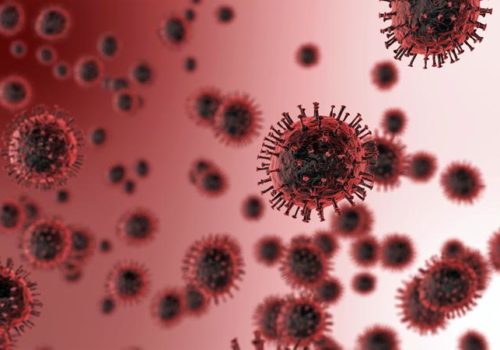
So what is it about this coronavirus? What are the quirks of its biology that pose a unique threat to our bodies and our lives?
Master of deception
In the early stages of an infection the virus is able to deceive the body.
Coronavirus can be running rampant in our lungs and airways and yet our immune system thinks everything is a-ok.
"This virus is brilliant, it allows you to have a viral factory in your nose and feel completely well," says Prof Paul Lehner from the University of Cambridge.
Our body's cells start releasing chemicals - called interferons - once they are being hijacked by a virus and this is a warning signal to the rest of the body and the immune system.
But the coronavirus has an "amazing capability" of switching off this chemical warning, Prof Lehner says, "it does it so well you don't even know you're ill".
He says when you look at infected cells in the laboratory you cannot tell they have been infected and yet tests show they are "screaming with virus" and this is just one of the "joker cards" the virus can play.
It behaves like a 'hit and run' killer
The amount of virus in our body begins to peak the day before we begin to get sick.
But it takes at least a week before Covid progresses to the point where people need hospital treatment.
"This is a really brilliant evolutionary tactic - you don't go to bed, you go out and have a good time," says Prof Lehner.
So the virus is like a dangerous driver fleeing the scene - the virus has moved on to the next victim long before we either recover or die.
In stark terms, "the virus doesn't care" if you die, says Prof Lehner, "this is a hit and run virus".
This is a massive contrast with the original Sars-coronavirus, back in 2002. It was most infectious days after people became ill, so they were easy to isolate.
It's new, so our bodies are unprepared
Remember the last pandemic? In 2009 there were huge fears about H1N1, aka swine flu.
However, it turned out to be no way near as deadly as anticipated because older people already had some protection. The new strain was similar enough to some that had been encountered in the past.
There are four other human coronaviruses, which cause common cold symptoms.
Prof Tracy Hussell from the University of Manchester, said: "This is a new one, so we don't think there's much prior immunity there."
The newness of Sars-CoV-2, to give it the official name, she says, can be "quite a shock to your immune system".
This lack of prior-protection is comparable to when Europeans took smallpox with them to the New World, with deadly consequences.
Building an immune defence from scratch is a real problem for older people, as their immune system is slow off the mark.
Learning to fight a new infection involves a lot of trial and error from the immune system.
But in older age we produce a less diverse pool of T-cells - a core component of the immune system - so it is harder to find ones that can defend against Coronavirus.
It does peculiar and unexpected things to the body
Covid starts off as a lung disease (even there it does strange and unusual things) and can affect the whole body.
Prof Mauro Giacca, from King's College London, says many aspects of Covid are "unique" to the disease, indeed "it is different from any other common viral disease".
He says the virus does more than simply kill lung cells, it corrupts them too. Cells have been seen fusing together into massive and malfunctioning cells - called syncytia - that seem to stick around.
And Prof Giacca says you can have "complete regeneration" of the lungs after severe flu, but "this does not happen" with Covid.
"It is quite a peculiar infection," he said.
Blood clotting also goes strangely awry in Covid, with stories of doctors unable to get a line into a patient because it is immediately blocked with clotted blood.
Clotting chemicals in the blood are "200 percent, 300 percent, 400 percent higher" than normal in some Covid patients, says Prof Beverly Hunt from King's College London.
She told Inside Health: "Quite honestly, in a very long career, I've never seen any group of patients with such sticky blood."
These whole-body effects could be due to the cellular doorway the virus strolls through to infect our cells - called the ACE2 receptor. It is found throughout the body including in blood vessels, the liver and kidneys, as well as the lungs.
The virus can cause runaway inflammation in some patients, making the immune system go into overdrive, with damaging consequences for the rest of the body.
And we're fatter than we should be
Covid is worse if you are obese, as a generous waistline increases the risk of needing intensive care, or death.
This is unusual.
"Its very strong association with obesity is something we haven't seen with other viral infections. With other lung injuries, obese people often do better rather than worse," said Prof Sir Stephen O'Rahilly, from the University of Cambridge.
"It looks pretty specific [to Covid] it probably happens in pandemic flu, but not regular flu."
Fat deposited throughout the body, in organs like the liver, causes a metabolic disturbance which seems to combine badly with coronavirus.
Obese patients are more likely to have higher levels of inflammation in the body and proteins that can lead to clotting.
- BBC
Sudan is to normalise relations with Israel - the latest in a series of Arab League countries to do so.
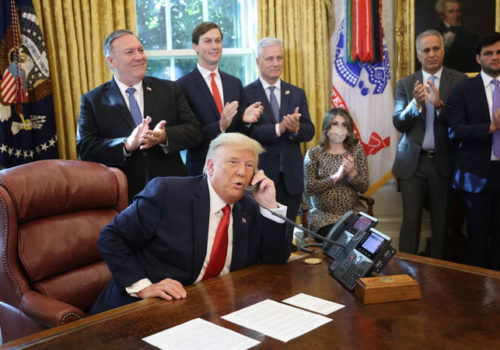
US President Donald Trump speaks with Israeli Prime Minister Benjamin Netanyau on the phone about a Sudan-Israel peace agreement. Photo: Win McNamee / Getty Images / AFP
At the same time, US President Donald Trump has removed Sudan from the US list of state sponsors of terrorism, unblocking economic aid and investment.
Announcing the normalisation, Trump said "at least five more" Arab states wanted a peace deal with Israel.
The Sudan deal comes weeks after similar moves by the United Arab Emirates and Bahrain.
The two Gulf states became the first in the Middle East to recognise Israel in 26 years.
Sudan and Israel said in a three-way statement with the US that delegations would meet "in the coming weeks".
The countries would discuss agricultural issues, aviation and migration, it said. A specific date for talks has not been announced.
"The leaders agreed to the normalisation of relations between Sudan and Israel and to end the state of belligerence between their nations," the statement added.
Jordan signed a peace deal with Israel in 1994, and Egypt in 1979. Mauritania, an African Arab League member, recognised Israel in 2009 but severed ties 10 years later.
The growing number of Arab countries formalising relations with Israel has been condemned by the Palestinians, who see it as a betrayal of their cause.
Historically, Arab countries conditioned peace talks with Israel on its withdrawal from territories occupied in the 1967 war and the establishment of a Palestinian state with East Jerusalem as its capital.
How was the move announced?
Shortly after Trump formally moved to remove Sudan from the US list of state sponsors of terrorism, reporters in Washington were taken to the Oval Office where the president was on the phone to the Sudanese and Israeli leaders.
Israeli Prime Minister Benjamin Netanyahu said the agreement was a "dramatic breakthrough for peace" and the start of a "new era".
Sudanese Prime Minister Abdalla Hamdok thanked Trump for removing his country from the US terrorism list and said the Sudanese government was working "towards international relations that best serve our people". Sudanese state TV said the "state of aggression" would end.
While on the phone to the two world leaders, Trump said: "Do you think 'Sleepy Joe' could have made this deal? Somehow I don't think so."
"Sleepy Joe" is his pejorative nickname for his opponent in the upcoming US presidential election, Democrat Joe Biden.
In response, Netanyahu said: "Well, Mr President, one thing I can tell you is, um, uh, we appreciate the help for peace from anyone in America."
Israeli Prime Minister Benjamin Netanyahu, US President Donald Trump, Bahrain Foreign Minister Abdullatif al-Zayani, and UAE Foreign Minister Abdullah bin Zayed Al-Nahyan wave from the Balcony at the White House on 15 September, 2020. Photo: AFP / Saul Loeb
The move is seen as a foreign policy victory for Trump ahead of the 3 November eletion. BBC correspondents say the timing of the announcement is no coincidence.
Trump's pro-Israel policies are seen by his advisers as appealing to Christian evangelical voters, a key part of his voter base.
The US president also said he expected Saudi Arabia would normalise relations with Israel.
His aide, Judd Deere, said the Sudan deal was "another major step toward building peace in the Middle East with another nation joining the Abraham Accords", the term used for the deals signed with the UAE and Bahrain.
However Palestinian Authority President Mahmud Abbas condemned the agreement, saying no one had the right to speak on behalf of Palestinians. Hamas, which controls Gaza, said it was a "political sin".
Meanwhile, Israel said it would not oppose US sales of high-grade military hardware to the UAE. The US had agreed to consider allowing the UAE to buy F-35 fighter jets after normalising ties with Israel.
Israel had said it needed to maintain a military advantage over other states in the Middle East. However, earlier this week it said the US had agreed to upgrade Israeli military capabilities.
How did we get here?
Sudan had been a foe of Israel since the latter's founding in 1948.
Famously, it was the site of a declaration against normalisation with Israel in 1967, when the Arab League, meeting in the capital, Khartoum, swore "no peace with Israel, no recognition of Israel, no negotiations with it".
It fought in wars against Israel in 1948 and 1967, provided a haven for Palestinian guerrilla groups and is suspected of sending Iranian arms to Palestinian militants in Gaza several years ago - prompting alleged Israeli air strikes against it.
The political dynamics changed with the overthrow last year of Sudan's long-time ruler Omar al-Bashir and his replacement by a transitional civilian-military council.
Sudan's generals, who wield the real power, have supported establishing relations with Israel as a way to help get US sanctions on Sudan lifted and open the door to badly needed economic aid.
However, the reaction to the deal in Sudan has been mixed.
Some feel Sudan's leaders gave in to Trump's proposal under duress, and out of desperation to be removed from the US's State Sponsors of Terrorism list, BBC senior Africa correspondent Anne Soy reports.
This week, Trump said Sudan would be removed from the US list of state sponsors of terrorism once the US received $335 million ($NZ502m) in compensation for attacks on US embassies in Africa.
The attacks in Kenya and Tanzania in 1998 were carried out by al-Qaeda while its leader, Osama bin Laden, was living in Sudan.
Sudan has since placed the money in a special escrow holding account for the victims of these attacks.
-BBC
France's coronavirus cases have surged past a million as the country is warned the virus will linger until at least the middle of 2021.
Yesterday France recorded more than 40,000 new cases and 298 deaths. Other nations including Russia, Poland, Italy and Switzerland also saw new highs.
A French hospital boss says many people are infecting others with Covid-19 without realising they have the virus. Photo: AFP
The World Health Organisation said the spike in European cases was a critical moment in the fight against the virus.
It called for quick action to prevent health services being overwhelmed.
Daily infections in Europe have more than doubled in the past 10 days. The continent has now seen a total of 7.8m cases and about 247,000 deaths.
"The next few months are going to be very tough and some countries are on a dangerous track," WHO chief Tedros Adhanom Ghebreyesus told reporters.
Globally there have been more than 42m cases and 1.1m deaths.
Too early to decide on lockdown - Macron
Speaking on a visit to a hospital in the Paris region, Macron said scientists were telling him that they believed the virus would be present "at best until next summer", he said.
But he said it was still too early to say whether France would go into a new full or partial lockdown.
Emmanuel Macron speaks to media after visiting a hospital in Paris. Photo: AFP
An overnight curfew in the country is being extended to about two-thirds of the country - 46 million people - from today for six weeks.
The curfew could be relaxed when new infections dropped back down to between 3000 and 5000 a day, Macron said - a level of infection that was last seen at the end of August.
Meanwhile, the head of a Paris hospital group warned that the second wave of infections could be worse than the first.
"There has been a perception in recent months that a second wave does not exist, or that it is a small wave. The situation is the opposite," Martin Hirsch, the head of the AP-HP hospital group, told local media.
Many of those currently in intensive care in his hospitals were older people who had been self-isolating but had become infected when their children visited them, Hirsch said.
"There are many positive people, infectious, in the streets without knowing it and without anyone else knowing it," he added.
Covid patients currently occupy nearly half of France's 5000 intensive care beds.
And Prime Minister Jean Castex said a further influx of patients was likely - "The new cases of today are the hospitalised patients of tomorrow. The month of November will be difficult," he said.
Spain ponders next move
Earlier this week Spain became the first EU country to record a million cases - but yesterday Prime Minister Pedro Sánchez said the "real number" of cases was probably more than three million.
Sánchez urged Spaniards to show "determination, social discipline and the necessary union" but did not announce any new measures to combat the spread of the virus.
The health minister and some regional governments have urged Sánchez to impose an overnight curfew but other regional administrations have been reluctant, fearing the economic impact.
The prime minister - whose Socialist party does not have a majority in parliament - said a nationwide curfew would require a new state of emergency and he wants all regional governments to agree before taking this step.
A two-week partial lockdown on Madrid - which had been resisted by city officials - is due to end this weekend and the city will then ban households from meeting indoors between midnight and 6am. Capacity in bars will be limited to 50 percent.
Meanwhile the regions of Castilla y León and Valencia are to impose their own curfews and the southern region of Andalucía is to introduce a curfew in the city of Granada.
A curfew is on the way for the residents of Granada. Photo: AFP
However, Sánchez said the current situation was not comparable to March, when the central government imposed a strict lockdown. The median age of those infected has also fallen.
Elsewhere in Europe:
Italy's public health body said the situation in many regions was approaching critical, and complete contact tracing had become impossible. The head of the southern Campania region, which has already imposed a curfew and shut schools, has called for a complete lockdown
Switzerland recorded a daily record of 6634 new cases. Tighter nationwide restrictions are expected next week, but are not expected to include school closures
Russia registered 17,340 coronavirus cases in the past 24 hours, a new daily record
Poland has entered a nationwide "red zone" lockdown that includes the partial closure of primary schools and restaurants
Czech Prime Minister Andrej Babis called on Health Minister Roman Prymula to resign after a tabloid newspaper published photos of him emerging late at night, without a mask, from a restaurant that was supposed to be shut
Germany recorded 11,424 new cases in the past 24 hours, suggesting a stable situation still under control, with an R rate of 1.1
The Netherlands has begun transferring patients to Germany as its own hospitals have come under strain
Portugal is imposing a lockdown on three northern districts, affecting 150,000 people - and the whole country will have restrictions on movement for next week's holiday weekend
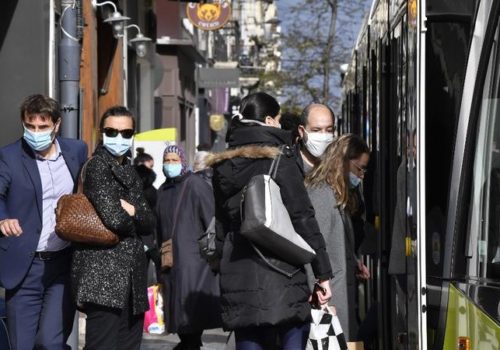
Greece has declared a night curfew in Athens and other areas to come into force today
- BBC
A three-decades-long Australian naval presence in the Middle East will come to an abrupt end this year as the Federal Government grapples with an increasingly uncertain strategic environment closer to home.
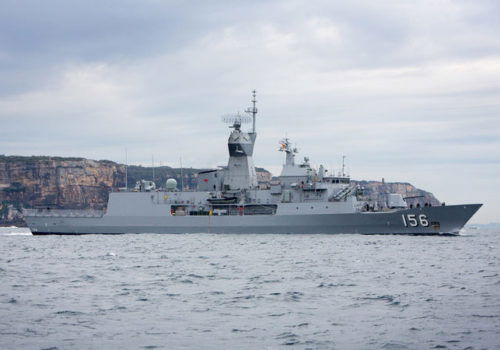
The last Australian Navy ship deployed to the Middle East, HMAS Toowoomba, returned to Australia in June this year (file picture). Photo: Royal Australian Navy
Defence Minister Linda Reynolds has announced Australia will no longer send a Royal Australian Navy ship to the Middle East every year.
The last Australian Navy ship deployed to the region, HMAS Toowoomba, returned to Australia in June this year.
Australia will also withdraw from the United States-led naval coalition patrolling the Strait of Hormuz at the end of 2020.
That means around 30 years of Australian maritime operations in the Middle East - largely focussed on counter-terrorism and counter-piracy operations - will soon come to an end.
In a statement, Senator Reynolds said the government's priorities had shifted.
"This year alone has seen [the] Navy respond to the bushfire and COVID-19 crises, a five-ship deployment throughout South-East Asia and the Pacific, a continued commitment to initiatives under the Pacific Step Up, and several highly successful activities with our regional partners," Reynolds said.
"We now face an increasingly challenging strategic environment which is placing greater demand on ADF resources closer to home.
"As a result, the Australian Defence Force will reduce its naval presence in the Middle East to enable more resources to be deployed in our region."
The shift was flagged in the government's recent Defence Strategic Update, which declared that deteriorating strategic circumstances would force the military to focus more sharply on the Indo-Pacific and Australia's immediate region.
China has engaged in a massive naval build-up over the last decade, as well as asserting increasing control over the contested waters of the South China Sea by building a series of military fortifications.
The relationship between the United States and China has also become increasingly hostile, sharply raising the risk of conflict in the region.
Australia has participated in a growing number of naval exercises in the region with a series of allies and partners, including the United States and Japan.
Earlier this year Australian warships encountered the Chinese Navy while sailing near contested islands claimed by Beijing on their way to trilateral exercises.
Next month the Australian Navy will also re-join the Malabar naval exercises with the US, Japan and India after a hiatus of more than a decade.
Senior officials, military officers and Morrison government ministers have been contemplating the shift away from the Middle East for several years.
Last year there was debate inside the Federal Government when the Trump Administration asked Australia to join a US-led naval coalition to protect ships in the Strait of Hormuz near Iran.
In the end, the Morrison government agreed to send a surveillance aircraft and a frigate to join the mission.
But one government source told the ABC the decision was "pretty hotly contested."
The Navy's Chief of Joint Operations, Lieutenant General Greg Bilton, said the change announced by the government was "historic" and Senator Reynolds declared Australia could be "proud" of its naval contribution.
"For over 30 years we have supported freedom of navigation, maritime security and the free flow of commerce in the Middle East," she said.
"In cooperation with our partners, our commitments have been invaluable in disrupting global drugs trade, supporting the reduction of funding lines to terrorism activity and building the capacity of regional forces."
- ABC
Nigerian President Muhammadu Buhari says 69 people have been killed in protests against police brutality that have rocked the country.
Protesters man a barricade on a highway near the capital, Lagos. Photo: AFP
The deaths were mainly civilians but include police officers and soldiers.
The president announced the toll in an emergency meeting with former Nigerian leaders aimed at finding ways to end the unrest, his spokesperson told the BBC.
A group that has been key in organising the demonstrations has now urged people to stay at home.
The Feminist Coalition also advised people to follow any curfews in place in their states.
The protests have drastically subsided but an uneasy calm remains in several cities.
Officials said a curfew introduced in Lagos state would be eased.
A prison was set on fire in Lagos during the unrest. Photo: AFP
The protests in Nigeria began on 7 October with mostly young people demanding the scrapping of a notorious police unit, the Special Anti-Robbery Squad (Sars).
The unit was dissolved days later, but the protests continued, demanding broader reforms in the way Nigeria is governed.
They escalated after a shooting in the nation's biggest city, Lagos, on Tuesday, when rights group Amnesty International says security forces killed at least 12 people. Nigeria's army has denied any involvement.
At yesterday's virtual meeting, President Buhari, 77, said his administration was committed to meeting the demands of the protesters. But he said his government would not fold its arms and allow criminals who had hijacked the protests to continue to perpetrate "hooliganism".
The president told the meeting that 51 civilians, 11 police officers and seven soldiers had been killed in the unrest, his spokesperson said. It was not immediately clear whether these figures included the protesters allegedly killed by security forces in Lagos on Tuesday.
President Muhammadu Buhari says he wants to meet protesters' demands. Photo: AFP
The president previously made a short televised address in which he urged protesters to stop demonstrating and instead engage with the government "in finding solutions".
He faced criticism for not mentioning the Lagos shootings.
Police officers face charges
Lagos and other parts of the country have seen buildings torched, shopping centres looted and prisons attacked since Tuesday night's shooting.
Two dozen buses were destroyed during the protests. Photo: AFP
The protests have now subsided, with barricades and police checkpoints dotting empty streets in Lagos yesterday, AFP news agency reports.
The city was placed under a 24-hour curfew amid the mass protests. But the state government said the curfew would be lifted later today.
The state's governor, Babajide Sanwo-Olu, also published a list of 23 police officers who have been charged or are waiting to be charged with various offences relating to brutality. The charges include murder, manslaughter, involuntary manslaughter, armed robbery and causing grievous body harm.
He said he had published the list to show he was "rebuilding Lagos and ending police brutality".
The south-west state of Osun also suspended a 24-hour curfew imposed to deal with the riots.
The Feminist Coalition earlier encouraged "all young Nigerians to stay safe, stay home, and obey the mandated curfew in your state".
"We are merchants of hope. Our priority is always the welfare and safety on the Nigerian youth," it said.
The group said it would no longer be taking donations for the #EndSARS protests.
- BBC
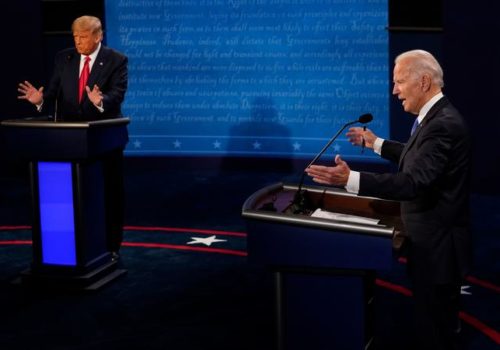
Trailing in opinion polls with the 3 November election just 12 days away, US President Donald Trump was under pressure during his final debate against Democratic rival Joe Biden.
Photo: AFP
Trump trails former vice president Biden in national polls, but the contest is much tighter in some battleground states where the election will likely be decided.
A record 47 million Americans already have cast ballots, eclipsing total early voting from the 2016 election.
A more civilized evening
After the first Trump-Biden debate in September devolved into a chaotic shouting match, moderators said they would mute each candidate's microphone to allow the other to speak without interruption for two minutes at the outset of each 15-minute debate segment.
The mute button did not much come into play, and even during the remaining free debate segments, the candidates maintained a more civil demeanor than at their last meeting.
Trump seemed to be on his best behavior early in the evening - even to moderator Kristen Welker, a member of the White House press corps he frequently denigrates. "So far, I respect very much the way you're handling this," he said.
As the debate wore on, Trump was reverting to form - talking over Welker and mocking Biden while he spoke.
Better than Abraham Lincoln?
Trump's refusal to condemn white supremacist groups in the first debate amounted to perhaps his biggest unforced error.
He avoided that pitfall this time during an exchange over race relations, during which he touted his criminal-justice reform law, which effectively rolled back some aspects of the tough-on-crime legislation sponsored by Biden in the 1990s that resulted in long prison sentences for millions of Black people.
But Trump's remarks also featured his signature hyperbole. "With the exception of Abraham Lincoln, possible exception ... nobody's done what I've done" for Black Americans, he said.
He also said he decided to run for president because he did not like the performance of the country's first Black president. "I ran because of Barack Obama. He did a poor job. If I thought he did a good job, I never would have run."
Biden responded with mockery: "'Abraham Lincoln' here is one of the most racist presidents we've had in modern history. He pours fuel on every single racist fire."
Talking to the camera
Biden tried several times to break away from the melee and address voters directly.
After a long exchange about the two candidates' personal finances, Biden turned to the camera and said: "It's not about his family and my family. It's about your family. And your family's hurting badly," he said.
During a discussion on healthcare, he said: "How many of you are home rolling around in bed at night wondering what in God's name are you going to do if you get sick?"
Election hacking, the IRS and tax returns
Trump sought to portray Biden as being corruptly involved with his son Hunter's business dealings in Ukraine and China, but he struggled to shape accusations that have circulated in conservative media into a coherent case.
No evidence has emerged to link Biden to any improper behavior, and the only result has been Trump's impeachment last year by the House of Representatives for pressuring Ukrainian President Volodymyr Zelenskiy to investigate Biden.
Biden flatly denied any impropriety on his part, and contrasted his willingness to release his tax returns with Trump's refusal to do so. "What are you hiding?" he asked. "Release your tax returns, or stop talking about corruption."
Trump was left to air old grievances about the Internal Revenue Service, former Special Counsel Robert Mueller and others who he thought were treating him unfairly. "I get treated very badly by the IRS, very unfairly," he said.
What time is it?
Biden briefly glanced at his wristwatch late in the debate, after Welker referenced the small amount of time remaining.
In the real world that might not be seen as an unusual act, but it evoked comparisons among political junkies with Republican President George H.W. Bush glancing at his watch during a 1992 debate with Bill Clinton and H. Ross Perot.
That was seen as a major faux pas at the time.
The pandemic
Shortly after the last debate, Trump contracted Covid-19 and spent three days in a hospital. The virus has spiked in several states, particularly in the midwest, with deaths nationally reaching their highest since August today.
The pandemic, which has killed more than 222,000 people in the United States, remains the top issue for voters and Biden has repeatedly accused Trump of mismanaging the crisis.
"I caught it, I learned a lot. Great doctors, great hospitals," Trump said.
Trump appeared to make news by promising that a vaccine for the virus would be ready "within weeks" before backpedaling. "It's not a guarantee," he clarified. He promised that the country was "rounding the corner," even as several US states reported record one-day increases.
Biden waved his black face mask as a prop, an implicit rebuke of a president who has famously been reluctant to wear one. "If we just wore masks, we could save 100,000 lives," he said.
Members of the Trump family did not wear masks at the last debate. For this one, they did.
Economic reactions
S&P 500 index futures were down 0.05 percent, little changed from levels before the debate started. In New York, Inverness Counsel chief investment strategist Tim Ghriskey said the markets appeared comfortable with both candidates, including the prospect of a Biden presidency.
"Remember that our government is much more than just our president. Our best presidents have been leaders, negotiators, and united our country.
"The markets are more focused on a vaccine and the economic recovery. Both are an inevitability regardless of who sits in the White House."
He said the primary concern violence in the streets or the risk of a blue wave or a red wave causing financial market volatility.
"The markets prefer a degree of gridlock since change happens more thoughtfully and at a measured pace."
Bank of Singapore financial analyst Moh Siong Sim said the reason markets had not moved was the debate covered old ground.
"I don't think there's anything new in it ... the focus is still on the timing of the fiscal stimulus and how big it is.
"The market has been in a range-trading mode, either waiting and worrying or waiting and hoping. It's just toggling in a very cautious manner and I suspect that will be the case unless we get stimulus before elections."
Longbow Asset Management chief executive Jake Dollarhide said recent volatility in stocks the past week could be a sign the markets were not so indifferent to a Democrat sweep.
"[The market] may be taking a step back to its old playbook on thinking it favors a Republican White House," he said. "The markets could open significantly higher tomorrow now that two adults finally showed up on the debate stage this time."
In Hong Kong, Natixis Asia Pacific economist Gary Ng said Asian markets had slightly tilted towards a more conservative sentiment.
"While the debate has yet to offer any new perspective from both candidates, global investors are likely to ... brace for any upcoming risks.
"The short term impact on Asia should be limited as investors have already priced in the uncertainty of the US election. What will change such a view could be any wild card stemming from an October surprise or an unclear election result leading to further clarification, especially if the situation is dragged into quagmire for a long time."
- Reuters