Firefighters in South Korea are struggling to completely put out a fire at a 33-storey tower block in the southern South Korean city of Ulsan, local media said.
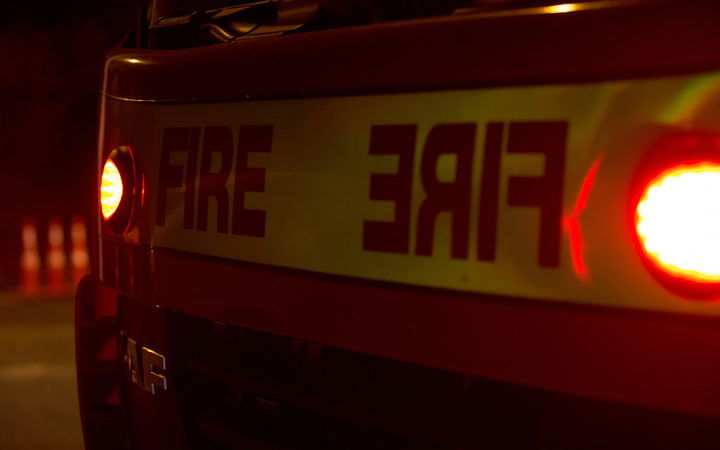
File photo Photo: RNZ / Claire Eastham-Farrelly
Hundreds were forced to evacuate and more than 80 people were sent to hospital for smoke inhalation.
The blaze reportedly started at about 23:00 local time (14:00 GMT) on Thursday and was spread by high winds.
On Friday morning, it had still not been completely extinguished.
The South Korean news agency said strong winds made it difficult to control the fire.
The fire broke out between the 8th and 12th floors of the Samhwan Art Nouveau commercial and residential building, which has about 120 households and shopping units.
One eyewitness told Yonhap news agency: "Suddenly, the fire came up. The windows were broken and the living room and bedroom lit up."
Another told YTN News of "exterior material", possibly insulation, attached to the outside of the building that caused the fire to spread quickly.
Authorities have not confirmed what caused the fire.
- BBC
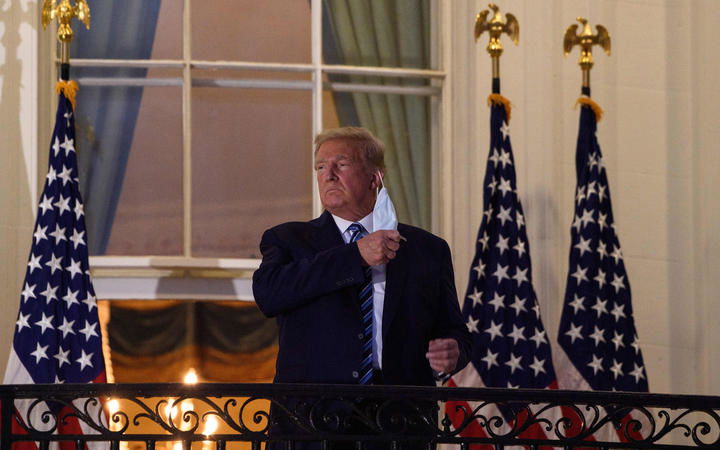
US President Donald Trump has completed his course of treatment for Covid-19 and can return to public engagements this weekend, his physician has said.
Photo: AFP
Dr Sean Conley said the president had responded "extremely well" to medication and had "remained stable".
Trump earlier pulled out of next Thursday's TV debate with Democratic rival Joe Biden after organisers said it would have to be a virtual event.
The move sparked a row about how and when further debates would take place.
In a memo released by the White House on Thursday evening, Dr Conley said Trump was displaying no signs "to suggest progression of illness".
"Saturday will be day 10 since [last] Thursday's diagnosis, and based on the trajectory of advanced diagnostics the team has been conducting, I fully anticipate the president's safe return to public engagements at that time," the memo added.
Earlier, Conley said that if the president's condition remained the same or improved throughout the weekend and into Monday, "we will all take that final, deep sigh of relief".
What about the presidential debates?
On Thursday, the commission organising the second presidential debate in Miami on 15 October said it would have to take place remotely because Trump had tested positive for coronavirus.
In response, Trump said he was "not going to waste my time on a virtual debate".
At the moment, it appears a debate could take place on 22 October, although in what form remains to be seen.
The first presidential debate on 29 September had descended into insults and interruptions. The vice-presidential debate, held on Wednesday night between Mike Pence and Kamala Harris, was a far more measured affair.
The US election will be held on 3 November. Latest opinion polls suggest Biden has a high single digit lead nationally, but the outcome is often decided in battleground states where the races can be much closer.
Six million ballots have already been cast in early voting.
How did the debate row unfold?
It began with the Commission on Presidential Debates announcing candidates would take part in the Miami debate "from separate remote locations... to protect the health and safety of all involved".
This infuriated the president who, in a phone-in interview with Fox Business Channel, said he was not prepared to "sit behind a computer, ridiculous".
Joe Biden said the president "changed his mind every second" and his campaign team added that Trump "clearly does not want to face questions from the voters".
The Trump campaign answered back, with manager Bill Stepien saying the commission's decision to "rush to Joe Biden's defence" was "pathetic," adding that Mr Trump would hold a rally instead on the same date.
The Biden team then proposed the town-hall style debate, set for Miami, should go ahead on 22 October instead.
This brought a brief moment of agreement, on the date at least.
However, the Trump team said there should be a third face-to-face debate - on 29 October, just five days before polling.
But the Biden team said that debates could only be scheduled on the three dates already agreed: 29 September, 15 October and 22 October.
On 15 October, Biden will now take part in his own primetime event on ABC answering questions from voters.
Quite what format any Biden-Trump debate takes now is hard to pin down.
What else did Trump say on Fox?
Addressing the issue of his health, Trump said: "I'm back because I'm a perfect physical specimen."
He said he had stopped taking most "therapeutics" but was still taking steroids and would be tested for Covid again "soon".
But although his doctor has said he now has no symptoms, questions still remain about when the president first became infected and whether he could still be contagious.
And although the names of many people who have interacted with the president and tested positive are now known, it remains unclear just how many were exposed at the White House. New Covid safety measures are in place there.
One of the top Republicans, Senate majority leader Mitch McConnell, said on Thursday that he had not been to the White House since 6 August because its approach to handling Covid with social distancing and masks was "different from mine and what I suggested we do in the Senate".
Trump said on Thursday that "somebody got in and people got infected" but gave no more details.
A gathering on 26 September announcing Trump's Supreme Court pick has been seen as a possible "super-spreader" event, with several attendees known to have tested positive.
- BBC
The FBI says it has thwarted a plot to abduct and overthrow Michigan's Democratic Governor Gretchen Whitmer.
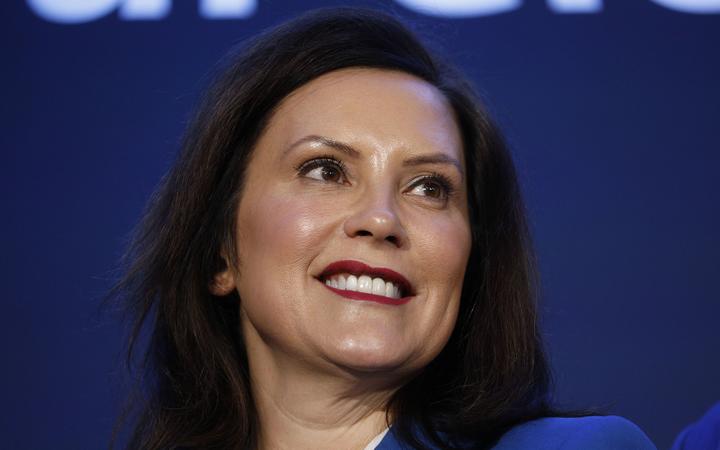
Gretchen Whitmer has attracted opposition to her measures to combat Covid-19. Photo: AFP
Whitmer has been a frequent target of Republican President Donald Trump's criticism, including over her moves to enforce coronavirus social distancing rules in her state.
She has become a target of coronavirus sceptics after enacting strict mitigation measures that were overturned by a judge last week.
Officials say the kidnapping plot involved six men. Whitmer's office has yet to comment on the arrests.
Those arrested are: Adam Fox, Barry Croft, Kaleb Franks, Daniel Harris, Brandon Casert and Ty Garbin, whose home was raided by authorities yesterday.
They could face life in prison if convicted on charges of attempting to kidnap Whitmer, said US Attorney for the Western District of Michigan Andrew Birge.
The alleged plot included reaching out to a militia group, according to an affidavit by FBI special agent Richard Trask released today.
Last month, Fox posted in an encrypted chat that he did not want a final training exercise to be held in the last week of October because it would not leave enough time to execute the kidnapping before the national election on 3 November, Trask said.
"The group agreed to use the time until the final training exercise to raise money for explosives and other supplies," Trask wrote in the affidavit.
Michigan Attorney General Dana Nessel told a news conference: "Our efforts uncovered elaborate plans to endanger the lives of law enforcement officers, government officials and the broader public."
In May, armed protesters opposed to the Covid-19 lockdown stormed the state capitol.
An armed protester stands outside the Michigan State Capitol in Lansing, Michigan, during a demonstration against the governor's stay-at-home order. Photo: AFP
According to a sworn FBI affidavit, an undercover law enforcement source attended a June meeting in Dublin, Ohio, where a group of Michigan-based militia members discussed overthrowing state governments "that they believed were violating the US Constitution".
"Several members talked about murdering 'tyrants' or 'taking' a sitting governor," the charging document states.
The group wished to gather about "200 men" to storm the capitol building and take hostages, including the governor. They hoped to enact their plan before the November presidential election. If that failed, they planned to attack the governor at her home, officials say.
The militia members held weapons training in several states, and at times attempted to create bombs that were faulty, the FBI says, adding that their training was captured on video.
- BBC / Reuters
By BBC security correspondent Gordon Corera and reporter Leo Kelion
There is "clear evidence of collusion" between Huawei and the "Chinese Communist Party apparatus", a UK parliamentary inquiry has concluded.
And the MPs say the government may need to bring forward a deadline set for the Chinese firm's 5G kit to be removed from the UK's mobile networks.
Photo: 123rf.com
Huawei has responded by saying "this report lacks credibility as it is built on opinion rather than fact".
But the latest accusation poses a further challenge to its business.
Although the company's options in the UK are now limited, it is still trying to sell its 5G telecoms infrastructure to other parts of Europe and beyond, having invested heavily in the technology.
"We're sure people will see through these accusations of collusion and remember instead what Huawei has delivered for Britain over the past 20 years," a spokesman for the company said.
'Communist Party links'
The House of Commons defence committee based its findings on the testimony of academics, cyber-security experts and telecom industry insiders, among others. These included some long-term critics of the company.
Hauwei's executives did not testify, although they did appear before a separate parliament committee in July.
The report cites a venture capitalist who claimed the Chinese government "had financed the growth of Huawei with some $75bn [NZ$111.8bn] over the past three years", which he said had allowed it to sell its hardware at a "ridiculously low price point".
And it highlights a claim made by a researcher who specialises in corporate irregularities within China, who alleged that Huawei had "engaged in a variety of intelligence, security, and intellectual property activities", despite its repeated denials.
"It is clear that Huawei is strongly linked to the Chinese state and the Chinese Communist Party, despite its statements to the contrary," the committee concludes.
"This is evidenced by its ownership model and the subsidies it has received."
Nuclear industry
The report warns that the West should not "succumb to ill-informed anti-China hysteria", but suggests some policy changes may be necessary.
At present, the government has said mobile networks must not buy new Huawei 5G equipment after the end of this year, and then must remove any they have installed by 2027.
But the committee says ministers should consider bringing the latter deadline forward to 2025 if relations with China deteriorate, or pressure from the US and other allies makes it necessary.
The MPs acknowledge being told by BT (formerly British Telecom) and Vodafone that such a move could cause signal blackouts in parts of the country. But they say operators could be compensated to minimise delays.
They also say Beijing had exerted pressure through "covert and overt threats" to keep Huawei in the UK's 5G network.
These are said to have included a suggestion it might block Chinese investment in the UK's nuclear industry.
The committee says that if further threats follow, the government should "carefully consider China's future presence in critical sectors of the economy".
And it recommends the forthcoming National Security and Investment Bill gives ministers the power to ban investments they deem risky.
More work is needed to work with allies to ensure there are other suppliers of telecoms equipment, the report adds.
And it calls on the government to avoid any further delay in introducing a telecoms bill to end what it describes as the current situation of "commercial concerns trumping national security".
Encrypted data
The MPs reject claims that Huawei's continued presence in the UK affects the country's ability to share sensitive information with partners.
Last year, one US congressman suggested the US and UK might have to resort to using paper instead of electronic-based communications.
But the committee says it is "content" that Huawei is sufficiently distanced from sensitive defence and national security sites, and in any case it would not be able to decipher encrypted data sent via its equipment.
It does, however, urge GCHQ to continue its work with the firm at the Huawei Cyber Security Evaluation Centre, where the firm's equipment is checked for flaws.
Huawei funds the work done there by government experts and has indicated it is willing to continue doing so for the foreseeable future.
The MPs say the government should now consider assessing equipment from "other vendors in a similar fashion".
They also back proposals to form a D10 group of democracies to provide alternatives to Chinese technology.
Little detail has been provided about what this might actually look like, and the committee calls on the government to consult allies to set out exactly what it would entail.
-BBC
US President Donald Trump has refused to take part in a virtual TV debate with his Democratic rival Joe Biden.
The first presidential debate last week between Donald Trump, left, and Joe Biden descended into insults and interruptions. Photo: AFP
Earlier the commission organising the 15 October debate in Miami said it would have to take place remotely.
It made the decision after Trump was treated for Covid-19. He has no current symptoms but the White House is tackling a cluster of positive tests.
He said the move to virtual was to "protect" his rival. Biden said Trump "changed his mind every second".
The first presidential debate on 30 September descended into insults and interruptions. The vice-presidential debate, held yesterday between Mike Pence and Kamala Harris, was a far more measured affair.
The US election will be held on 3 November. Latest opinion polls give Biden a high single digit lead nationally, but the outcome is often decided in battleground states where the races can be much closer.
Trump fears being cut off
His comments during a phone-in interview with Fox Business Channel which touched on a number of key matters, including his health and the possibility of movement towards a stimulus package for the economy.
But it was his comments on the debate format that drew most attention.
Trump said: "I'm not gonna waste my time on a personal debate. Sit behind a computer, ridiculous. They cut you off... I'm not doing a virtual debate."
He also described the moderator of the Miami debate - political editor of the cable and satellite television network C-SPAN, Steve Scully - as a "never Trumper".
A statement from Trump campaign manager Bill Stepien, who had also previously tested positive for Covid, said the decision of the commission to "rush to Joe Biden's defence" was "pathetic" and Trump would have posted "multiple negative tests" before the debate.
He said Trump would hold a rally instead.
On his health, Trump said: "I'm back because I'm a perfect physical specimen."
He said he had stopped taking most "therapeutics" but was still taking steroids and would be tested for Covid again "soon".
Donald Trump leaves a military hospital to return to the White House. Photo: AFP
But although his doctor has said he now has no symptoms, questions still remain about when the president first became infected and whether he could still be contagious.
And although the names of many people who have interacted with the president and tested positive are now known, it remains unclear just how many were exposed at the White House. New Covid safety measures are in place there.
Trump said that "somebody got in and people got infected" but gave no more details.
A gathering on 26 September announcing Trump's Supreme Court pick has been seen as a possible "super-spreader" event, with a number of attendees known to have tested positive.
What's the Biden team's position?
Biden had previously been wary of an on-stage event, saying he would attend if medical experts gave the go-ahead.
He said after Trump's comments on the virtual debate: "We don't know what the president's going to do. He changes his mind every second. For me to comment on that now would be irresponsible.
"I think I'm going to follow the commission's recommendation. If he goes off and he's going to have a rally I don't know what I'll do. You never know what's going to come out of his mouth."
Joe Biden says his opponent changes his mind every second. Photo: AFP
Biden communications director Kate Bedingfield said: "Vice-President Biden looks forward to speaking directly to the American people and comparing his plan for bringing the country together and building back better with Donald Trump's failed leadership on the coronavirus that has thrown the strong economy he inherited into the worst downturn since the Great Depression."
Debate commission aiming to protect health
The 90-minute presidential debate was due to be held at the Adrienne Arsht Centre for the Performing Arts in Miami, with local residents in the audience posing questions to the candidates.
But the Commission on Presidential Debates said the candidates would have to take part "from separate remote locations". Participants and the moderator would be in Miami.
The commission said the decision had been made "to protect the health and safety of all involved".
One further debate is currently scheduled - on 22 October in Tennessee.
What about the economy?
The president on Tuesday had said he was breaking off talks with the Democrats on an overarching Covid stimulus package but, after a negative stock market reaction, said he would instead try to agree individual deals.
He was more bullish yesterday, saying he saw "really good" odds of reaching a deal on a range of issues.
"We're starting to have some very productive talks," he said.
The main areas of progress were on assistance for airlines and a $US1200 ($NZ1800) stimulus cheque for workers.
Republicans under Treasury Secretary Steven Mnuchin and Democrats under House Speaker Nancy Pelosi have been in regular discussions but have differed on the amount they want to spend.
- BBC
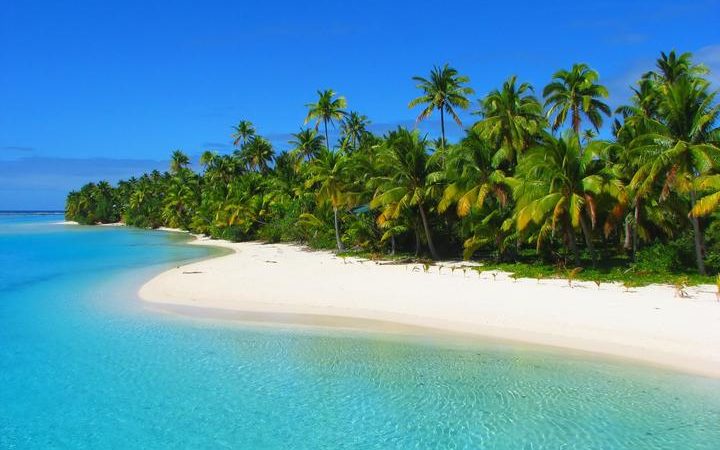
The Cook Islands could remove quarantine restrictions for people travelling from New Zealand as soon as next week.
Prime Minister Mark Brown said cabinet would meet on Saturday to discuss changing the restrictions.
Currently, only Cook Islands residents and permit holders are allowed into the country, and they have to undergo two weeks' quarantine.
Photo: 123RF
Mr Brown said with Auckland now joining the rest of New Zealand at alert level one things were looking promising from his perspective.
"We are reconsidering our position here," he said. "We'll be able to make a decision on when we can resume quarantine-free travel by Friday our time (Saturday NZT)."
But that doesn't mean a resumption of tourism just yet.
Talks were well underway for a travel bubble between the two countries in July, but the recent outbreak of coronavirus in Auckland burst that.
But with that outbreak seemingly contained, Mr Brown and his New Zealand counterpart Jacinda Ardern have both said those talks have resumed.
Mr Brown said things had progressed well and there were only a few finer points to iron out, which he hoped would only take a matter of weeks.
Cook Islands Prime Minister Mark Brown Photo: Phillipa Webb / Cook Islands News
Those points included protocols for maritime borders and shipping, customs clearance, and how passengers to and from the Cook Islands would be separated from one another
"Once that is done then both governments should be in a position to announce a date," he said.
"I am hopeful that December is a possible timeline, if we can get arrangements sooner then that would be a bonus."
Mr Brown said there was significant demand, both from New Zealanders wanting a Cook Islands holiday, but also Cook Islanders wanting access to healthcare and family, among other reasons.
He said the Cook Islands would likely retain the need for all passengers to provide a negative Covid test and temperature scanning at airports.
Talks with Australia
Mark Brown said he was excited by Australia's announcement that New Zealanders would be able to travel to New South Wales and the Northern Territory without the need for quarantine
Cook Islanders are New Zealand citizens and carry New Zealand passports, and Mr Brown said Cook Islanders would also be eligible for that entry.
"This can only progress the discussions that we're having currently," he said. "I do expect to have some discussions with Australia ... about the possibility of travel to Australia as well."
"It only takes a small number of Kiwis to come to the Cook Islands to make a big difference to our tourism industry."
By Andy Sullivan
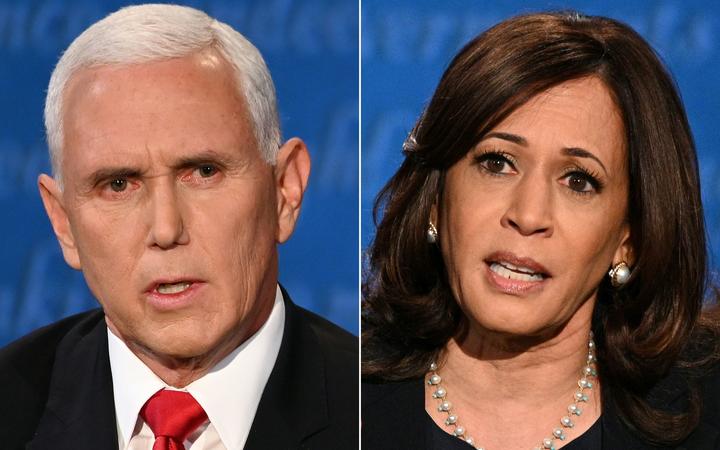
The matchup between Vice President Mike Pence and Democratic challenger Senator Kamala Harris opened without the fireworks that marred last week's chaotic debate between President Donald Trump and former Vice President Joe Biden.
US Vice President Mike Pence and Democratic challenger Senator Kamala Harris. Photo: AFP
But Trump's Covid-19 infection, and his and Biden's advanced age, made it perhaps the most consequential US vice presidential debate in living memory.
Here are a few standout moments from the debate:
Packing the court?
Frustrated that Trump and the Republican-controlled Senate may soon cement a 6-3 conservative majority on the Supreme Court, some on the left have called on Biden to expand the nine-member court to 11 or 13 seats. Harris declined to say whether she supported that idea.
Seeking to push that idea, Pence posed questions about Biden's and Harris' plans, which he also answered for her: "The straight answer is they are going to pack the Supreme Court if they somehow win this election."
Policy to the fore
The relatively sedate atmosphere allowed stark policy differences to come to the fore.
On global warming, for example, Pence declined to say that it was caused by human activity - the overwhelming scientific consensus - and said Biden's proposed fixes would be too expensive.
He also inaccurately said that Biden would ban hydraulic fracturing. Biden, in fact, has said repeatedly he would not pursue a fracking ban, although he would oppose new permits for drilling on federal land. It is a key issue in electoral backgrounds like western Pennsylvania and eastern Ohio, where the technique has led to a boom in energy production over the past decade.
A fly in the ointment
Pence's left eye was noticeably bloodshot for much of the debate. More than an hour in, a black housefly sat for several minutes on Pence's white hair, hanging on as he shook his head and parried with Harris over race and criminal justice. The hashtag #fly2024 surfaced on Twitter.
"Three debaters are now on the stage: Harris, Pence, and a very political fly that has nested in the Veep's head," Larry Sabato, director of the University of Virginia's Center for Politics, wrote on Twitter.
A fly rests on the head of Mike Pence during the debate. Photo: AFP
Colouring inside the lines
Following last week's chaotic, insult-laden debate between Biden and Trump, moderator Susan Page warned both candidates that she would strictly enforce rules designed to ensure decorum. "We want a debate that is lively. But Americans also deserve a discussion that is civil," she said.
Pence opened by saying it was a "privilege" to be on stage with Harris - even after she said the administration's coronavirus response was "the greatest failure of any presidential administration in the history of our country".
Things eventually heated up, but only to a simmer, not a boil. Pence repeatedly interrupted Harris and the moderator, leaving Harris to plead: "Mr Vice President, I'm speaking."
Speak not of the aged
In 2008, when he was Barack Obama's running mate, Biden said that "no one decides who they're going to vote for based on the vice president." Yet this debate has outsized importance.
Biden, 77, would be the oldest president in US history if he were to win the election, and he has hinted he might only serve one term.
Trump, only slightly younger at 74, spent the weekend at a military hospital outside Washington after contracting the novel coronavirus.
From purely an actuarial standpoint, Pence, 61, and Harris, 55, would be more likely to step into the presidency than other vice presidential candidates.
US Democratic vice presidential candidate Kamala Harris and US Vice President Mike Pence in Kingsbury Hall at the University of Utah, US. Photo: AFP
Pence also carries an additional burden as he has been tasked with campaigning for the ticket as Trump has been sidelined because of his Covid-19 infection.
Yet both candidates avoided the topic.
When asked whether they had a firm plan of succession in place, Pence used his time to talk about vaccines, while Harris talked up her biography as a child of immigrants who went on to serve as California attorney general.
Likewise, neither answered directly when asked why their elderly running mates had not released detailed health information. Pence thanked those who had wished for Trump's recovery, while Harris criticised Trump for not releasing his tax returns.
Dinging Biden on plagiarism
Candidates typically show up with a quiver of prepared one-liners, and Pence loosed one early.
He accused Biden of copying the Trump administration's plan to fight the coronavirus, dredging up charges of plagiarism that helped sink Biden's first presidential run in 1988.
"It looks a little bit like plagiarism, which is something Joe Biden knows a little bit about," he said.
- Reuters
Confirmed cases of coronavirus in Brazil have passed five million, with deaths in the country approaching 150,000, officials say.
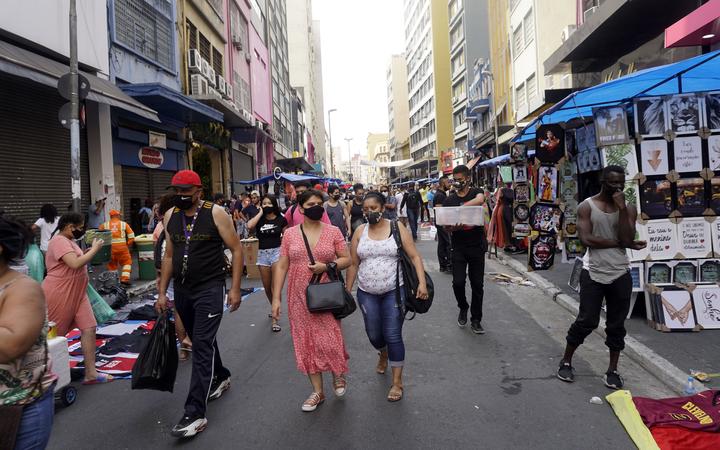
People walk at a popular shopping street amid the coronavirus disease outbreak in São Paulo, Brazil, on 4 October. Photo: AFP
Brazil's health ministry reported 31,553 new cases on Tuesday, bringing the total infections to 5,000,694.
The country is the third worst hit for infections, after the US and India.
President Jair Bolsonaro has been accused of downplaying the risks of the virus throughout the pandemic, ignoring expert advice on restrictive measures.
Bolsonaro has rejected criticism of his handling of the pandemic, but his decision to oppose lockdowns and focus on the economy has been hugely divisive.
On Tuesday, Brazil recorded 734 new fatalities, bringing the death toll to 148,228, the ministry said.
Brazil has the highest number of deaths in Latin America.
The state of São Paulo has been the worst hit, with around 36,000 deaths, followed by Rio de Janeiro, with about 19,000.
In August, Brazil's Vice-President Hamilton Mourão defended the government's handling of the pandemic, instead blaming a lack of discipline among Brazilians for the failure to limit the spread of Covid-19 through social distancing measures.
- BBC