skip to Main Content
Water On The Moon Could Sustain A Lunar Base

Water on the Moon could sustain a lunar base

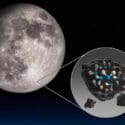
Having dropped tantalising hints days ago about an "exciting new discovery about the Moon", Nasa has revealed conclusive evidence of water on our only natural satellite. This illustration highlights the Moon's Clavius Crater with an illustration depicting water trapped in the lunar soil there. Photo: NASA This "unambiguous detection of molecular water" will boost Nasa's hopes of establishing a lunar base. The aim is to sustain that base by tapping into the Moon's natural resources. The findings have been published as two papers in the journal Nature Astronomy. While there have previously been signs of water on the lunar surface, these new discoveries suggest it is more abundant than previously thought. "It gives us more options for potential water sources on the Moon," said Hannah Sargeant, a planetary scientist from the Open University in Milton Keynes, told BBC News. Where to put a Moon base is largely focused on where the water is." The US space agency has said it will send the first woman and next man to the lunar surface in 2024 to prepare for the "next giant leap" - human exploration of Mars as early as the 2030s. However, space scientist Dr Duncan Steel, who has worked for both NASA and the European Space Agency, said the discovery doesn't mean there is life on the moon. "For sometime we've suspected there is water on the moon in the form of ice, there will never be liquid water on the Moon, it would either be frozen or in a vapor form. "In the vacuum of space water would go from the solid, so ice into vapor if it was heated at all, it wouldn't look like liquid water as we know here on Earth," he said. The water is like a frost in craters near the Moon's poles which are always shaded from sunlight, he said. "This is a big deal because if we know there is water on the Moon we can use it when we set up a scientific outpost on the moon, it can be used for astronauts to drink, to shower and we can even split it to get the oxygen out for people to use it to breathe. "We can even get the hydrogen out which can be used as rocket fuel - it sounds like science fiction but we are getting close to being able to have scientists stationed on the Moon," Steel said. There are estimates that there could be as much as a litre of water per cubic metre of soil on the Moon's surface. NASA plane SOFIA Photo: AFP "That's a substantial amount and is a lot more than what's been suspected to be there in the past, so this is a very interesting discovery." "It will be a great day when we can get on the Moon and dig deeper into the surface to see what is below, certainly the target of future missions is to go closer to the poles in order to look at this craters in greater detail," he said. Professor of Physics at Auckland University Richard Easther said scientists could make the discovery by looking at infra red light which is reflected off the Moon's surface. Prof Easther said with so much water vapor in the Earth's atmosphere, the only way to read the Moon's surface is to do tests in space or from an aircraft which is flying at a sufficient altitude so that it doesn't pick up what's in the Earth's atmosphere. "This discovery tells us a lot about he mineralogy of the Moon, but it also brings up a lot of questions which need to be answered like how it got there, how long its been there and so on." Easther said the discovery and announcement has had many in the science world rolling their eyes, because it's not the first time water has been discovered on the Moon. "It is big news, it's not necessarily a big breakthrough like what it's been touted as, there's been a lot of talk on social media about NASA's announcement. "It's been a little hyped up, how many times can we claim that we've found water on the Moon this is at least the second if not third time its been discovered." -BBC / RNZ

Researchers Find Upside In Tough Year For Pacific Workers

Researchers find upside in tough year for Pacific workers

Unemployed tourism workers in the Pacific have enjoyed a reconnection with their culture during the pandemic shutdown and are hoping this continues when life returns to normal. Thousands of workers across the Pacific have lost their jobs amid the global shutdown and turned to traditional farming and fishing practices. Dr Api Movono Photo: Massey University Research by Massey University showed their experiences had shown an upside to a very difficult year. Senior lecturer in development studies, Dr Api Movono, said Pacific Islanders had a long history of being innovative and resourceful and having this embedded in their way of life had provided the safety net to "allow them to sustain their families, relearn the skills of food production, gardening, farming, fishing. "We have actually noticed that people have gained in terms of their well-being, with participants in our studies and those who were interviewed really coming out and saying , 'this is what we miss. This is what we want more of.'" Movono said people were asked if they re-imagined their working life after Covid-19 ends. "People are saying, yes, we will have to return to our jobs, because we need the money to pay for our bills, school fees etcetera, but at the same time they are reflecting on how this should be done, with one particular group of respondents saying that tourism must complement their way of life and not overtake everything else."
Melbourne Lockdown Restrictions To Be Eased

Melbourne lockdown restrictions to be eased

A lockdown of Australia's second-biggest city will be eased after the country's coronavirus epicentre went 24 hours without any new infections for the first time in four months, Victoria state Premier Daniel Andrews said. Victoria state Premier Daniel Andrews. Photo: AFP Melbourne - home to 5 million people - has been in lockdown since early July after a spike of novel coronavirus infections that began in hotels where people were in quarantine after arriving from abroad. But with infections now under control, Andrews said most restrictions would be eased in two phases from Tuesday, which should give Australia's ailing economy a boost. "Now is the time to open up," Andrews told reporters in Melbourne. "We've have been able to bring this under control, a day of zero cases is an amazing achievement." Andrews said people would be free to leave their homes from Tuesday while restaurants, cafes, shops, bars and hotels would be allowed to reopen. Capacities at those businesses, however, will be capped at 40 indoors and 70 outside. The size of religious services would also be expanded, Andrews said. Andrews said people would be allowed to travel from Melbourne to the state's rural areas from 9 November, when a curb limiting people to no more than 25 km from their homes will be dropped. The easing of restrictions will boost hopes of a quick economic rebound from Australia's first recession in three decades, triggered after large swathes the economy were shut to slow the spread of the virus. The economy shrank 7 percent in the three months to the end of June, the biggest quarterly contraction since records began in 1959. Unemployment hit a 22-year high of 7.5 percent in July as businesses and borders closed. Most restrictions in other parts of Australia have been eased with just a handful of locally acquired infections being found on most days. Australia has recorded just over 27,500 novel coronavirus infections, far fewer than many other developed countries. Victoria, which accounts for more than 90 percent of the 905 deaths nationally, did not record any new deaths from the virus in the past 24 hours. -Reuters
Back To Top