
skip to Main Content
Australia Withdraws Navy Operations In Middle East To Focus On Asia-Pacific, China

Australia withdraws Navy operations in Middle East to focus on Asia-Pacific, China

A three-decades-long Australian naval presence in the Middle East will come to an abrupt end this year as the Federal Government grapples with an increasingly uncertain strategic environment closer to home. The last Australian Navy ship deployed to the Middle East, HMAS Toowoomba, returned to Australia in June this year (file picture). Photo: Royal Australian Navy Defence Minister Linda Reynolds has announced Australia will no longer send a Royal Australian Navy ship to the Middle East every year. The last Australian Navy ship deployed to the region, HMAS Toowoomba, returned to Australia in June this year. Australia will also withdraw from the United States-led naval coalition patrolling the Strait of Hormuz at the end of 2020. That means around 30 years of Australian maritime operations in the Middle East - largely focussed on counter-terrorism and counter-piracy operations - will soon come to an end. In a statement, Senator Reynolds said the government's priorities had shifted. "This year alone has seen [the] Navy respond to the bushfire and COVID-19 crises, a five-ship deployment throughout South-East Asia and the Pacific, a continued commitment to initiatives under the Pacific Step Up, and several highly successful activities with our regional partners," Reynolds said. "We now face an increasingly challenging strategic environment which is placing greater demand on ADF resources closer to home. "As a result, the Australian Defence Force will reduce its naval presence in the Middle East to enable more resources to be deployed in our region." The shift was flagged in the government's recent Defence Strategic Update, which declared that deteriorating strategic circumstances would force the military to focus more sharply on the Indo-Pacific and Australia's immediate region. China has engaged in a massive naval build-up over the last decade, as well as asserting increasing control over the contested waters of the South China Sea by building a series of military fortifications. The relationship between the United States and China has also become increasingly hostile, sharply raising the risk of conflict in the region. Australia has participated in a growing number of naval exercises in the region with a series of allies and partners, including the United States and Japan. Earlier this year Australian warships encountered the Chinese Navy while sailing near contested islands claimed by Beijing on their way to trilateral exercises. Next month the Australian Navy will also re-join the Malabar naval exercises with the US, Japan and India after a hiatus of more than a decade. Senior officials, military officers and Morrison government ministers have been contemplating the shift away from the Middle East for several years. Last year there was debate inside the Federal Government when the Trump Administration asked Australia to join a US-led naval coalition to protect ships in the Strait of Hormuz near Iran. In the end, the Morrison government agreed to send a surveillance aircraft and a frigate to join the mission. But one government source told the ABC the decision was "pretty hotly contested." The Navy's Chief of Joint Operations, Lieutenant General Greg Bilton, said the change announced by the government was "historic" and Senator Reynolds declared Australia could be "proud" of its naval contribution. "For over 30 years we have supported freedom of navigation, maritime security and the free flow of commerce in the Middle East," she said. "In cooperation with our partners, our commitments have been invaluable in disrupting global drugs trade, supporting the reduction of funding lines to terrorism activity and building the capacity of regional forces." - ABC
Nigeria Police Brutality Protests: President Says Dozens Have Died

Nigeria police brutality protests: president says dozens have died

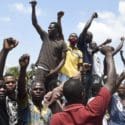
Nigerian President Muhammadu Buhari says 69 people have been killed in protests against police brutality that have rocked the country. Protesters man a barricade on a highway near the capital, Lagos. Photo: AFP The deaths were mainly civilians but include police officers and soldiers. The president announced the toll in an emergency meeting with former Nigerian leaders aimed at finding ways to end the unrest, his spokesperson told the BBC. A group that has been key in organising the demonstrations has now urged people to stay at home. The Feminist Coalition also advised people to follow any curfews in place in their states. The protests have drastically subsided but an uneasy calm remains in several cities. Officials said a curfew introduced in Lagos state would be eased. A prison was set on fire in Lagos during the unrest. Photo: AFP The protests in Nigeria began on 7 October with mostly young people demanding the scrapping of a notorious police unit, the Special Anti-Robbery Squad (Sars). The unit was dissolved days later, but the protests continued, demanding broader reforms in the way Nigeria is governed. They escalated after a shooting in the nation's biggest city, Lagos, on Tuesday, when rights group Amnesty International says security forces killed at least 12 people. Nigeria's army has denied any involvement. At yesterday's virtual meeting, President Buhari, 77, said his administration was committed to meeting the demands of the protesters. But he said his government would not fold its arms and allow criminals who had hijacked the protests to continue to perpetrate "hooliganism". The president told the meeting that 51 civilians, 11 police officers and seven soldiers had been killed in the unrest, his spokesperson said. It was not immediately clear whether these figures included the protesters allegedly killed by security forces in Lagos on Tuesday. President Muhammadu Buhari says he wants to meet protesters' demands. Photo: AFP The president previously made a short televised address in which he urged protesters to stop demonstrating and instead engage with the government "in finding solutions". He faced criticism for not mentioning the Lagos shootings. Police officers face charges Lagos and other parts of the country have seen buildings torched, shopping centres looted and prisons attacked since Tuesday night's shooting. Two dozen buses were destroyed during the protests. Photo: AFP The protests have now subsided, with barricades and police checkpoints dotting empty streets in Lagos yesterday, AFP news agency reports. The city was placed under a 24-hour curfew amid the mass protests. But the state government said the curfew would be lifted later today. The state's governor, Babajide Sanwo-Olu, also published a list of 23 police officers who have been charged or are waiting to be charged with various offences relating to brutality. The charges include murder, manslaughter, involuntary manslaughter, armed robbery and causing grievous body harm. He said he had published the list to show he was "rebuilding Lagos and ending police brutality". The south-west state of Osun also suspended a 24-hour curfew imposed to deal with the riots. The Feminist Coalition earlier encouraged "all young Nigerians to stay safe, stay home, and obey the mandated curfew in your state". "We are merchants of hope. Our priority is always the welfare and safety on the Nigerian youth," it said. The group said it would no longer be taking donations for the #EndSARS protests. - BBC
US Election 2020: Takeaways And Market Reactions From The Final Trump-Biden Debate

US election 2020: Takeaways and market reactions from the final Trump-Biden debate

Trailing in opinion polls with the 3 November election just 12 days away, US President Donald Trump was under pressure during his final debate against Democratic rival Joe Biden. Photo: AFP Trump trails former vice president Biden in national polls, but the contest is much tighter in some battleground states where the election will likely be decided. A record 47 million Americans already have cast ballots, eclipsing total early voting from the 2016 election. A more civilized evening After the first Trump-Biden debate in September devolved into a chaotic shouting match, moderators said they would mute each candidate's microphone to allow the other to speak without interruption for two minutes at the outset of each 15-minute debate segment. The mute button did not much come into play, and even during the remaining free debate segments, the candidates maintained a more civil demeanor than at their last meeting. Trump seemed to be on his best behavior early in the evening - even to moderator Kristen Welker, a member of the White House press corps he frequently denigrates. "So far, I respect very much the way you're handling this," he said. As the debate wore on, Trump was reverting to form - talking over Welker and mocking Biden while he spoke. Better than Abraham Lincoln? Trump's refusal to condemn white supremacist groups in the first debate amounted to perhaps his biggest unforced error. He avoided that pitfall this time during an exchange over race relations, during which he touted his criminal-justice reform law, which effectively rolled back some aspects of the tough-on-crime legislation sponsored by Biden in the 1990s that resulted in long prison sentences for millions of Black people. But Trump's remarks also featured his signature hyperbole. "With the exception of Abraham Lincoln, possible exception ... nobody's done what I've done" for Black Americans, he said. He also said he decided to run for president because he did not like the performance of the country's first Black president. "I ran because of Barack Obama. He did a poor job. If I thought he did a good job, I never would have run." Biden responded with mockery: "'Abraham Lincoln' here is one of the most racist presidents we've had in modern history. He pours fuel on every single racist fire." Talking to the camera Biden tried several times to break away from the melee and address voters directly. After a long exchange about the two candidates' personal finances, Biden turned to the camera and said: "It's not about his family and my family. It's about your family. And your family's hurting badly," he said. During a discussion on healthcare, he said: "How many of you are home rolling around in bed at night wondering what in God's name are you going to do if you get sick?" Election hacking, the IRS and tax returns Trump sought to portray Biden as being corruptly involved with his son Hunter's business dealings in Ukraine and China, but he struggled to shape accusations that have circulated in conservative media into a coherent case. No evidence has emerged to link Biden to any improper behavior, and the only result has been Trump's impeachment last year by the House of Representatives for pressuring Ukrainian President Volodymyr Zelenskiy to investigate Biden. Biden flatly denied any impropriety on his part, and contrasted his willingness to release his tax returns with Trump's refusal to do so. "What are you hiding?" he asked. "Release your tax returns, or stop talking about corruption." Trump was left to air old grievances about the Internal Revenue Service, former Special Counsel Robert Mueller and others who he thought were treating him unfairly. "I get treated very badly by the IRS, very unfairly," he said. What time is it? Biden briefly glanced at his wristwatch late in the debate, after Welker referenced the small amount of time remaining. In the real world that might not be seen as an unusual act, but it evoked comparisons among political junkies with Republican President George H.W. Bush glancing at his watch during a 1992 debate with Bill Clinton and H. Ross Perot. That was seen as a major faux pas at the time. The pandemic Shortly after the last debate, Trump contracted Covid-19 and spent three days in a hospital. The virus has spiked in several states, particularly in the midwest, with deaths nationally reaching their highest since August today. The pandemic, which has killed more than 222,000 people in the United States, remains the top issue for voters and Biden has repeatedly accused Trump of mismanaging the crisis. "I caught it, I learned a lot. Great doctors, great hospitals," Trump said. Trump appeared to make news by promising that a vaccine for the virus would be ready "within weeks" before backpedaling. "It's not a guarantee," he clarified. He promised that the country was "rounding the corner," even as several US states reported record one-day increases. Biden waved his black face mask as a prop, an implicit rebuke of a president who has famously been reluctant to wear one. "If we just wore masks, we could save 100,000 lives," he said. Members of the Trump family did not wear masks at the last debate. For this one, they did. Economic reactions S&P 500 index futures were down 0.05 percent, little changed from levels before the debate started. In New York, Inverness Counsel chief investment strategist Tim Ghriskey said the markets appeared comfortable with both candidates, including the prospect of a Biden presidency. "Remember that our government is much more than just our president. Our best presidents have been leaders, negotiators, and united our country. "The markets are more focused on a vaccine and the economic recovery. Both are an inevitability regardless of who sits in the White House." He said the primary concern violence in the streets or the risk of a blue wave or a red wave causing financial market volatility. "The markets prefer a degree of gridlock since change happens more thoughtfully and at a measured pace." Bank of Singapore financial analyst Moh Siong Sim said the reason markets had not moved was the debate covered old ground. "I don't think there's anything new in it ... the focus is still on the timing of the fiscal stimulus and how big it is. "The market has been in a range-trading mode, either waiting and worrying or waiting and hoping. It's just toggling in a very cautious manner and I suspect that will be the case unless we get stimulus before elections." Longbow Asset Management chief executive Jake Dollarhide said recent volatility in stocks the past week could be a sign the markets were not so indifferent to a Democrat sweep. "[The market] may be taking a step back to its old playbook on thinking it favors a Republican White House," he said. "The markets could open significantly higher tomorrow now that two adults finally showed up on the debate stage this time." In Hong Kong, Natixis Asia Pacific economist Gary Ng said Asian markets had slightly tilted towards a more conservative sentiment. "While the debate has yet to offer any new perspective from both candidates, global investors are likely to ... brace for any upcoming risks. "The short term impact on Asia should be limited as investors have already priced in the uncertainty of the US election. What will change such a view could be any wild card stemming from an October surprise or an unclear election result leading to further clarification, especially if the situation is dragged into quagmire for a long time." - Reuters
Trump V Biden: Sparks Fly In Final US Presidential Debate

Trump v Biden: Sparks fly in final US presidential debate

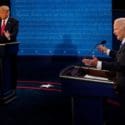
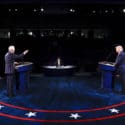
Sparks flew and tempers frayed at the second and final US presidential debate between the incumbent Donald Trump and Democratic candidate Joe Biden, though measures to control interruptions made for a more constructive discussion. The final US presidential debate before the 3 November election. At Belmont University, Nashville, Tennessee. Photo: AFP The debate, held at Belmont University in Nashville today was planned to revolve around six topics; fighting Covid-19, climate change, American families, national security, leadership and race in the US. It was one of the last big events the candidates have to convince Americans they are the best person to be President for the next four years, before the election on 3 November. See how the debate unfolded with RNZ's live blog Mute buttons were introduced for this debate following the chaos that ensued during the last one - and each candidate was given two minutes at the start of each topic - to speak without being interrupted. The opening topic was fighting the coronavirus in the US. Trump said the country had rounded a corner and Covid-19 is going away. "More and more people are getting better, we have a problem that's a world-wide problem... but I've been congratulated by the heads of many countries on what we've been able to do. If you take at look at what we've done in terms of goggles and masks and gowns and everything else." Biden said anyone who doesn't take responsibility for 220,000 deaths from the pandemic shouldn't be President. "Anyone who's responsible for not taking control - in fact not saying 'I take no responsibility' initially. Anyone who's responsible for that many deaths should not remain as president of the United States of America. "We're in a situation where there are a thousand deaths a day now - a thousand deaths a day, and there are over 70,000 new cases per day." Photo: AFP Questions about issues threatening national security became a discussion about tax returns. Last month the New York Times revealed Trump paid just $750 in tax the year he took office. Biden again called on the President, to release his returns. "I have released all of my tax returns - 22 years of my tax returns, go and look at them. You have not released a single solitary year of your tax returns, what are you hiding? "Why are you unwilling? The foreign countries are paying you a lot, Russia's paying you a lot, China's paying you a lot, and your hotels and all your businesses all round the country, all around the world." Trump responded by saying he wants to release them and will do as soon as he can. Photo: AFP He also said his accountants told him he had prepaid his taxes. "They said 'sir you prepaid tens of millions of dollars... over the last number of years'. "Tens of millions of dollars I prepaid, because at some point they think - it's an estimate, they think I may have to pay tax. So I already prepaid it. Nobody told me that. "And it wasn't written: they keep talking about $750, which I think is a filing fee." There are 12 days until the election, and more than 40 million early ballots have already been cast.
Covid-19 Surges Across The US As Some Hospitals Stretched

Covid-19 surges across the US as some hospitals stretched

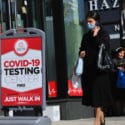
Several US states, many of them in the Midwest, have reported record single-day increases in Covid-19 infections, further evidence that the pandemic is accelerating anew as cooler weather takes hold in many parts of the country. A person walks past a Covid-19 Testing Center in the Borough Park section of Brooklyn. Photo: AFP Indiana, North Dakota, Illinois, Montana, Oklahoma, Utah and Ohio posted daily records today, according to a Reuters analysis, while Florida reported more than 5500 new cases, its highest single-day increase since 15 August. Twenty-eight states have reported their daily record high of Covid-19 cases in the month of October alone. Today, the number of coronavirus deaths reported across the country reached its highest in two months. Increases in deaths tend to trail spikes new infections by several weeks. The US Food and Drug Administration has formally approved Gilead Sciences Inc's antiviral drug remdesivir, which has been in wide use under an emergency authorization, for treating patients hospitalized with Covid-19. It is the first drug officially approved for the disease in the United States. Since the pandemic reached the United States earlier this year, the nation has lost more than 222,000 lives, the world's highest total as well as one of the highest per capita death rates, especially among developed nations. The autumn resurgence and dire predictions that the spread would further accelerate in the cold winter months have once again cast a harsh spotlight on President Donald Trump's handling of the pandemic. The Republican incumbent will debate Democratic challenger Joe Biden today for the last time before the 3 November election. But with less than two weeks before the election, Trump's seemingly dismissive approach to the coronavirus has clouded his re-election prospects, with polls showing Americans losing confidence in his ability to handle the pandemic. A report released on Wednesday by Columbia University estimated that between 130,000 and 210,000 Covid-19 deaths could have been avoided in the United States, calling the federal government's response to the pandemic an "enormous failure". "The weight of this enormous failure ultimately falls to the leadership at the White House - and among a number of state governments - which consistently undercut the efforts of top officials at the CDC and HHS," the report said, referring to the US Centers for Disease Control and Prevention and the Department of Health and Human Services. White House spokesman Judd Deere blamed the pandemic's toll on China, where the virus originated, and the World Health Organization - two favourite Trump targets - and said Trump's actions saved American lives. Last month on the Fox & Friends show, Trump said he would give himself an "A+" for his coronavirus response. Hospitals strained Along with spikes in cases and deaths, the number of Covid-19 patients in US hospitals climbed to a two-month high. There are now over 40,000 hospitalized coronavirus patients across the country, up 33 percent from 1 October, according to a Reuters analysis. In Wisconsin, a Covid-19 hotspot and a pivotal battleground state that could help decide the presidential election, hospitals were feeling the strain from the surge in cases. "We have a tremendous volume of patients in our hospitals right now," Dr Jeff Pothof, an emergency medicine physician at University of Wisconsin Health in Madison, told Reuters. "I think a lot of the hospital systems in Wisconsin are feeling really stretched." Pothof said some medical facilities were beginning to turn additional space into areas where coronavirus patients could be treated. "The good news is we had lots of plans in place," he said. "It's that tightrope of meeting the need of Covid patients but not potentially harming patients who don't have Covid because we need to think about postponing their care." On top of the health toll, the pandemic has weighed heavily on the finances of millions of Americans, who say they are barely getting by as Washington wrangles over another round of financial aid. In Illinois, some residents planned to protest a fresh round of Covid-19 restrictions announced this week by Governor J.B. Pritzker. A petition to the governor posted on change.org by a restaurant owner in St. Charles, Illinois, urged businesses to stay open tomorrow, when Pritzker's restrictions in some counties, including a ban on indoor dining, are set to go into effect. Chicago Mayor Lori Lightfoot today announced a 10pm curfew for bars, restaurants and non-essential businesses in the city for at least the next two weeks starting tomorrow, to help stem the spread of the virus. Lightfoot, in a news conference, said the city is on a path for tougher restrictions in the holiday season, including another stay-at-home order, if the virus spread is not better controlled. - Reuters
As It Happened: Donald Trump And Joe Biden In Final Presidential Debate

As it happened: Donald Trump and Joe Biden in final presidential debate

Democratic presidential candidate Joe Biden has renewed his attacks on President Donald Trump's handling of the coronavirus pandemic in today's final debate. Biden is seeking to bolster his lead in opinion polls with 12 days to go to the election. The televised encounter in Nashville, Tennessee, represents one of the Trump's last remaining opportunities to reshape a campaign dominated by a pandemic that has killed more than 221,000 people in the United States and devastated the economy. "Anyone who's responsible for that many deaths should not remain president of the United States of America," Biden said. Trump, who was far more restrained than at the first debate in September when he aggressively talked over Biden, defended his approach to the outbreak and claimed the worst of the pandemic was in the past. "We're rounding the corner," said Trump, who has played down the virus for months. "It's going away." See how it all unfolded with RNZ's live blog:
US Election Live Updates: Donald Trump And Joe Biden In Final Presidential Debate

US Election live updates: Donald Trump and Joe Biden in final presidential debate

Democratic presidential candidate Joe Biden has renewed his attacks on President Donald Trump's handling of the coronavirus pandemic in today's final debate. Biden is seeking to bolster his lead in opinion polls with 12 days to go to the election. The televised encounter in Nashville, Tennessee, represents one of the Trump's last remaining opportunities to reshape a campaign dominated by a pandemic that has killed more than 221,000 people in the United States and devastated the economy. "Anyone who's responsible for that many deaths should not remain president of the United States of America," Biden said. Trump, who was far more restrained than at the first debate in September when he aggressively talked over Biden, defended his approach to the outbreak and claimed the worst of the pandemic was in the past. "We're rounding the corner," said Trump, who has played down the virus for months. "It's going away." Follow all the latest developments with RNZ's live blog:
Back To Top