skip to Main Content
Flood-hit Vietnam Warned Another Storm Looms

Flood-hit Vietnam warned another storm looms

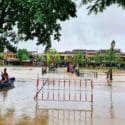
At least 17 people have been killed by floods in Vietnam's central provinces in the past week and 13 are still missing, state media said, as the country braced for another tropical storm. Flooding in the old city of Hoi An, a UNESCO world heritage site, in Quảng Nam province in Vietnam. Photo: AFP In the next few days, the central region should be prepared for another typhoon, Linfa, which will bring more rains and result in more flooding, state broadcaster Vietnam Television (VTV) reported. Footage broadcast by VTV showed fishermen being rescued by coastguard and helicopters as strong winds battered the central Vietnamese coast in the central province of Quang Tri. Floods have cut food supplies to thousands of people. Around 31,000 people have been displaced and more than 33,000 houses submerged and damaged by floods, according to a government report. Houses inundated by floodwaters following heavy rainfall in central Vietnam's Quang Binh province. Photo: AFP The national highway linking northern Vietnam to the south has been flooded, while airlines cancelled some domestic flights, local media report. Vietnam is prone to destructive storms and flooding due to its long coastline. Natural disasters - predominantly floods and landslides triggered by storms - killed 132 people and injured 207 others in the country last year. Roads also turned to rivers and water inundated properties in Thailand's Nakhon Ratchasima province, as residents scrambled to place sandbags and move their belongings to higher ground. In Laos, rising floodwaters have damaged villages and rice fields along the Xepon and Xebanghieng rivers in Savannakhet province with more rain on the way. - Reuters
Can A TB Vaccine From 1921 Save Lives From Covid-19?

Can a TB vaccine from 1921 save lives from Covid-19?

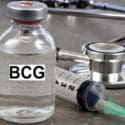
By James Gallagher BBC Health and science correspondent Scientists in the UK have begun testing the BCG vaccine, developed in 1921, to see if it can save lives from Covid. The BCG vaccine was originally developed in 1921 to stop tuberculosis but it may protect against other infections as well. Photo: 123RF The vaccine was designed to stop tuberculosis, but there is some evidence it can protect against other infections as well. Around 1000 people will take part in the trial at the University of Exeter. But while millions of people in the UK will have had the BCG jab as a child, it is thought they would need to be vaccinated again to benefit. Vaccines are designed to train the immune system in a highly targeted way that leaves lasting protection against one particular infection. But this process also causes wide-spread changes in the immune system. This seems to heighten the response to other infections and scientists hope it may even give our bodies an advantage against coronavirus. Previous clinical trials have shown the BCG jab reduced deaths by 38 percent in newborns in Guinea-Bissau, mostly by reducing cases of pneumonia and sepsis. Studies in South Africa linked the vaccine to a 73 percent reduction in infections in the nose, throat and lungs; experiments in the Netherlands showed BCG reduced the amount of yellow fever virus in the body. "This could be of major importance globally," Prof John Campbell, of the University of Exeter Medical School, told the BBC. "Whilst we don't think it [the protection] will be specific to Covid, it has the potential to buy several years of time for the Covid vaccines to come through and perhaps other treatments to be developed." The UK trial is part of the international Brace-study, which is also taking place in Australia, the Netherlands, Spain and Brazil, recruiting 10,000 people in total. It will focus on health and care workers, as they are more likely to be exposed to coronavirus, so researchers will know more quickly if the vaccine is effective. Sam Hilton, a GP from Exeter, is taking part in the trials since, as a doctor, he is at higher risk of catching Covid. "There's quite a good theory BCG might make you less likely to get unwell when you get Covid," he told the BBC. "So I see it as a potential for me to get protected a bit, which means I'm more likely to come to work this winter." Dr Tedros Adhanom Ghebreyesus, the director general of the World Health Organization, is one of the authors of a Lancet article saying the BCG vaccine has the potential to "bridge the gap before a disease-specific vaccine is developed". "This would be an important tool in the response to Covid-19 and future pandemics," the article states. However, the BCG vaccine will not be a long-term solution. Any enhanced resilience to Covid is expected to wane meaning people who were immunised with BCG in childhood would no longer have protection. BCG has not been used in the UK since 2005 because levels of tuberculosis are so low. Additionally, the vaccine will not train the immune system to produce the antibodies and specialist white blood cells that recognise and fight off the coronavirus. End game The big goal remains a vaccine that specifically targets the coronavirus. Ten such vaccines are in the final stages of clinical research, including the one developed at the University of Oxford. Prof Andrew Pollard, from the Oxford Vaccine Group, told the BBC: "The way that most vaccines work is to make a very specific immune response against the germ you are trying to prevent. "But in order to make a good immune response, there is also a rather non-specific 'souping-up' of the immune response and that changes the way the immune system is able to respond in the future. "The problem we have today is I can't tell you what you could do with other vaccines to try to improve your ability to respond to coronavirus because we have no evidence at all." - BBC
Covid-19 Virus 'survives On Some Surfaces For 28 Days'

Covid-19 virus 'survives on some surfaces for 28 days'

The virus responsible for Covid-19 can remain infectious on surfaces such as banknotes, phone screens and stainless steel for 28 days, researchers say. Photo: 123rf The findings from Australia's national science agency suggest SARS-Cov-2 can survive for far longer on surfaces than previously thought. The virus is most commonly transmitted when people cough, sneeze or talk. But experts say it can also be spread by particles in the air, as well as on surfaces such as metal and plastic. See all RNZ coverage of Covid-19 Previous laboratory studies have found that SARS-Cov-2 can survive for two to three days on bank notes and glass, and up to six days on plastic and stainless steel, although results vary. But the latest research from Australian agency CSIRO found the virus was "extremely robust," surviving for 28 days on smooth surfaces such as glass found on mobile phone screens and both plastic and paper banknotes, when kept at 20C (68F), which is about room temperature. In comparison, the flu virus can survive in the same circumstances for 17 days. Establishing how long the virus really remains viable on surfaces enables us to more accurately predict and mitigate its spread, and do a better job of protecting our people," said CSIRO chief executive Dr Larry Marshall. The study, published in Virology Journal, found the virus survived for less time at hotter temperatures; it stopped being infectious within 24 hours at 40C on some surfaces. The experiments were carried out in the dark, as UV light has already been shown to kill the virus. The study's authors said the ability of SARS-Cov-2 to persist on stainless steel at cooler temperatures could explain outbreaks of Covid-19 at meat processing and cold storage facilities. Thousands of workers have tested positive at meat processing factories and abattoirs around the world. Other reasons previously suggested include close working conditions, cold and damp environments and the need to shout over noisy machinery. The CSIRO researchers also say their findings support previous research suggesting the virus can survive on fresh and frozen food. The World Health Organization says: "There is currently no confirmed case of Covid-19 transmitted through food or food packaging." But it does list a number of precautions you can take to avoid cross-contamination. -BBC
Trump 'no Longer A Covid Transmission Risk' – White House

Trump 'no longer a Covid transmission risk' – White House

US President Donald Trump is no longer a Covid transmission risk to others, the White House physician has said. Photo: AFP / 2020 Getty Images Sean Conley's memo is the first update on Trump's health since Thursday. Earlier on Saturday the president delivered a speech in front of cheering supporters at the White House in his first public appearance since being hospitalised with the virus. There had been concerns that he might still be contagious following his three-day hospital stay. The doctor's memo said the latest tests on the president revealed there was "no longer evidence of actively replicating virus", and that his viral load was "decreasing". Trump no longer needs to isolate, his doctor says pic.twitter.com/lQQ6KRANle — David S. Joachim (@davidjoachim) October 11, 2020 However, the statement did not say whether Trump had tested negative for Covid-19. In the memo, Dr Conley said President Trump had been given sensitive lab tests that detect how much of the virus is still in his system. "This evening I am happy to report that in addition to the President meeting [Centers for Disease Control and Prevention] criteria for the safe discontinuation of isolation, this morning's Covid PCR sample demonstrates, by currently recognised standards, he is no longer considered a transmission risk to others," he said. Trump first started showing symptoms of coronavirus 10 days ago, and was admitted to Walter Reed Medical Center a day later, on 2 October. While there he was treated with - among other medication - dexamethasone, a steroid medication usually only used on people who are seriously or critically ill with the virus. Dr Conley's latest update comes after President Trump told a crowd at a White House event that he was "feeling great". He has also said that he is no longer taking any medication against Covid-19. The event on Saturday was officially a "peaceful protest", but looked, critics said, much like a Trump campaign rally. His rival in next month's presidential election, Joe Biden, has been campaigning in Pennsylvania. He said his "heart goes out" to all those families who have lost someone they love to coronavirus. Polling suggests Biden has a single-digit lead over Trump and an ABC News/Ipsos poll found that just 35 percent of Americans approved of how Trump has handled the coronavirus crisis. More than 214,000 Americans are known to have died of Covid-19. White House physician Sean Conley said Trump is "no longer considered a transmission risk to others". Photo: AFP What were the concerns over the event? Questions over safety were raised after a gathering to unveil Trump's nominee to the Supreme Court resulted in at least 11 people subsequently testing positive for Covid-19 - including the president. Top US infectious disease expert Dr Anthony Fauci described it as "a super-spreader event". Senior Democratic Congressman Adam Schiff said it was "morally bankrupt" for the president to hold "another super-spreader rally" at the White House. The White House said in advance of Saturday's event that those attending would be required to undergo a temperature check and wear face masks, and encouraged to practice social distancing. However, images from the event showed several hundred people packed closely together. The gathering to unveil Trump's nominee to the Supreme Court has been criticised with at least 11 people who attended subsequently testing positive for Covid-19. Photo: AFP The president's campaign team has also said he is planning to attend a "big rally" in Florida - a battleground state in next month's presidential election - on Monday, followed by trips to Pennsylvania and Iowa. Biden expressed disbelief at the president's plans to hold rallies and criticised the Trump administration's lax stance on mask use as reckless. "I wouldn't show up unless you have a mask and can distance," Biden said, speaking while campaigning in Las Vegas on Friday. Meanwhile, ethics experts say that hosting political events at the White House, as well as being against long-standing convention in the US, could violate federal law. The Hatch Act, dating from 1939, bars federal employees from being involved in campaign activities while on duty. While the president and vice-president are exempt, most White House employees are not. On Thursday Sean Conley said that it would be safe for Trump to return to public engagements on Saturday [10 October] as that would mark "day 10" since his diagnosis on Thursday 1 October. Following his diagnosis, Trump spent three nights in hospital and was treated with the steroid dexamethasone, the antiviral drug remdesivir and a cocktail of manufactured antibodies made by the company Regeneron. The CDC recommends self-isolation for at least 10 days after coronavirus symptoms first appear, with more severe illness, such as that requiring hospital treatment, potentially needing up to 20 days. - BBC
Man Shot Dead At Dueling Denver Rallies, Suspect In Custody

Man shot dead at dueling Denver rallies, suspect in custody

A man was fatally shot on Saturday (local time) during dueling protests by left-wing and right-wing groups in downtown Denver, and police arrested a suspect they said was working as a private security guard. File photo Photo: Photo Credit:Fer Gregorywww.fergregory.com/ 123rf An NBC News affiliate, KUSA-TV, said on its website that the man taken arrested for the shooting was a security guard hired by the television station to provide protection to its crew. "It has been the practice of (KUSA) for a number of months to hire private security to accompany staff at protests," the station said. The shooting took place in a courtyard at the Denver Art Museum during a so-called Patriot Rally that was met by counter-protests by groups who dubbed their rally a BLM-Antifa Soup Drive. Denver Police Chief of Investigations Joe Montoya would not confirm if the suspect worked for the station. Neither the victim nor the suspected shooter has been identified by authorities. Update: Further investigation has determined the suspect is a private security guard with no affiliation with Antifa. Additional information will be released as it becomes available. — Denver Police Dept. (@DenverPolice) October 11, 2020 Montoya said police kept the two groups separated, and there were no other arrests during the competing rallies. A photographer for the Denver Post captured an image of a man spraying a chemical agent at another man with a drawn hand gun.
Natural Fibres More Prevalent In Ocean Than Plastic – Study

Natural fibres more prevalent in ocean than plastic – study

Rubbish made from natural fibres could be polluting oceans at far greater rates than plastic, an expert on marine plastics says. A world champion free diver in the ocean off the coast of Istanbul to draw attention to the problem of pollution in the ocean. Photo: AFP Professor Peter Ryan of the University of Cape Town has recently had a study published in New Scientist. It showed that the large majority of the microfibres polluting our oceans are not plastic - which has long been assumed - but actually natural fibres like cotton, wool and other celluloses, such as linen and flax. Professor Ryan told Sunday Morning that this was observed by one of his colleagues during an Antarctic circumnavigation expedition, and it was surprising because the Southern Ocean is by far the cleanest ocean in terms of plastic pollution, he said. The fibres are identified by precise "tedious' work involving the use of a small beam of infra-red light shone on the tiny fibres. Only 8 percent of the fibres recovered from the Southern Ocean were plastic. "The natural fibres that we've been putting out for much longer than we've been putting out synthetic fibres are also accumulating in the ocean for some reason. We don't understand why that might be... "Their densities in the ocean are much much higher than so called micro plastics." The biggest concern for marine life was the natural fibres' impact of clogging of filter-feeders which adapted to deal with non-food items in their filter stream so it was a moot point what the full impact was.    Putting plastic items into rivers Ryan's own recent research attracted controversy because it involved putting plastic items into rivers and tracing them. He said most washed ashore - so if beaches are regularly cleaned, especially around rivermouths, it can have a large influence on how much plastic ends up in the ocean. "The plastics we put deliberately into rivers to see where they go we get typically between 80 and 100 percent recovery rates, admittedly from relatively small rivers. If you've got a really big river it might be a different story. "That means that if you clean beaches regularly around river mouths you can make quite a significant impact on the amount of plastic getting out into the ocean." Ryan said close to land, flexible packaging was the most visible sight but the items changed further out. "Interestingly, what we find in terms of washing up on beaches, buoyancy is very important, so the more buoyant an item is the more likely it will wash up on shore." Tourists generate more trash in small island developing states - and 80% ends up in the ocean. Photo: Oleg Doroshenko/123RF He said the evidence was the vast majority of plastic is still in larger form which was good news but once it degraded into micro-plastic it was much harder to deal with.   'Missing plastics' debate Some scientists have estimated that between 5 million and 12 million tonnes of plastic was moving from land into the sea. Ryan said 250,000 to 300,000 tonnes were estimated to be drifting on the surface and while this was an unacceptably large amount, it was a vast difference to some scientists' figures. It had become "the missing plastic plastic debate" with scientists trying to explain the difference. "We're coming to the conclusion in South Africa, at least, that the missing plastic doesn't exist in the first place." He had recently been on Pitcairn Island and found New Zealand trays, used in the fishing industry that were all dated pre-2000, while all those that had washed up on the island that were from South America were a lot more recent. This suggested environmental progress in this country's fishing industry, he said.
Alarm As Covid Cases Soar Across Europe And The US

Alarm as Covid cases soar across Europe and the US

France has recorded its highest ever daily increase in Covid-19 cases while new cases hit a two-month high in the US, as the pandemic tests governments in many parts of the world. Gym fans in Paris march towards the French Health Ministry to protest at the closure of their facilities due to the pandemic. Photo: AFP More than 58,000 infections were reported in the United States as hospitalisations in the Midwest hit record levels for a fifth day in a row, according to a Reuters analysis. Ten of the 50 states reported record one-day rises in cases, including the Midwestern states of Indiana, Minnesota, Missouri and Ohio. Wisconsin and Illinois recorded over 3000 new cases for a second day in a row - a two-day trend not seen even during the height of the previous outbreak in the spring, according to Reuters data. A member of the National Guard tests a motorist in Wisconsin, which has one of the highest Covid-19 rates in the US. Photo: AFP The Western states of Montana, New Mexico and Wyoming also reported their biggest one-day jumps in cases, as did Oklahoma and West Virginia. Nineteen states have seen record increases in new cases so far in October. While deaths nationally continue to trend downward, the United States is losing on average 700 lives a day. Three states reported a record one-day increase in fatalities: Arkansas, Missouri and Montana. Health experts caution that deaths are a lagging indicator and usually rise weeks after cases climb. The US death toll now stands at 213, 037. The number of people who succumb to Covid-19 is expected to accelerate as the US enters winter. More than 26,000 cases in one day in France The number of new coronavirus infections in France jumped by over 26,000 in one day for the first time since the start of the epidemic, health ministry data showed. The ministry reported 26,896 new infections, taking the cumulative total to 718,873 since the start of the year. The number of deaths increased by 54 to 32,684. Ireland has reported 1012 new cases, the highest number in a day since the start of the pandemic and almost double the average for the past week. The surge, after a week in which regions of neighbouring Northern Ireland reported some of the highest infection rates in Europe, is likely to increase pressure on the government to impose additional restrictions. A woman leaves a train in Dublin, Ireland. The country's cases are on the rise again. Photo: AFP Chief Medical Officer Tony Holohan said in a statement that he was "very worried about the numbers we are seeing and how quickly they are deteriorating". The government last Monday banned indoor restaurant dining nationwide and limited the number of visitors to people's homes. But it rejected a recommendation from public health officials to impose a much stricter lockdown. The United Kingdom recorded 15,166 new cases, a rise on the 13,864 cases reported the day before, government data showed. A further 81 people died after testing positive for the virus within 28 days, the latest daily figures showed. Spain's Socialist Prime Minister Pedro Sanchez appealed for unity after the far-right Vox party said it would take legal action against a partial lockdown imposed on Madrid to contain one of Europe's worst outbreaks. Poland announced new measures to curb the pandemic after reporting record infections for a fifth straight day, but it stopped short of introducing mandatory distance learning for schools. Russia, Portugal and the Netherlands reported record daily case increases. Africa needs billions The economic damage as well as the health costs caused by coronavirus has left Africa needing £920 billion ($NZ1798b) over the next three years, the International Monetary Fund has said. IMF chief Kristalina Georgieva said the world "must do more to support Africa to [recover]... from this crisis". Africa has had fewer Covid infections and deaths than most other continents. But the World Bank says 43 million more Africans are at risk of extreme poverty as a result of the pandemic. A girl collects a food parcel from a food bank in Johannesburg. Photo: AFP The economic impact is reversing the trend in recent years of strong growth in Africa, as jobs have been lost and family incomes have been reduced by 12 percent, Georgieva told a virtual IMF meeting. To help soften the blow, many African governments have introduced mitigation policies which have cost 2.5 percent of GDP, she added. Meanwhile, mask wearing has become mandatory in public in the Iranian capital, Tehran, and violators will be fined, President Hassan Rouhani announced as the country battles a third wave of coronavirus infections. - Reuters
Trump Holds First Public Event Since Covid Diagnosis

Trump holds first public event since Covid diagnosis

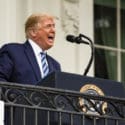
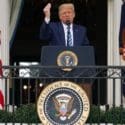
US President Donald Trump has made his first public appearance since returning to the White House from a three-day stay in hospital for Covid-19, even as his aides remained silent on whether he is still contagious. Photo: AFP The maskless president seemed to be back on the campaign trail for the first time since his hospital stay, though the event was officially a "peaceful protest". The president, who says he is no longer taking medicines against Covid-19, told the crowd he was "feeling great". Trump also said a vaccine would be ready "very, very soon". American science and medicine would "eradicate the China virus", the president said. Speaking without hesitation, Trump appeared to be back to his usual rallying form, boasting about his record and hurling unsubstantiated allegations against his opponents as a packed crowd of supporters chanted, "We love you." Trump, who has campaigned on a law-and-order theme during recent months of sometimes violent protests for racial justice, told the gathering that the Republican Party had the support of America's police forces. "We have law enforcement watching," he said. "We're on the side of right." Supporters, many not wearing masks, listen to the president's speech. Photo: AFP It is just over a week since Trump announced he had tested positive for coronavirus. He said yesterday he was awaiting a fresh test result, and the White House has not provided an update on his health since Friday. Trump's doctors have cleared him to hold public events, 24 days before he faces Democratic rival Joe Biden in the presidential election on 3 November. Today's White House gathering was partly organised by a foundation called "Blexit", which aims to get black and Latino voters to support the Republican party. The president railed against his presidential rival Joe Biden, describing the Democrats' programme as "beyond socialism - Communist, that's about right". Trump repeated his previous assertion that he had done more for the black community than any president since Abraham Lincoln. Trump has been criticised for using the White House for political events, such as when he accepted his party's renomination for president from the South Lawn back in August. The president says he is planning to attend a "big rally" in Florida - a battleground state in next month's presidential election - on Monday. Polling suggests Biden has a single-digit lead over Trump while an ABC News/Ipsos poll found that just 35 percent of Americans approved of how Trump has handled the coronavirus crisis. However US presidential elections are in practice determined in key states where both candidates stand a chance of winning, rather than by the total number of votes won, as Hillary Clinton found to her cost in 2016. Protesters made their feelings clear outside the perimeter of the White House. Photo: AFP What is the latest on the president's health? Trump told Fox News that he was feeling "really, really strong" and was no longer on medication, having had his "final doses of just about everything". On Friday the president's doctor Sean Conley said that it would be safe for him to return to public engagements yesterday as that would mark "day 10" since his diagnosis on Thursday 1 October. Following his diagnosis, Trump spent three nights in hospital and was treated with the steroid dexamethasone, the antiviral drug remdesivir and a cocktail of manufactured antibodies made by the company Regeneron. The US Centres for Disease Control (CDC) recommends self-isolation for at least 10 days after coronavirus symptoms first appear, with more severe illness, such as that requiring hospital treatment, potentially needing up to 20 days. What's happening at the White House? With just over three weeks to go until the election on 3 November, Mr Trump is keen to get back on the campaign trail. All attendees at today's event on the South Lawn were required to wear masks, given temperature checks and encouraged to social distance, said the White House. "We're making sure we're taking precautions so that those in attendance are screened before they come in," White House communications director, Alyssa Farah, told CBS News. "The president's at a great distance, he's going to be up on the balcony, and very, very briefly, address the supporters there." Biden who has tested negative for Covid-19 again today expressed disbelief at the president's plans to hold rallies and criticised the Trump administration's lax stance on mask use as reckless. "I wouldn't show up unless you have a mask and can distance," Biden said, speaking while campaigning in Las Vegas. - BBC / Reuters
N Korea Reveals 'monster' New Intercontinental Ballistic Missile At Parade

N Korea reveals 'monster' new intercontinental ballistic missile at parade

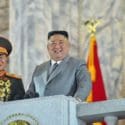
North Korea has unveiled previously unseen intercontinental ballistic missiles at a rare night-time military parade that showcased the country's long-range weapons for the first time in two years. Kim Jong Un, centre, enjoys the parade from a balcony. Photo: AFP It is the country's first parade in two years and comes just weeks ahead of the US presidential election. Analysts said the missile, which was shown on a transporter vehicle with 11 axles, would be one of the largest road-mobile intercontinental ballistic missiles (ICBMs) in the world if it becomes operational. "This missile is a monster," said Melissa Hanham, deputy director of the Open Nuclear Network. A screen grab of the new ICBM. Photo: AFP Also displayed were the Hwasong-15, which is the longest-range missile ever tested by North Korea, and what appeared to be a new submarine-launched ballistic missile (SLBM). No foreign media or foreigners were allowed to attend, so analysts are relying on edited state-media footage which is being released to assess the parade. Ahead of the parade, which was held to mark the 75th anniversary of the founding of its ruling Workers' Party, officials in South Korea and the United States said Kim Jong Un could use the event to unveil a new "strategic weapon" as promised earlier this year. A senior US administration official called the display of the ICBM "disappointing" and called on the government to negotiate to achieve a complete denuclearisation. The parade featured North Korea's ballistic missiles for the first time since Kim began meeting with international leaders, including US President Donald Trump, in 2018. Photo: AFP "We will continue to build our national defence power and self-defensive war deterrence," Kim said, but vowed that the country's military power would not be used preemptively. He made no direct mention of the United States or the now-stalled denuclearisation talks. Kim blamed international sanctions, typhoons, and the coronavirus for preventing him from delivering on promises of economic progress. "I am ashamed that I have never been able to repay you properly for your enormous trust," he said. "My efforts and devotion were not sufficient to bring our people out of difficult livelihoods." The video showed Kim make an appearance as a clock struck midnight. Dressed in a grey suit and tie, he waved to the crowd and accepted flowers from children while surrounded by military officials in Pyongyang's recently renovated Kim Il Sung Square. Kim spoke for nearly half an hour, often visibly sweating despite the cool morning air, shedding tears when thanking the troops, and smiling and laughing as he watched the missiles. The parade was highly choreographed, with thousands of troops marching in formation, displays of new conventional military equipment including tanks, and fighter jets launching flares and fireworks. Photo: AFP Experts said that the new, larger ICBM is likely designed to carry multiple independent reentry vehicles (MIRVs), allowing it to attack more targets and making interception more difficult. The new ICBM is likely intended to dispel doubts about North Korea's ability to strike the continental United States, and an implicit threat that they are preparing to test the larger missile, said Markus Garlauskas, a former US intelligence officer for North Korea. "If the Hwasong-15 could carry a 'super-large' nuclear warhead to anywhere in the US, then the natural question is what can this larger missile carry?," he said. Photo: AFP Coronavirus measures Kim became visibly emotional as he thanked the troops for their sacrifice in responding to natural disasters and preventing a corovonavirus outbreak. He said he was grateful that not a single North Korean had tested positive for the disease, an assertion that South Korea and the United States have previously questioned. While attendees at other celebratory events were shown wearing masks, no one at the parade appeared to be wearing them. Kim said he hoped that North and South Korea would join hands again when the global coronavirus crisis is over. South Korean officials said this week that Kim could use the event as a "low intensity" show of power ahead of the U.S. presidential election on 3 November, as denuclearisation talks with Washington have stalled. In a congratulatory message to Kim for the anniversary, Chinese President Xi Jinping said he intended to "defend, consolidate and develop" ties with North Korea, its state media said yesterday. - Reuters
How Australia Is Coping With Covid-19

How Australia is coping with Covid-19

Investigative journalist Dr Norman Swan says the Covid-19 pandemic in Australia saw "superspreading social networks" that led to the situation getting out of control. Dr Norman Swan. Photo: Janie Barrett Swan was one of the country's first medically trained journalists - training in medicine at the University of Aberdeen, in Scotland, where he was born and raised. He is also the father of Jonathan Swan - a journalist who works as a political reporter in Washington DC, and recently gained fame for grilling President Donald Trump in an interview. He's the host of the ABC's Health Report, and Coronacast, a podcast dedicated to informing Australians on the latest in the Covid-19 pandemic. He joined Kim Hill to discuss the latest developments in how the Covid-19 pandemic is affecting Australia and when we might see a vaccine rolled out. In July, Victoria's Covid-19 cases rose dramatically and remained stubbornly high. By early August, a stage four lockdown was imposed across Melbourne, while the rest of Victoria moved to stage three. Rather than an individual "superspreader" being the cause of the outbreak, Swan said it was more of a case of "superspreading social networks" that led to the situation getting out of control. "You had people going out into the north-west corridor of Melbourne and into large family groups," he said. "Friendly, cohesive families where people were working all over Melbourne, living in relatively overcrowded circumstances, they're working in abattoirs and so on, and they go out and spread it." He said the outbreak in Victoria and another recent outbreak in Sydney showed the virus had the potential to "go underground". An outbreak of Covid-19 in Victoria led to a six week lockdown in Melbourne. Photo: AFP "In Washington state at the beginning of it, it went underground for about six weeks, spreading in probably asymptomatic populations," he said. "When testing rates go down you lose control of the virus." The outbreak in Sydney was discovered when virus particles were found during testing of the sewage system. Using the positive samples, officials were able to trace the virus to communities in south-west Sydney, where it was discovered that cases of the Covid-19 had been missed. Swan said that contact tracing was much better and more transparent in New South Wales than it was in Victoria and this had meant they were able to get the outbreak under control. "It one sense it was bad news the other day when they had 12 cases, now there's the sense that it was good news that very quickly after finding it in the sewage, they're finding new cases and the testing rate goes up 5000 a day to 12 or 15,000 a day," he said. Sewage testing was one way to manage the pandemic going forward, Swan said, as well as mass testing of communities using new rapid testing technology. "It's essentially mass screening, where your shopping malls, pharmacies, general practictioners surgeries, you have these rapid tests where you don't need pathology, it's a bit like a pregnancy test. "The other way is that you monitor the sewage for viral fragments. You've got to do it really carefully because you can make mistakes, you can wrongly pick up viral fragments that you think are SARS but they're not." He said the success of sewage testing also depended on how accurate the sewage drainage system was, as to whether the infection could be traced to a particular area, which could be then mass tested. Swan believed that New Zealanders and Australians would be starting to be vaccinated against Covid-19 in a year's time, but that it would likely be an annual immunisation. "As to mutation, no one knows how long the immunity lasts, you hear about reinfection cases and they're real, but it's not massive numbers of them," he said. "My best guess is about a year, so we're going to talk about annual immunisations forevermore." While the SARS-COV2 virus did not mutate deliberately, Swan said it had changed its behaviour in response to us. "We've socially distanced globally to some extent and mutations of the virus have preferentially survived to get around our social distancing," he said. "So this D614G mutation that they talk about is almost a more contagious form of the virus, it's not more virulent and it's survived preferentially." This mutation was found in the spike protein, which is the part of the virus that connects to the body - which Swan said was a worry for vaccine development. "Vaccines are all using the Wuhan virus from earlier this year, so are these vaccines going to be up to the task of the new mutations, which are in exactly the same spot that you want to attack with the vaccine?" However, he said an Australian study on ferrets infected with the mutated virus found in the country, as well as earlier samples from Wuhan, found that the immune response looked like it was "deep enough and broad enough at the moment to cope with the mutations". If a vaccine was developed, Swan said he thought that we might be able to "start relaxing" by Christmas next year.  But this was complicated by "vaccine nationalism", where countries were buying up large stocks of vaccines. "It's important for governments to join COVAX, which is an international project organised by Gari, a vaccine initiative where countries buy in, they donate to Covax, in return for which they are guaranteed supplies from successful vaccines, but also some of the money is spent getting vaccines to low income countries. "That's why it's going to be this time next year, where if we get one out early 2021, it's just going to be a while before you get enough vaccine around to immunise the general community."

Back To Top