skip to Main Content
Nobel Prize Winner Appeals To Billionaires To Aid World's Hungry

Nobel prize winner appeals to billionaires to aid world's hungry

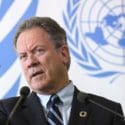
The head of the World Food Programme is using his new platform to tell billionaires to share their wealth that has increased during Covid-19 to help the world's hungry. David Beasley says the Nobel Peace Prize is a clarion call "to the billionaires who are making billions off Covid". Photo: AFP The United Nations' World Food Programme, which has coordinated medical logistics during the coronavirus pandemic, won the Nobel Peace Prize last night in what its boss said was a call to action that no one should go hungry with the wealth in the world today. The Rome-based organisation says it helps some 97 million people in about 88 countries each year and that one in nine people worldwide still does not have enough to eat. WFP executive director David Beasley said the prize was a clarion call "to our donors around the world" and "to the billionaires who are making billions off Covid". Beasley has expressed his elation at winning the Nobel Peace Prize - saying members of his team are working in the most difficult places in the world and really deserve the prize. "It's a call to action to not let anyone die from starvation, it's a call to action that we've got to save and help our friends, our brothers, our sisters around the world," he said. "All the wealth in the world today no one should go to bed hungry, much less starve to death." Only this week, a report by UBS and PwC found billionaire wealth had reached a record high during the pandemic, helped by a rally in stock prices. "The need for international solidarity and multilateral cooperation is more conspicuous than ever," Berit Reiss-Andersen, chairwoman of the Norwegian Nobel Committee, told a news conference. The head of the awards committee called the WFP a driving force in efforts to prevent the use of hunger as a weapon of war and conflict, and said the Covid-19 pandemic, which the WFP says could double hunger worldwide, had made it even more relevant. At one point at the height of the pandemic, as airlines were cutting back flights, the WFP was running the largest operational airline in the world, a WFP spokesman said. WFP runs a logistics service that has dispatched medical cargoes to over 120 countries throughout the pandemic to help governments and health partners fighting Covid-19. It has also provided passenger services to ferry humanitarian and health workers where commercial flights were unavailable. "Until the day we have a medical vaccine, food is the best vaccine against chaos," the Nobel committee said in its citation. Response during lockdowns Beasley, travelling in Niger, posted a video statement on social media praising the "WFP family". "They are out there in the most difficult, complex places in the world, where there's war, conflict, climate extremes; it doesn't matter. They are out there and they deserve this award ...," he said. In Geneva, WFP spokesperson Tomson Phiri told reporters: "When everything went into shutdown mode, the World Food Programme was there. When everyone was leaving and we were going into lockdowns, the World Food Programme had to provide the logistical support that the world deserved, that the world needed." A child holds a sibling while carrying a food parcel collected from a charity in Johannesburg. There are fears the pandemic could double hunger rates worldwide. Photo: AFP Dan Smith, director of the Stockholm International Peace Research Institute, said the Norwegian Nobel Committee had wanted to send a message of both hope and "support for international cooperation". "Hunger, like climate change, the pandemic and other issues, is a world problem that can only be properly addressed through cooperation," he said. "Unfortunately, in too many quarters, especially among the great powers, there is a declining appetite for cooperation." He noted that, after declining for several decades, world hunger had been on the rise again since 2016. This year, there were 318 contenders - 211 individuals and 107 organisations. Among them were Greta Thunberg, Jacinda Ardern, WHO, the European Court of Human Rights, Julian Assange, Edward Snowden and Chelsea Manning, the "people of Hong Kong" and jailed Saudi activist Loujain al-Hathloul. The Norwegian Nobel Committee plans to go ahead with an award ceremony, albeit in a reduced format due to the pandemic, in Oslo on 10 December, the anniversary of the death of Swedish industrialist Alfred Nobel, who founded the awards in his 1895 will. The Nobel Peace Prize is worth 10 million Swedish crowns, or around $NZ1.7 million. - Reuters

UN World Food Programme Wins 2020 Nobel Peace Prize

UN World Food Programme wins 2020 Nobel Peace Prize

The United Nations food agency, the World Food Programme (WFP), won the Nobel Peace Prize for its efforts to combat hunger and improve conditions for peace in conflict-affected areas. People line up to receive food aid distributed by the World Food Programme at one of the camps in Mogadishu in 2009. (File photo). Photo: AFP The Rome-based organisation says it helps some 97 million people in about 88 countries each year and that one in nine people worldwide still does not have enough to eat. "The need for international solidarity and multilateral cooperation is more conspicuous than ever," Chairwoman Berit Reiss-Andersen of the Norwegian Nobel Committee told a news conference. The prize is worth 10 million Swedish crowns (approx $NZ1.7m) and will be presented in Oslo on 10 December. This year, there were 318 contenders - 211 individuals and 107 organisations. Among them were Greta Thunberg, Jacinda Ardern, WHO, the European Court of Human Rights, Julian Assange, Edward Snowden and Chelsea Manning, the "people of Hong Kong" and jailed Saudi activist Loujain al-Hathloul. Ardern was also nominated last year for the work she did to unite the country following the 15 March mosque attacks in Christchurch. In the past, three New Zealanders have won the Nobel Prize for Science. They include Ernest Rutherford chemistry, 1908; Maurice Wilkins, physiology or medicine, 1962; and Alan MacDiarmid, chemistry, 2000. The 2019 Nobel Peace Prize was presented to Ethiopian Prime Minister Abiy Ahmed who made peace with bitter foe Eritrea. A Norwegian lawmaker has nominated Donald Trump for the Nobel Peace Prize for 2021 for helping broker a deal between Israel and the United Arab Emirates, the second time he has put forward the US president for the honour. How the winner is decided The prize should go to the person "who has done the most or best to advance fellowship among nations, the abolition or reduction of standing armies, and the establishment and promotion of peace congresses", according to the will of Swedish industrialist Alfred Nobel, the inventor of dynamite, who founded the awards. Thousands of people can propose names: members of governments and parliaments; current heads of state; university professors of history, social sciences, law and philosophy; and former Nobel Peace Prize laureates, among others. The Norwegian Nobel Committee, which consists of five individuals appointed by the Norwegian Parliament. They are often retired politicians, but not always. The current committee is led by a lawyer and includes two academics. They are all put forward by Norwegian political parties and their appointments reflect the balance of power in parliament. - Reuters
US Justice Department Sues Yale For Discriminating Against Asians, Whites

US Justice Department sues Yale for discriminating against Asians, whites

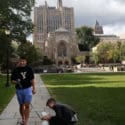
The US Department of Justice has sued Yale University, accusing the Ivy League school of illegally discriminating against Asian and white applicants in undergraduate admissions. Photo: GETTY via AFP The lawsuit escalates the Trump administration's push against affirmative action in admissions to elite universities, after it publicly supported a lawsuit by Asian-American students accusing Harvard University of discriminating against them. The Justice Department said Asian-American and white applicants were typically only one-eighth to one-fourth as likely to win admission to Yale as similarly qualified Black applicants. In a complaint filed in the federal court in New Haven, Connecticut, where Yale is based, the Justice Department said Yale's practices violate Title VI of the Civil Rights Act of 1964. Yale must comply with that law to receive federal funding, which the government said includes more than $630 million annually from the Department of Health and Human Services alone. Applicants must be "judged by their character, talents, and achievements and not the colour of their skin," said Eric Dreiband, an assistant attorney general for civil rights. "To do otherwise is to permit our institutions to foster stereotypes, bitterness, and division." Thursday's lawsuit followed a two-year investigation into Yale's practices. "Yale does not discriminate against applicants of any race or ethnicity," and will not change its admissions policies because of the "baseless" lawsuit, its President Peter Salovey said. "We look forward to defending these policies in court." The school has 6057 undergraduates, and typically accepts just 6 percent of applicants for admission. Harvard is awaiting a decision from the federal appeals court in Boston on its admissions practices. A federal judge upheld them last year after finding the school had no workable "race-neutral alternatives" to build a diverse student body. The US Supreme Court has allowed race to be used in college admissions to promote diversity in the classroom. Opponents of affirmative action hope the court's conservative majority might end the practice in a future case. - Reuters
Blaze Engulfs 33-storey South Korean Tower Block

Blaze engulfs 33-storey South Korean tower block

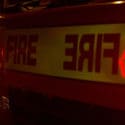
Firefighters in South Korea are struggling to completely put out a fire at a 33-storey tower block in the southern South Korean city of Ulsan, local media said. File photo Photo: RNZ / Claire Eastham-Farrelly Hundreds were forced to evacuate and more than 80 people were sent to hospital for smoke inhalation. The blaze reportedly started at about 23:00 local time (14:00 GMT) on Thursday and was spread by high winds. On Friday morning, it had still not been completely extinguished. The South Korean news agency said strong winds made it difficult to control the fire. The fire broke out between the 8th and 12th floors of the Samhwan Art Nouveau commercial and residential building, which has about 120 households and shopping units. One eyewitness told Yonhap news agency: "Suddenly, the fire came up. The windows were broken and the living room and bedroom lit up." Another told YTN News of "exterior material", possibly insulation, attached to the outside of the building that caused the fire to spread quickly. Authorities have not confirmed what caused the fire. - BBC
Trump Ready To Return To Public Life, Says Doctor

Trump ready to return to public life, says doctor

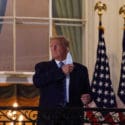
US President Donald Trump has completed his course of treatment for Covid-19 and can return to public engagements this weekend, his physician has said. Photo: AFP Dr Sean Conley said the president had responded "extremely well" to medication and had "remained stable". Trump earlier pulled out of next Thursday's TV debate with Democratic rival Joe Biden after organisers said it would have to be a virtual event. The move sparked a row about how and when further debates would take place. In a memo released by the White House on Thursday evening, Dr Conley said Trump was displaying no signs "to suggest progression of illness". "Saturday will be day 10 since [last] Thursday's diagnosis, and based on the trajectory of advanced diagnostics the team has been conducting, I fully anticipate the president's safe return to public engagements at that time," the memo added. Earlier, Conley said that if the president's condition remained the same or improved throughout the weekend and into Monday, "we will all take that final, deep sigh of relief". What about the presidential debates? On Thursday, the commission organising the second presidential debate in Miami on 15 October said it would have to take place remotely because Trump had tested positive for coronavirus. In response, Trump said he was "not going to waste my time on a virtual debate". At the moment, it appears a debate could take place on 22 October, although in what form remains to be seen. The first presidential debate on 29 September had descended into insults and interruptions. The vice-presidential debate, held on Wednesday night between Mike Pence and Kamala Harris, was a far more measured affair. The US election will be held on 3 November. Latest opinion polls suggest Biden has a high single digit lead nationally, but the outcome is often decided in battleground states where the races can be much closer. Six million ballots have already been cast in early voting. How did the debate row unfold? It began with the Commission on Presidential Debates announcing candidates would take part in the Miami debate "from separate remote locations... to protect the health and safety of all involved". This infuriated the president who, in a phone-in interview with Fox Business Channel, said he was not prepared to "sit behind a computer, ridiculous". Joe Biden said the president "changed his mind every second" and his campaign team added that Trump "clearly does not want to face questions from the voters". The Trump campaign answered back, with manager Bill Stepien saying the commission's decision to "rush to Joe Biden's defence" was "pathetic," adding that Mr Trump would hold a rally instead on the same date. The Biden team then proposed the town-hall style debate, set for Miami, should go ahead on 22 October instead. This brought a brief moment of agreement, on the date at least. However, the Trump team said there should be a third face-to-face debate - on 29 October, just five days before polling. But the Biden team said that debates could only be scheduled on the three dates already agreed: 29 September, 15 October and 22 October. On 15 October, Biden will now take part in his own primetime event on ABC answering questions from voters. Quite what format any Biden-Trump debate takes now is hard to pin down. What else did Trump say on Fox? Addressing the issue of his health, Trump said: "I'm back because I'm a perfect physical specimen." He said he had stopped taking most "therapeutics" but was still taking steroids and would be tested for Covid again "soon". But although his doctor has said he now has no symptoms, questions still remain about when the president first became infected and whether he could still be contagious. And although the names of many people who have interacted with the president and tested positive are now known, it remains unclear just how many were exposed at the White House. New Covid safety measures are in place there. One of the top Republicans, Senate majority leader Mitch McConnell, said on Thursday that he had not been to the White House since 6 August because its approach to handling Covid with social distancing and masks was "different from mine and what I suggested we do in the Senate". Trump said on Thursday that "somebody got in and people got infected" but gave no more details. A gathering on 26 September announcing Trump's Supreme Court pick has been seen as a possible "super-spreader" event, with several attendees known to have tested positive. - BBC
Back To Top