skip to Main Content

Australian government wants to boost manufacturing after learning lessons of Covid-19

The Australian government will pump close to $A1.5 billion into the manufacturing sector, outlining plans to shore up local production and strengthen supply chains in the wake of Covid-19. The Australian government's investment will prioritise medicines and medical products. Photo: AFP / Sigrid Gombert / Cultura Creative Under the manufacturing strategy unveiled on Wednesday, $A107 million will be dedicated to strengthening supply lines for essential goods. That money will prioritise medicines and medical products, with the goal of boosting Australia's ability to provide critical supplies for itself during surges in demand. A separate $A1.3b will spent over the next four years, starting in the first half of 2021, to help manufacturers upscale their businesses, with additional focus on turning concepts into finished products, and integrating into global supply chains. The money will be distributed to businesses willing to co-invest with the government in six priority areas: Resources technology and critical minerals Food and beverages Medical products Recycling and clean energy Defence Space In addition, $A52m will be spent on a second round of the government's manufacturing modernisation fund. Australia's PM says manufacturing jobs changing Recent research from the The Australia Institute's Centre for Future Work ranked Australia lowest among OECD countries in terms of manufacturing self-sufficiency. Industry Minister Karen Andrews said the government and industry had learned lessons from the Covid-19 pandemic. "Our manufacturers have risen to the challenge to deliver during Covid-19 and now we're unlocking their potential to deliver for our future," she said. "By playing to our strengths, strategically investing and boosting the role of science and technology in industry, we can open up new markets and take more of our quality products to the world." Prime Minister Scott Morrison will outline more details of the plan in a pre-budget speech at the National Press Club, where he will say manufacturing jobs are increasingly being created away from the assembly line, the ABC reports. "Today's advanced manufacturing enterprise stretches from the labs doing the research and development, the skilled workers doing the design and engineering, through to sales, marketing and after-sale services," his speech says. "Increasingly, this is where most of the value is created - around half of the jobs in manufacturing are in these parts of the manufacturing process." Morrison will say the government plans to work with industry over the next six months to develop road maps for each of the priority manufacturing areas targeted by the government. "The roadmaps will set clear goals and performance indicators - such as jobs, R&D and investment - over the next two, five and 10 years," he will say. - ABC
Continue Reading

Presidential debate: How the world's media reacted

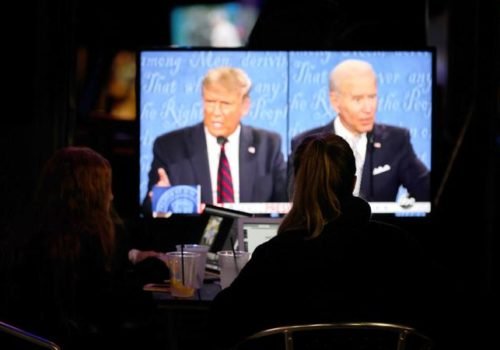
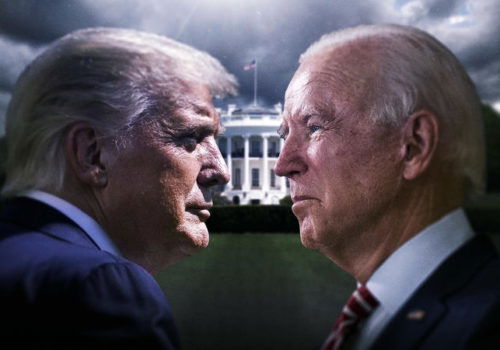
US voters have endured the first of three presidential debates between President Donald Trump and Joe Biden. People watch the first presidential debate between President Donald Trump and Joe Biden. Photo: AFP The event has also prompted a huge reaction from world audiences who tuned in for the chaotic event. Newspapers and commentators around the world have criticised the tone and tactics of the debate. As The Times in the UK wrote, "The clearest loser from the first presidential debate between Donald Trump and Joe Biden was America." [UK] The paper went further, saying the event "was not a debate in any meaningful sense" but rather "an ill-tempered and at times incomprehensible squabble between two angry septuagenarians who palpably loathe each other". The Guardian described it as a "national humiliation". "The rest of the world - and future historians - will presumably look at it and weep," the paper wrote, adding that Mr Biden was the only man who looked "remotely presidential" on the stage and saying that if Trump was re-elected in November, "this dark, horrifying, unwatchable fever dream will surely be the first line of America's obituary." The Financial Times highlighted how the president had stoked lies about voter fraud and urged his supporters to carefully watch polling stations. "'Dog-whistling' is the politico-speak for such language, but it implies subtlety. Mr Trump was blatant," it wrote. The paper also noted that snap polls after the event said Biden had come out on top. "But no one with a care for American democracy can have switched off feeling anything but queasy." France "Chaotic, childish, gruelling" - that's how French newspaper Libération described Wednesday's debate. Le Monde agreed, calling it a "terrible storm", and saying that the president had sought to "push his opponent off his hinges" with constant interruptions and by mocking his answers. Le Figaro said Biden had "systematically refused to play his opponent's game". While Trump tried to directly confront his challenger, pointing at him and addressing him directly, the Democratic candidate spoke more to viewers and looked directly into the camera. "Trump voters are unlikely to have had any doubts about their candidate, despite an unconvincing performance. Those of Biden, on the other hand, had confirmation that the Democrat was able to measure up to his formidable opponent, and even put him on the defensive," the paper wrote. Germany Der Spiegel's analysis of the debate is headlined "A TV duel like a car accident". In a piece titled Part fist-fight, part play, Süddeutsche Zeitung wrote: "Both Trump and Biden could go home satisfied because as far as the theatrical performance is concerned, both did their job properly. Donald Trump played Donald Trump, Joe Biden played Joe Biden, and fans should have liked it." Die Welt said the debate had revealed very little about policy. "Most importantly, it showed that America has a president whose behaviour stands out and who lacks self-control - but that's not exactly news," it wrote. Biden in contrast was not an exciting candidate but "at least someone with common sense and a stable personality" who would "bring something like normalcy back to the White House". Italy "Never had American politics sunk so low," La Repubblica's US correspondent wrote, describing the debate as "Chaotic, rowdy, and based on mutual contempt". Il Corriere della Sera meanwhile said President Trump's refusal to condemn white supremacy was "a message for Black America". Russia One broadcaster described it as a "one and a half-hour exchange of insults", while another said there was "no constructive dialogue". "The rivals kept interrupting each other and instead of a balanced discussion they chose the path of mutual insults," pro-Kremlin NTV television said. Biden's description of President Trump as "Putin's puppy" also generated comments on Russian social media. One Twitter user said: "Two old men are figuring out which of them is more worthy to become the president of the United States, but without Putin, you can't boost your rating." China Chinese official media sites broadly ignored the US debate although some wrote about how both candidates had used China to attack their opponent. The state-run Global Times called it "the most chaotic presidential debate ever" and noted that Mr Trump had taken "aim at China by blaming [it] for the raging Covid-19 epidemic and US economic woes". Editor-in-chief Hu Xijin wrote on Twitter that the debate reflected "division, anxiety of US society and the accelerating loss of advantages of the US political system". India Hindi-language news channel AajTak accused both candidates of "mud-slinging", while broadcaster Times Now said the debate was "marred with personal jibes and political barbs". But the strongest commentary came from The Times of India, the country's largest-selling English-language newspaper, which compared the debate to "mud-wrestling". "The US embarrassed itself before the world for 100 minutes," it wrote. - BBC
Continue Reading

Armenia-Azerbaijan conflict: Azerbaijan president vows to fight on

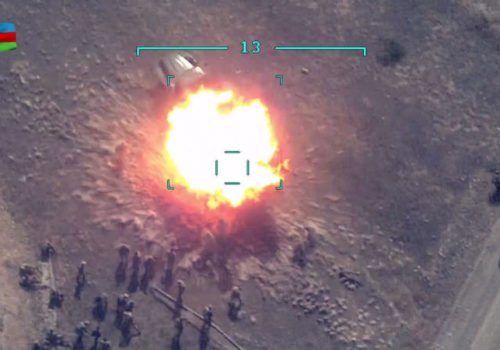
Azerbaijan's president has vowed to fight on until Armenian forces leave disputed territory, on the fourth day of fierce fighting in the region. An image grab from a video on the official website of the Azerbaijani Defence Ministry on September 30, 2020, allegedly shows Azeri units destroying Armenian forces during fighting over the breakaway Nagorny Karabakh region. Photo: Handout / Azerbaijani Defence Ministry / AFP "We only have one condition: Armenian armed forces must unconditionally, fully, and immediately leave our lands," President Ilham Aliyev said. More than 100 deaths have been reported in the heaviest fighting in years over the Nagorno-Karabakh region. Officially part of Azerbaijan, it is governed by ethnic Armenians. The two former Soviet republics fought a war in 1988-1994 over the territory. Although Armenia backs the self-declared republic it has never officially recognised it. It is unclear what caused the renewed fighting, which is the heaviest since the 1994 ceasefire, and there are growing fears international powers could be dragged into the conflict. On Wednesday French President Emmanuel Macron said he was "extremely concerned by the warlike messages" coming from Turkey, a staunch ally of Azerbaijan. Turkey says it is "fully ready" to help Azerbaijan recover the enclave. Meanwhile, Armenia's defence ministry released a picture of an Armenian SU-25 jet it said had been shot down by a Turkish F-16 on Tuesday. Turkey has rejected the allegation as "cheap propaganda" and Azerbaijan says Armenia is lying about the cause. A handout picture provided by the Armenian Unified Infocenter on September 30, 2020 reportedly shows the remains of an Armenian SU-25 warplane downed during fighting with Azerbaijan over the breakaway Nagorny Karabakh region. Photo: AFP / Armenian Unified Infocenter / handout And one fighter has told BBC Arabic he was recruited in northern Syria last week and sent via Turkey to fight in the conflict. Ilnur Cevik, an adviser to Turkish President Recep Tayyip Erdogan, dismissed the report as "completely unfounded". What's happening on the ground? Dozens of soldiers and some civilians have died since fighting broke out on Sunday. Both sides accused the other of shelling across the so-called Line of Control, separating forces in Nagorno-Karabakh. On Wednesday, Azerbaijan published footage of what it said was the destruction of two "enemy" tanks and said an Armenian battalion had fled the area around Tonashen. Armenian reports said three civilians had been killed in an Azerbaijani air attack on the town of Martakert in Nagorno-Karabakh. Armenian state news agency Armenpress said seven civilians and 80 service personnel had been killed since the fighting began. Azerbaijan's prosecutor general announced on Wednesday that 14 civilians had been killed and 46 injured. BBC Arabic, meanwhile, has spoken to one man who was recruited in northern Syria "to guard military points" on Azerbaijan's borders for $2000 (£1550). Abdullah - not his real name - said he was flown to Azerbaijan via Istanbul with other Syrian men. They received no training, but were sent to Nagorno-Karabakh "wearing Azerbaijani uniforms" when fighting broke out. "The car stopped and we were surprised to find ourselves on the front line," he said. "Then the bombing began, people were crying in fear and wanted to go home." President Erdogan's adviser Ilnur Cervik called the accusation "a kind of disinformation campaign". "We are not recruiting anyone. Where is the proof that we're recruiting these people along with the Syrian opposition sending them Azerbaijan [sic]? This is completely false," he said. The Syrian Observatory for Human Rights reports that about 320 Syrian mercenaries have been transported to Azerbaijan by Turkish security companies. But they add that Armenian-born fighters in Syria have also been transported to Armenia to join the fight. What's the international situation? On Wednesday French President Macron warned Turkey about "warlike comments... which essentially remove any inhibitions from Azerbaijan in what would be a reconquest of Nagorno-Karabakh. That we will not accept." Turkey is an ally of Azerbaijan, and even closed its border with Armenia in 1993 in solidarity over the Nagorno-Karabakh dispute. Macron meanwhile appeared to promise greater support to Armenia in the coming days: "I say to Armenia and to the Armenians, France will play its role." Hundreds of thousands of French citizens are of Armenian descent. France is also a chair of the Organization for Security and Co-operation in Europe (OSCE) Minsk Group, created in 1992 to resolve the conflict between Armenia and Azerbaijan. In recent weeks, Nato allies France and Turkey have been on opposite sides in a dispute over energy claims in the Eastern Mediterranean. They have also been at odds over the power struggle in Libya. Turkey has said it will do "what is necessary" to back Azerbaijan, and Foreign Minister Mevlut Cavusoglu accused the French president of, in effect, supporting occupation. But there has been international concern that Turkey may back a bigger military operation. Cavusoglu has already said Turkey will support Azerbaijan "both on the field and at the negotiation table" and a presidential aide has spoken of Turkey's commitment "to helping Azerbaijan take back its occupied lands". Macron said he would speak to Russian President Vladimir Putin later on Wednesday about the conflict. Russia is part of a military alliance with Armenia, and has a military base in the country. However, it is also close to Azerbaijan's rulers, and has called for an immediate ceasefire, offering to mediate in the conflict. On Wednesday, Armenian Prime Minister Nikol Pashinyan said he had not yet discussed Russia's possible involvement in the conflict, given their alliance. "Armenia's armed forces are capable of defending the country's security," he told reporters. Nagorno-Karabakh - key facts A mountainous region of about 4400 sq km (1700 sq miles) Traditionally inhabited by Christian Armenians and Muslim Turks In Soviet times, it became an autonomous region within the republic of Azerbaijan Internationally recognised as part of Azerbaijan, but majority of population is ethnic Armenian Self-proclaimed authorities are not recognised by any UN member, including Armenia An estimated one million people displaced by war in 1988-94, and about 30,000 killed Separatist forces captured some extra territory around the enclave in Azerbaijan Stalemate has largely prevailed since a 1994 ceasefire Turkey openly supports Azerbaijan Russia has a military base in Armenia - BBC
Continue Reading

Britons told to obey rules as virus surges

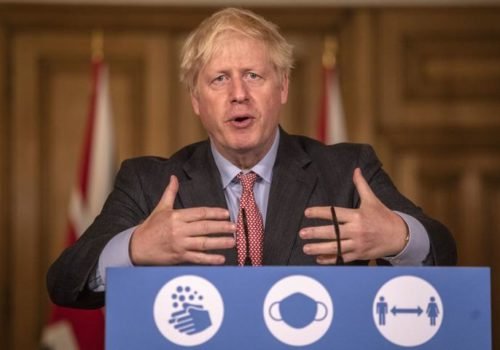
British Prime Minister Boris Johnson has urged residents to obey rules imposed to tackle a rapidly accelerating second wave of the coronavirus outbreak, or risk facing a tougher lockdown. UK Prime Minister Boris Johnson at a media conference as the country faces a rapid acceleration of Covid-19 outbreaks across the country. Photo: AFP New cases of Covid-19 are rising by more than 7000 per day in the United Kingdom, though Johnson is facing growing opposition to lockdown measures. After a reprimand from the speaker of parliament's House of Commons, Johnson defused a rebellion among MPs over the way such onerous rules were imposed by promising angry lawmakers more say over any new national measures. At a briefing in Downing Street flanked by his chief medical and scientific advisers, Johnson acknowledged the opposition to his curbs on freedom. However he said the British people should follow lockdown rules. "I know that some people will think we should give up and let the virus take its course despite the huge loss of life that would potentially entail," Johnson said on Wednesday. "I have to say I profoundly disagree and I don't think it's what the British people want. I don't think they want to throw in the sponge, they want to fight and defeat the virus," he said. Britain, which has the worst official Covid-19 death toll in Europe, is facing a rapid acceleration of outbreaks across the country, England's Chief Medical Officer Chris Whitty said. Chief Scientific Adviser Patrick Vallance said the outbreak was not yet under control. Swathes of the UK and millions of citizens are subject to local restrictions brought in to try to slow the second wave of Covid-19 infections. Britain has reported more than 42,143 deaths from the virus - the world's fifth- highest total. "If the evidence requires it, we will not hesitate to take further measures that would, I'm afraid, be more costly than the ones we put into effect now," Johnson said. Johnson previously had to apologise after getting muddled over local lockdown rules on Tuesday. He is facing growing anger within his own Conservative Party over the most severe restrictions in peacetime history, which are destroying swathes of the economy. In a rare intervention by the chief officer of the House of Commons, Speaker Lindsay Hoyle scolded Johnson for making rules in a "totally unsatisfactory" way. "The way in which the government has exercised its powers to make secondary legislation during this crisis has been totally unsatisfactory," Hoyle told parliament. After Johnson's government offered concessions, MPs passed the extension of the Coronavirus Act, which hands the government emergency powers to introduce restrictions, voting 330 to 24 in favour. The UK's economy has shrunk by a record 19.8 per cent in the second quarter of 2020 - meaning it contracted more than any other Group of Seven economy in the first half of 2020. - Reuters
Continue Reading

Australian singer Helen Reddy dies aged 78 in Los Angeles

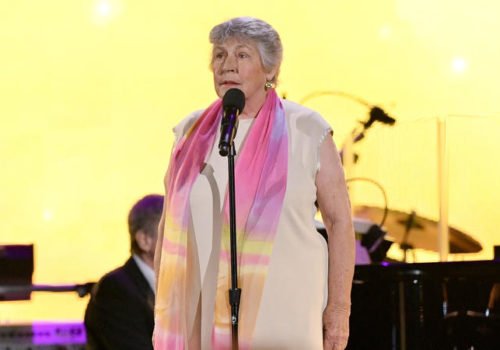
Australian singer Helen Reddy, who reached number 1 around the world with hits like I Am Woman, has died in Los Angeles at the age of 78. Recording artist Helen Reddy performs onstage during the MPTF 95th anniversary celebration. Photo: AFP Her family confirmed she died yesterday. Her song I Am Woman was an anthem for the feminist movement. "She was a wonderful mother, grandmother and a truly formidable woman," a family statement on her official fan Facebook page said. "Our hearts are broken. But we take comfort in the knowledge that her voice will live on forever."
Continue Reading

Live US Election 2020 presidential debate updates: Donald Trump and Joe Biden face off

US President Donald Trump and Democratic presidential nominee Joe Biden will debate an array of urgent political challenges, including the response to the coronavirus pandemic, the Supreme Court, and continued protests for racial justice. [embedded content] The 90-minute debate, with a limited and socially distanced in-person audience because of the pandemic, will begin at 2pm (NZ time) at Case Western Reserve University in Cleveland. RNZ's Max Towle and Jeremy Rees will bring you the latest developments here: It is the first of three scheduled debates: Second presidential debate: Trump and Biden will debate again on 16 October, 2pm (NZT), at a performing arts centre in Miami, Florida. Steve Scully of C-SPAN Networks is set to moderate the debate. Third presidential debate: In their final chance to win over voters, Trump and Biden will take to the stage in Nashville, Tennessee. NBC's White House correspondent Kristen Welker will be hosting the debate on 23 October, 1pm (NZT). The only vice presidential debate between Harris and Pence will take place on 8 October, 12pm (NZT) in Salt Lake City, Utah. White House aides have said Trump, 74, will aggressively challenge Biden's record on issues such as trade, energy and taxes and will be prepared to defend himself on his own taxes. Trump, who has repeatedly cast doubt on the integrity of the election, is likely to face questions about his refusal to commit to accepting the election results and a peaceful handover of power should he lose. Biden, 77, is certain to press his criticism of Trump's response to the pandemic, and highlight Trump's efforts to eliminate the Affordable Care Act, the law known as Obamacare which has helped millions of Americans obtain health insurance. The debate will be divided into six segments - the records of Trump and Biden, the US Supreme Court, the coronavirus pandemic, the economy, election integrity and "race and violence" in US cities. Ahead of the debate, Democrats have demanded that moderator Chris Wallace of Fox News correct Trump when he makes false claims. But Wallace, whom Trump has called "nasty and obnoxious," said he would not perform a fact-checking function, instead remaining as invisible as possible. - Reuters
Continue Reading

Kuwait ruler Sheikh Sabah al-Ahmad al-Sabah dies aged 91

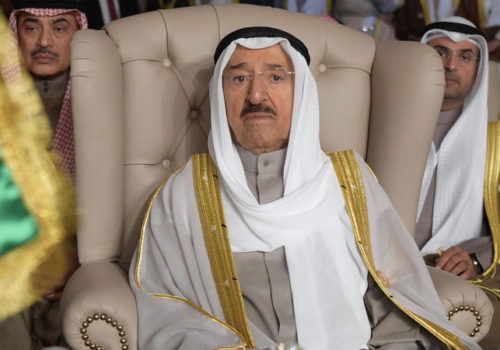
Kuwait's Emir, Sheikh Sabah al-Ahmed al-Sabah, has died at the age of 91. Sheikh Sabah al-Ahmed al-Sabah pictured at the Arab League summit in Tunisia, in March 2019. Photo: AFP His 83-year-old half-brother, Crown Prince Sheikh Nawaf al-Ahmed, has been named by the cabinet as his successor. In July, Sheikh Sabah was flown to the United States for medical treatment following surgery for an unspecified condition in Kuwait that month. He had ruled the oil-rich Gulf Arab state since 2006 and had overseen its foreign policy for more than 50 years. He was dubbed the "dean of Arab diplomacy" for his efforts to restore relations with states that backed Iraq during the 1990-1991 Gulf War, when Kuwait was invaded by Iraqi forces. The emir also often acted as a mediator in regional disputes, including the ongoing diplomatic stand-off between Saudi Arabia, its allies and Qatar. Kuwait similarly refrained from intervening in Syria's civil war, instead hosting several donor conferences for humanitarian aid. "Today we lost a big brother and a wise and loving leader... who spared no effort for Arab unity," Jordan's King Abdullah II wrote on Twitter in Arabic. Abu Dhabi Crown Prince Sheikh Mohammed bin Zayed Al Nahyan, the de facto ruler of the United Arab Emirates, tweeted: "Sheikh Sabah epitomised wisdom, tolerance, and peace and he was a great pioneer of Gulf cooperation." UN Secretary General António Guterres called the emir "an extraordinary symbol of wisdom and generosity, a messenger of peace, a bridge builder". Sheikh Sabah's death was announced on state television on Tuesday afternoon by the Minister of Emiri Diwan (Court) Affairs, Sheikh Ali Jarrah al-Sabah. "With the utmost sadness and grief for the Kuwaiti people, the Islamic and Arab world and people of friendly nations, the Emiri Diwan mourns the death of Sheikh Sabah al-Ahmed al-Jaber al-Sabah, the emir of Kuwait, who is now next to God" he said. Sheikh Jarrah did not give a cause of death nor say where the emir died. Born in 1929, Sheikh Sabah was the great-grandson of the founder of modern Kuwait, Mubarak al-Sabah, who signed a "Treaty of Friendship" with Britain in 1899 that saw it become a protectorate. Sheikh Sabah became Kuwait's foreign minister in 1963 - two years after Britain recognised Kuwait's independence - and held the position until 1991, following the end of the seven-month-long Iraqi occupation. He was reappointed foreign minister in 1992 and served until 2003, when he was named prime minister by his half-brother Emir Sheikh Jaber al-Ahmad. Sheikh Sabah became Kuwait's ruler himself in 2006, after Sheikh Jaber died and his cousin Emir Sheikh Saad al-Abdullah stepped down just nine days into his rule as parliament moved to depose him on health grounds. Kuwait - which has a population of 4.8 million, including 3.4 million foreign workers - has the world's sixth-largest known oil reserves and is a major US ally. The emirate's parliament has the most powers of any elected body in the Gulf and opposition MPs openly criticise the Sabahs. However, the ruling family retains full control over key government and executive posts and the emir has the last say in political matters. He also has the power to override or dissolve parliament, and call elections. Sheikh Sabah dissolved parliament or reshuffled his cabinet a number of times after lawmakers sought to question or submit votes of no confidence against senior ministers, including members of the ruling family. -BBC
Continue Reading

Armenia says fighter jet 'shot down by Turkey'

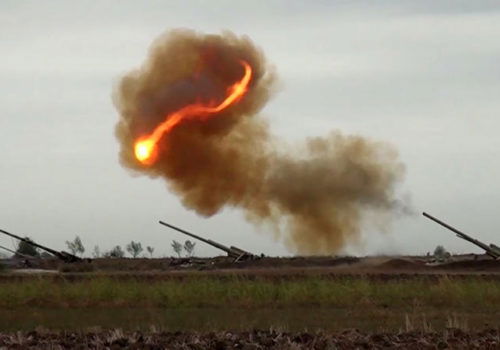
Armenia says one of its fighter jets was shot down by a Turkish jet, in a major escalation in the conflict over the disputed Nagorno-Karabakh region. A video made available by the Azerbaijani Defence Ministry appears to show an Azeri artillery strike towards the positions of Armenian separatists in the breakaway region of Nagorno-Karabakh. Photo: AFP / Azerbaijani Defence Ministry The Armenian foreign ministry said the pilot of the Soviet-made SU-25 died after being hit by the Turkish F-16 in Armenian air space. Turkey, which is backing Azerbaijan in the conflict, has denied the claim. Nearly 100 people, including civilians, have died in three days of fighting over the disputed mountainous region. The enclave is internationally recognised as part of Azerbaijan, but has been run by ethnic Armenians since a 1988-94 war between the two former Soviet republics. Azerbaijan has repeatedly stated that its air force does not have F-16 fighter jets. However, Turkey does. The fighting that started three days ago now appears to be spilling out of Nagorno-Karabakh. Armenia and Azerbaijan - which have already mobilised more soldiers and declared martial law in some areas - blame each other for starting the fighting. While Turkey is openly backing Azerbaijan, Russia - which has a military base in Armenia - has called for an immediate ceasefire. Armenian Defence Ministry spokeswoman Shushan Stepanyan said the Armenian SU-25 was shot down on Tuesday morning and the pilot "died heroically". In a Facebook post, she said the Turkish F-16 was 60km deep into Armenian air space. Turkey immediately denied the claim as "absolutely untrue". "Armenia should withdraw from the territories under its occupation instead of resorting to cheap propaganda tricks," Turkish President Recep Tayyip Erdogan's aide Fahrettin Altun said. What's the background? In 1988, towards the end of Soviet rule, Azerbaijani troops and Armenian secessionists began a bloody war which left Nagorno-Karabakh in the hands of ethnic Armenians when a truce was signed in 1994. Tens of thousands died in fighting, and many ethnic Azerbaijanis were forced to flee their homes. It is now a de facto independent region, relying heavily on support from Armenia. But it is not recognised by any UN member, including Armenia. Swathes of Azeri territory around the enclave are also under Armenian control.Negotiations have so far failed to produce a permanent peace agreement, and the dispute in the region remains one of post-Soviet Europe's "frozen conflicts". Karabakh is the Russian rendering of an Azeri word meaning "black garden", while Nagorno is a Russian word meaning "mountainous". Ethnic Armenians prefer to call the region Artsakh, an ancient Armenian name for the area. Over the years both sides have had soldiers killed in sporadic breaches of the ceasefire. Landlocked Armenia has suffered severe economic problems due to the closure of borders with Turkey and Azerbaijan. Russia, France and the US co-chair the Organization for Security and Co-operation in Europe's Minsk Group, which has been attempting to broker an end to the dispute. - BBC
Continue Reading

Covid-19 coronavirus: A lethal march across the planet, tracked by a map in motion

On a Thursday night in early January, the disease that would become known as Covid-19 claimed its first victim, a 61-year-old man who succumbed to the newly identified coronavirus in the city of Wuhan, in the People's Republic of China. Nine months later, the pandemic took its millionth life. And while the vagaries of record-keeping mean we may never know who that victim was, the fact remains: Covid has killed a million people. Tens of millions of things undone. Daughters and sons unborn, works of genius uncreated. Pieces of communities — excised. Entire residential complexes filled with older people — ravaged. Human contribution melted away, with no way of ever knowing or chronicling what was lost. Accounting for what's missing when people die is never an easy task; now it is one multiplied by an entire million. Advertisement A new AP interactive map of the coronavirus' spread — represented by the lives it has claimed — blends data and geography in a way that forces us to see what has happened to the world. And what is still happening to it. The path of Covid-19 to a million deaths. Like so many things in the world, it started small. At first, the map shows only one splash of colour: China, the place where the coronavirus silently began its march. As it began to move around, the map evolved. Month by month, week by week, day by day, the coronavirus spread. Pandemic was declared. Hospitals girded. Cities and countries, shut down. The world changed so fast that its people could barely keep up. How did something so contained at first, so localised, upend the routines and activities of huge chunks of human civilisation? We all have watched it, lived through it, but the visual is striking. From a world largely unsullied by the virus to one merely touched by it to an entire planet feeling its effects. Some of the hardest hit countries. — March 18, 2020 China still leads the world in deaths. In the United States, President Donald Trump has just declared a state of emergency. The US has lost 191 people. The wide belief among Americans: This can still be contained. Advertisement — April 6, 2020Italy is being ravaged; 16,523 have been lost. China has dropped out of the top five when it comes to deaths. The US is second by now at 14,199 dead. — May 22, 2020The US has shot ahead of the rest of the world and sits on the cusp of 100,000 dead — 99,166. It, like the United Kingdom (35,440), Italy (32,616), Spain (28626) and France (28,292), is rendered in a darker forest green, along with Brazil. The march is accelerating. — July 26, 2020In the heart of the summer, the US remains the country with the most dead: 147,656. Brazil, whose president has just tested positive for coronavirus, is second at 87,004. Darker greens are starting to fill the map, including in India. In China, blamed by Trump for the virus in terms some deem racist, the hue is light after strict and protracted containment measures. — Sept. 27, 2020India is third in the world with 95,542 deaths. The United States, still No. 1 and criticised for its haphazard efforts at containment, has just passed the 200,000 mark. Brazil sits at 141,741, with no apparent detrimental political effect on its leader. Russia is now darker green. Africa, Australia and much of Asia are lighter, though swaths of Southeast Asia are showing higher death rates. Olivia Troye, a former adviser on the White House Coronavirus Task Force, recounts her "nightmare to tell," saying there was an organized effort to seek data to underplay the danger of coronavirus for certain populations, ages and demographics. https://t.co/Ep0fGPozYc pic.twitter.com/U0sRWpnQiK — Cuomo Prime Time (@CuomoPrimeTime) September 29, 2020 This map tells the story of an invisible virus that upended the world. It tells of first responses and fear and decisions good and bad. Stories of valiant women and men who tried to stop it, and were sometimes claimed by their efforts. It tells stories of leaders who measured up and leaders who didn't. And how simple human touch ended up killing. Advertisement Most of all, it tells of the one million dead and gone. These are the stories of the human beings who, had they been able to stick around, might have done things we'd all remember — or might have done things just as important that only a few people they loved would remember. The map contains their stories, too, and even amid the elegant lines of the map and the illuminating contours of the data they should not be forgotten. - Ted Anthony, director of digital innovation for AP, oversees the news organisation's coverage of the pandemic's ripple effect on society. - AP
Continue Reading

Global Covid-19 death toll passes one million

The number of people worldwide who have died from Covid-19 has passed one million, researchers say, with many regions still reporting surging numbers of new infections. People wearing face masks, to curb the spread of Covid-19 in Nantes, western France. Photo: AFP According to a tally by Johns Hopkins University the death toll now stands at 1,000,555. The US, Brazil and India make up nearly half of that total. Experts caution that because of differences in recording deaths the true figure is probably much higher. The grim milestone comes nearly 10 months after news of the new coronavirus began to emerge in the Chinese city of Wuhan. The pandemic has since spread to 188 countries with more than 32 million confirmed cases. Lockdowns and other measures to try to stop virus spreading have thrown many economies into recession. Meanwhile, efforts to develop an effective vaccine are continuing - although the World Health Organization (WHO) has warned that the death toll could hit two million before one is widely available. The US has the world's highest death toll with about 205,000 fatalities followed by Brazil on 141,700 and India with 95,500 deaths. The US has recorded more than seven million cases - more than a fifth of the world's total. After a second wave of cases in July, numbers dropped in August but appear to be on the rise again now. The coronavirus has been spreading fast in India, with the country recording about 90,000 cases a day earlier in September. Confirmed infections in India have reached six million - the second-highest after the US. However, given the size of its population India has seen a relatively low death rate. Brazil has the highest number of deaths in Latin America and has recorded more than 4.7 million cases, the third highest in the world. Elsewhere in the region, newly confirmed infections are also rising quickly in Argentina, which now has more than 700,000 cases. - BBC
Continue Reading
Back To Top