skip to Main Content
Covid-19: French Police Raid Ministers' Homes In Pandemic Inquiry

Covid-19: French police raid ministers' homes in pandemic inquiry

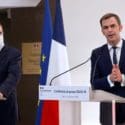
French police have raided the homes of senior government and health officials as part of an investigation into their handling of the Covid-19 pandemic. French Health Minister Olivier Veran (right) speaks flanked by French Prime Minister Jean Castex during a press conference on 15 October to present the details of new restrictions aimed at curbing the spread of the Covid-19 pandemic. Photo: AFP Health Minister Olivier Véran and the director of the national health agency, Jérôme Salomon, are among those whose properties were searched on Thursday. The raids came after a court launched an inquiry earlier this year into the government's handling of the pandemic. It has faced criticism over shortages of equipment and slow response times. Prime Minister Jean Castex is also under investigation, French media report, as is his predecessor Edouard Philippe and Véran's predecessor Agnès Buzyn. The prime minister and Véran have been at the forefront of France's new policy of imposing night-time curfews in nine cities, including Paris, from Saturday, which will be enforced by 12,000 police. "This means at 21:00 everyone must be at home and, without exception, every place, business or public service open to the public will be shut," Castex said on Thursday. See all RNZ coverage of Covid-19 In July, the court launched the inquiry into the government's handling of the pandemic after members of the public, including doctors and relatives of victims, alleged that it had been criminally negligent in its response to Covid-19. The special court hears cases of alleged wrongdoing by ministers and other government officials in the course of their duties. But for the claims to be substantiated, there would have to be evidence that officials knowingly failed to take obvious steps that would have saved lives. Diners at a restaurant in Paris socially distance. Photo: AFP At a news conference on Thursday, Prime Minister Castex said he had "absolute" confidence in both Véran and Salomon. How bad is the situation in France? A further 22,951 cases of Covid-19 were confirmed on Wednesday. "We have to act. We need to put a brake on the spread of the virus," French president Emmanuel Macron said in a television address. The president added that this wave of Covid-19 was different to the outbreak in the spring, because the virus had spread to all parts of France. France managed to control the first outbreak by introducing a national lockdown. It then opened bars and restaurants in the summer, and allowed foreign tourists to visit as part of an effort to boost the ailing economy. Schools reopened and universities began teaching classes in person in early autumn. But since August the number of reported cases has accelerated quickly. Wednesday was the third time in six days that France reported more than 20,000 new infections. Macron said the new measures aimed to reduce daily cases to around 3,000. As with the first wave of Covid-19, there is concern that hospitals and intensive care units will become overwhelmed with patients. People wearing face masks, to curb the spread of Covid-19 in Nantes, western France. Photo: AFP What are the new measures there? The curfew, from 9pm to 6am each day, will apply for at least four weeks to the capital Paris and its suburbs, as well as the cities of Marseille, Lyon, Lille, Saint-Etienne, Rouen, Toulouse, Grenoble and Montpellier. Affecting around 22 million people, it will be applied for four weeks to begin with, and Macron's government will seek to extend it to six. President Macron said the virus has spread to all parts of France now. (File photo). Photo: AFP The measures will stop people visiting restaurants and private homes during the evening and night-time. Private parties will be banned, even in areas not under curfew, from midnight on Friday. But there is some scepticism over how effective the curfew might be. "People were mainly going out to eat out, which they will continue to do... until 9pm," said Lou Mielot, a student at the University of Lyon. "This will create restaurants that are full from 7pm to 9pm, [where people] won't be able to keep a safe distance," she added. Residents will need a valid reason to be outside their homes during the hours of curfew. President Macron said on Wednesday night he understood a curfew was a "hard" thing to ask people to do. On Thursday, Castex said travel during hours of curfew was permitted for trips to the hospital or pharmacy, or if work hours required. But a special certificate would need to be produced as proof. Pre-booked tickets for planes and trains that arrive after the curfew will be allowed. Anyone found breaking the curfew will be fined €135 (NZ$240). Businesses that suffer financially due to the new measures will be eligible for state aid. Any company with up to 50 staff in the nine cities affected will be eligible for help if their turnover has fallen by over half in the past year. All companies in curfew areas will be asked to move towards having employees work from home for at least part of the week, and to stagger working hours. President Macron has already suggested "tele-working" for two or three days a week. Hand sanitiser on the bar of a restaurant in Paris, where a four-week overnight curfew has been announced to fight the rapid spread of Covid-19. Photo: AFP - BBC

Thai Protests: Tens Of Thousands Defy Ban On Demonstrations

Thai protests: Tens of thousands defy ban on demonstrations

Tens of thousands of Thai protesters cheered and chanted into the night in central Bangkok in a show of mass defiance to a ban on demonstrations designed to end more than three months of anti-government action. As they dispersed at 10 pm on Thursday protesters pledged to return to the same place every day. Thousands of pro-democracy protesters rallied in central Bangkok late into the evening, raising the three-finger salute that has become a symbol of the protest movement. Photo: AFP Growing demonstrations have targeted King Maha Vajiralongkorn as well as Prime Minister Prayuth Chan-ocha, a former junta leader, in the biggest challenge for years to an establishment long dominated by the army and palace. "Like dogs cornered, we are fighting till our deaths," Panupong "Mike Rayong" Jadnok, one the high-profile protest leaders who remains free, told the crowd. "We won't fall back. We won't run away. We won't go anywhere." Protesters ignored police appeals to disperse and spilled from the Ratchaprasong Intersection across streets and walkways, their mobile phones shimmering in the night. The location was the scene of bloodshed in 2010, during more than a decade of violence between supporters and opponents of the Thai establishment. "All protesters will be prosecuted," the deputy head of Bangkok police, Piya Tawichai, told a news conference. "I would like us to warn the children and youth: participating in these protests could impact you in the future." Police put the number of protesters at 10,000. Protesters chanted for the release of some 40 activists arrested this week. Some also called out insults against the king - until recently almost unheard of behaviour in a country where the constitution says he must be revered. A pro-democracy protester faces off against a police officer in Bangkok on Thursday. Photo: AFP Closing the protest, student leader Jutatip Sirikhan called on people to return at 5 pm on Friday and daily thereafter. Three months of protests in the country of 70 million have been largely peaceful, as was a march by tens of thousands on Wednesday. But in one incident, police pushed jeering protesters away from a motorcade carrying Queen Suthida. Overnight the government banned political gatherings of five or more people and the publication of news and online information that could threaten national security. Riot police swiftly cleared a protest camp outside Prayuth's office. "The measures were necessary to ensure peace and order," government spokesman Anucha Burapachaisri said in a statement. He rejected accusations from some government critics that the motorcade incident was an excuse to crack down. Arrests Thai media reported that arrest warrants had been issued against two people for injuring the queen - which can carry a life sentence, whereas the maximum penalty for insulting the monarch under lese majeste laws is 15 years in jail. Student leader Panusaya "Rung" Sithijirawattanakul. Photo: AFP Police said they had arrested protest leaders Parit "Penguin" Chiwarak and rights lawyer Arnon Nampa overnight. Student leader Panusaya "Rung" Sithijirawattanakul was taken away in a wheelchair. Arnon said on Facebook he was taken to Chiang Mai, where he faces sedition charges over a speech in August. Panusaya and Parit also face sedition charges over comments at previous protests, their lawyer said. They all deny the charges. In a handwritten note embellished with a rainbow, Panusaya urged protesters to keep fighting. "You might all see leaders disappearing one by one, but we're actually always with you," she wrote. The protest movement aims to remove Prayuth, saying he manipulated an election last year to keep hold of power. He says the election was fair. Those marching on the streets also want a new constitution and have called for a reduction in the powers of the king. They want his role to be clearly subject to the constitution and seek the reversal of orders that gave him control of the palace fortune and some army units. Anger in Thailand has been exacerbated by the economic impact of the coronavirus - even greater than in other parts of Southeast Asia because of the importance of tourism. The Chinese government's top diplomat, State Councillor Wang Yi, agreed at a meeting with Prayuth on Thursday to speed up the transfer of people and goods and on future economic cooperation, Chinese state news agency Xinhua said. The European Union, meanwhile, called on Thailand to respect the rights of detainees and urged restraint from all sides. - Reuters
US Hostages Released In Yemen 'prisoner Swap'

US hostages released in Yemen 'prisoner swap'

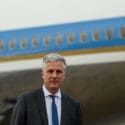
Two US hostages held by Houthi rebels in Yemen have been released, seemingly as part of a large prisoner exchange. US national security adviser Robert O'Brien. Photo: AFP Sandra Loli, a humanitarian worker held for about three years, and businessman Mikael Gidada, held for about one, were freed on Wednesday (local time), US officials said. The remains of a third US captive, Bilal Fateen, were repatriated as well. It comes after the Houthis reported receiving more than 200 Yemenis from Oman, where many had been stranded after receiving medical treatment. A much-anticipated swap between Yemen's internationally recognised, Saudi-backed government and the Houthi rebels had been expected to take place on Thursday. In a statement, the US state department welcomed the release of Loli and Gidada, and extended its condolences to the family of Fateen. US national security adviser Robert O'Brien thanked Sultan Haitham bin Tariq of Oman and King Salman of Saudi Arabia for their assistance, and credited President Donald Trump for his support. A Houthi spokesperson, Mohammed Abdulsalam, earlier tweeted that the 240 or so Yemenis who returned to the Yemeni capital, Sanaa, included either people who had been stranded or who were injured and had travelled to the Omani capital Muscat to receive medical treatment. Abdulsalam added that they included casualties who had travelled to the Gulf state during UN-brokered peace talks between the warring parties in Stockholm in 2018. "The United Nations did not bring [them] back" in line with the agreement reached, he said. Abdulsalam also thanked Oman for its "humanitarian efforts" but did not mention the release of US hostages. The Wall Street Journal, which broke the news about the US hostages, said the state department had been working urgently to secure the deal because Loli was in ill-health. It reported the deal also included delivery of medical aid for Yemen. The operation was reportedly overseen by the International Committee of the Red Cross. Yemen has been devastated by a conflict that escalated in March 2015, when the rebels seized control of much of the west of the country and forced President Abdrabbuh Mansour Hadi to flee abroad. The civil war has also triggered the world's worst humanitarian disaster, with thousands of civilians dying from preventable causes, including malnutrition, disease and poor health. - BBC
Donald Trump's Son Tests Positive For Covid-19

Donald Trump's son tests positive for Covid-19

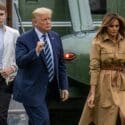
US first lady Melania Trump says her 14-year-old son Barron tested positive for coronavirus but has since returned a negative result. Photo: AFP Melania Trump says she also has now tested negative for Covid-19. The White House initially said Barron Trump had tested negative after both his parents tested positive earlier this month. However Melania Trump said on Wednesday subsequent test results showed Barron had also come down with Covid-19 but showed no symptoms. "Luckily he is a strong teenager and exhibited no symptoms," Melania Trump said in a statement. Melania Trump said her symptoms were "minimal" and that she hoped to resume her duties as first lady "as soon as I can". "I experienced body aches, a cough and headaches, and felt extremely tired most of the time," she said. "I chose to go a more natural route in terms of medicine, opting more for vitamins and healthy food," Melania Trump said. Donald Trump spent three nights in a military hospital after announcing on 2 October that he and Melania had tested positive. To treat the virus, he received an experimental dual antibody therapy developed by Regeneron Pharmaceuticals Inc and Gilead Sciences Inc's antiviral remdesivir, as well as the steroid dexamethasone. "In one way I was glad the three of us went through this at the same time so we could take care of one another and spend time together," Melania Trump said. Meanwhile, President Donald Trump is no longer capable of actively spreading Covid-19 and has been given the all clear to attend an upcoming town hall interview with NBC News without putting others at risk. Top American public health official Anthony Fauci says he and a colleague at the National Institute of Health have reviewed the Covid tests taken by the president to reach the conclusion that the president is not contagious. - Reuters
'On Brink Of Disaster': Europe Faces Coronavirus Surge

'On brink of disaster': Europe faces coronavirus surge

France has introduced curfews in major cities and other European nations are closing schools, bars and restaurants and cancelling operations as authorities battle a second wave of Covid-19 at the onset of winter. Health workers speak to people prior to being tested for Covid-19 at Lyon's sports arena Palais des Sports, which has been turned into a huge testing centre, Photo: AFP See all RNZ coverage of Covid-19 French President Emmanuel Macron announced that people must stay indoors from 11pm to 6am in Paris and eight other cities. The curfew will come into effect from Saturday and last for at least four weeks, Macron said in a televised interview. A state of emergency has also been declared. A further 22,951 infections were confirmed on Wednesday. A partial lockdown comes into force in the Netherlands at 11pm local time and cafes and restaurants are closing. Spain's north-eastern region of Catalonia said that bars and restaurants will close for 15 days from Thursday. European infections have been running at an average of almost 100,000 a day - about a third of the global total. The United Kingdom, France, Russia and Spain accounted for more than half of Europe's new cases in the week to 11 October, according to the World Health Organisation. Europe has by a wide margin overtaken the United States, where more than 51,000 Covid-19 infections are reported on average every day. While 22 states have so far in October set records for increases in new cases, deaths are trending downward and have averaged 700 a day over the last week. Most European governments eased lockdowns over the summer to start reviving economies already battered by the pandemic's first wave. Hand sanitiser on the bar of a restaurant in Paris where a four-week overnight curfew has been announced to fight the rapid spread of Covid-19. 14 October 2020. Photo: AFP But the return of normal activity - from packed restaurants to new university terms - fuelled a sharp spike in cases all over the continent. Bars and pubs were among the first to shut or face earlier closing in the new lockdowns, but now the surging infection rates are also testing governments' resolve to keep schools and non-Covid-19 medical care going. The Czech Republic, with Europe's worst rate per capita, has shifted schools to distance learning and plans to call up thousands of medical students. Hospitals are cutting non-urgent medical procedures to free up beds. "Sometimes we are at the edge of crying," said Lenka Krejcova, a head nurse at Slany hospital near Prague, as builders hurried to turn a general ward into a Covid-19 department. Poland is ramping up training for nurses and considering creating military field hospitals, Moscow is to move many students to online learning, and Northern Ireland is closing schools for two weeks and restaurants for four. "I don't have any good information. We are on the brink of disaster," said immunologist Pawel Grzesiowski in Poland, which reported a record 6,526 infections and 116 deaths on Wednesday. Major European economies such as Germany, England and France have so far resisted pressure to close schools, but in Germany, politicians are debating whether to extend the Christmas-New Year school break to reduce contagion. The Netherlands' return to partial lockdown has not included shutting schools. In Lisbon, football fans were unsurprised after Portugal captain Cristiano Ronaldo tested positive, saying it simply showed everyone was at risk of getting infected - and famous athletes were no exception. Even Pope Francis was subject to new coronavirus rules, staying at a safe distance from well-wishers at his weekly audience on Wednesday. British Prime Minister Boris Johnson faces opposition calls for another national lockdown in England, but has so far resisted. Hospital admissions, however, are climbing and field hospitals constructed in the spring are once more being readied. In Belgium, with Europe's second worst infection rate per capita, hospitals must now reserve a quarter of their beds for Covid-19 patients. - Reuters / BBC
Thai Protests: Thousands Gather In Bangkok As King Returns To Country

Thai protests: Thousands gather in Bangkok as king returns to country

Pro-democracy protesters in Thailand have confronted a motorcade carrying King Maha Vajiralongkorn as it passed through a rally in Bangkok. The protesters, who were pushed back by ranks of police, raised the three-finger salute that has become a symbol of the protest movement. They have called for curbs on the king's powers and for the resignation of Prime Minister Prayuth Chan-ocha. The protests on Wednesday follow months of escalating tension in the country. The king, who spends most of his time abroad but has returned from Germany for several weeks, travelled in a car alongside Queen Suthida through a crowd of peaceful protesters, who chanted and raised their hands in the three-finger salute. The gesture is thought to have been inspired by the Hunger Games films in which it is used as a symbol of unity and defiance. The royal couple were on their way to a Buddhist ceremony on Ratchadamnoen Avenue, where demonstrations had taken place earlier in the day, before the protesters moved on towards Government House. The protesters had vowed not to block the royal motorcade's passage and they did not. Thailand's Queen Suthida and Prince Dipangkorn Rasmijoti in the motorcade as anti-government protesters (back) hold up their three-finger salute. Photo: AFP Supporters of the monarchy, dressed in t-shirts in royal yellow colour, staged rival protests in the capital, with some filmed violently attacking the pro-democracy protesters. Some witnesses accused the government of disguising police as royalist demonstrators. The two sides gathered separately along Ratchadamnoen Avenue on Wednesday afternoon and were kept largely apart by police. The anti-government protesters linked arms and marched chanting "Prayuth, get out!" - referring to the prime minister - and "Long live the people!" The protesters were prevented from reaching Government House by what appeared to be ranks of royalist supporters wearing yellow t-shirts who linked arms and shouted insults at the protesters. "We want to show that we love the king," 47-year-old Sirilak Kasemsawat told AFP news agency, accusing the pro-democracy movement of wanting to "overthrow" the monarchy - a charge the movement has always denied. "We're not asking them to be toppled, forgotten, or not to be respected," said Dear Thatcha, a pro-democracy protester. "We're just asking them to change with us. Our country needs to adapt to many things, and the monarchy is one of the issues that needs to be adapted as well," she said. The growing student-led protest movement, which began in July, has become the greatest challenge in years to Thailand's ruling establishment. Protests over the weekend in the capital were some of the largest in years, with thousands defying authorities to gather and demand change. The protesters' calls for royal reform are particularly sensitive in Thailand, where criticism of the monarchy is punishable by long prison sentences. Pro-democracy protesters walk towards Government House, as people dressed in pro-monarchy yellow t-shirts look on. Photo: AFP / Anadolu Agency Why are there protests? Thailand has a long history of political unrest and protest, but a new wave began in February after a court ordered a fledgling pro-democracy opposition party to dissolve. The Future Forward Party (FFP) had proved particularly popular with young, first-time voters and garnered the third-largest share of parliamentary seats in the March 2019 election, which was won by the incumbent military leadership. Protests were re-energised in June when prominent pro-democracy activist Wanchalearm Satsaksit went missing in Cambodia, where he had been in exile since the 2014 military coup. His whereabouts remain unknown and protesters accuse the Thai state of orchestrating his kidnapping - something the police and government have denied. Since July there have been regular student-led street protests. Demonstrators have demanded that the government headed by Prime Minister Prayuth, a former army chief who seized power in the coup, be dissolved; that the constitution be rewritten; that the authorities stop harassing critics. - BBC
Govt Project On The Cook Islands' Penrhyn To Be Investigated

Govt project on the Cook Islands' Penrhyn to be investigated

An investigation by the Cook Islands financial watchdog is currently underway into a major government contract for the island of Penrhyn that was tendered earlier this year. Penrhyn in the Cook Islands Photo: Ewan Smith Tenders for the Infrastructure Ministry contract closed in February. The Public Expenditure Review Committee and Audit was looking into the contract which was awarded to Civil Contractors Ltd., a company which was registered in 2019. The contract was to construct two-story cyclone centres on Omoka and Te Tautua villages in Penrhyn. According to the tender, the contract also included all associated building services, including water and waste systems, electrical, communications, plumbing and furnishings. Scrutiny was being placed on how the contract was awarded, possible conflicts of interest and the claim significant payments had already been made to the contractor before the commencement of any work. The committee's reports have to be tabled with parliament before being publicly released although parliament was no longer required to be in session to deal with such reports. Penrhyn, Cook Islands Photo: RNZI / Mary Baines
Back To Top