skip to Main Content
Twitter: Major Outage Affects Users Around The World

Twitter: Major outage affects users around the world

Twitter has experienced a major outage, with users across the world affected. Photo: 123rf The social media giant said the issue was caused by an "inadvertent change" it made to its internal systems. Users in countries including New Zealand, the US and UK were unable to use the platform for more than an hour, with many receiving error messages. The service was later largely restored, and the California-based company said the site should soon be working for all of its users. According to DownDetector.com, reports of problems with Twitter began to spike at about 10.30am in New Zealand time. It said users from around the world - including Japan, Australia, Argentina and France - had reported being unable to use the platform. In the US, there were tens of thousands of reports of problems. Users were sent error messages including "something went wrong" and "Tweet failed: There's something wrong. Please try again later." Twitter said there was no evidence of a security breach or hack. Internet monitoring group NetBlocks confirmed the incident was "not related to country-level internet disruptions or filtering". In July, hackers accessed Twitter's internal systems to hijack accounts owned by some of the platform's most prominent users. The breach saw the accounts of Barack Obama, Elon Musk, Kanye West, and Bill Gates among other celebrities used to tweet a Bitcoin scam. - BBC
NSW MP Daryl Maguire Confesses To Corruption Investigation

NSW MP Daryl Maguire confesses to corruption investigation

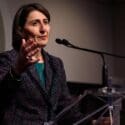
Disgraced New South Wales MP Daryl Maguire has made a string of admissions to the state's corruption investigator this week - but a legal prosecution is no certainty. New South Wales MP Daryl Maguire was in a secret relationship with New South Wales Premier Gladys Berejiklian (pictured). Photo: AFP The former member for Wagga Wagga has been frank about his involvement in a "cash-for-visa" scam for Chinese nationals, failing to disclose business interests in line with MPs' obligations and "monetising" his office to benefit both himself and associates. The inquiry has also heard Maguire discussed property deals with New South Wales Premier Gladys Berejiklian during 2017, when they were in a secret relationship, and facilitated a "drop-in" meeting between the Premier and a property developer. But what unfolds after an Independent Commission Against Corruption (ICAC) inquiry is often more of political consequence than legal significance. The Premier has faced what she described as a "personal nightmare", as her secret five-year relationship with Maguire was publicly revealed. She also copped a grilling in Question Time over what she did or didn't know about his conduct. But it remains to be seen whether Maguire will face prosecution over his evidence to the corruption watchdog. In general, ICAC can make findings of serious corrupt conduct and refer evidence to the Director of Public Prosecutions to consider prosecution, disciplinary action, or further investigation. In the past, it has also referred matters to the Australian Federal Police, Security Intelligence Organisation, Taxation Office, Border Force and other states' police forces. The commission's annual reports provide an insight into where past investigations have landed. ICAC's high-profile casualties In 2018 to 2019, ICAC made 57 findings of serious corrupt conduct and asked for the Director of Public Prosecutions' advice on eight people. But past inquiries tell us the process of investigation and public hearing can cause more waves than the outcome itself. Arguably the most high-profile result was the 2014 resignation of former premier Barry O'Farrell, over the now-infamous $3,000 bottle of Penfolds Grange. During his evidence to ICAC, O'Farrell denied receiving the gift from Australian Water Holdings executive Nick Di Girolamo, but when the commission uncovered a handwritten thank you note, he resigned citing a "massive memory fail". However, when the ICAC report was published three years later, no adverse findings were made against O'Farrell. Instead, former Labor ministers Eddie Obeid Snr, Joe Tripodi and Tony Kelly, along with political staffer Gilbert Brown, were found to have engaged in serious corrupt conduct. Another former premier, and ironically the "father" of the ICAC, Nick Greiner, also fell victim to the corruption watchdog, It shone the spotlight on his decision to give a job to former education minister Terry Metherell. While findings against Greiner were later overturned by the Court of Appeal, he was forced to resign after it was clear he had lost the support of key independents. Spotlight turned on ICAC The watchdog has previously faced criticism for airing evidence in public hearings that would not be admissible in court. Probes have unravelled on appeal, including an attempted public hearing into then-prosecutor Margaret Cunneen SC over allegations related to a drink-driving test conducted on her son's girlfriend. Cunneen had her name cleared in the High Court, which ruled the ICAC exceeded its authority by misinterpreting its own governing act. But weighing up the number of convictions secured as a result of ICAC probes has been described as an "imperfect indicator" of the commission's performance, because of its investigative nature. In a 2015 review of the ICAC, barrister Bruce McClintock SC wrote that the proportion of corrupt conduct findings ultimately reflected in criminal convictions was "relatively low". "The discrepancy between convictions and findings of corrupt conduct, in fact, provides an eloquent demonstration of the fundamental distinction between an ICAC investigation and its function and the criminal justice system and its purpose and that of the criminal trial," he wrote. The public spectacle created by Maguire's case may be drawing to a close, but the process is far from over. - ABC
'Things Will Get Worse': London Goes Into Stricter Lockdown

'Things will get worse': London goes into stricter lockdown

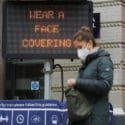
London, the world's international financial capital, will enter a tighter Covid-19 lockdown from midnight Friday as Prime Minister Boris Johnson seeks to tackle a swiftly accelerating second coronavirus wave. A pedestrian outside Charing Cross station in central London, 14 October. Photo: AFP The respiratory pandemic is spreading in most parts of Britain, whose official death toll of 43,155 is the highest in Europe. Anger, though, is rising over the economic, social and health costs of the biggest curtailment of freedoms since WWII. One former government adviser warned some people would have trouble clothing their children soon. Health Secretary Matt Hancock said London, which has a population of 9 million, as well as the adjacent, heavily populated county of Essex, would be put on "high" alert level, up from "medium", at one minute past midnight (2301 GMT Friday). The main impact of the move to "high" is that people cannot meet other households socially indoors in any setting, for example at home or in a restaurant. Travel should be reduced where possible, Hancock said. "Things will get worse before they get better," Hancock said. "But I know that there are brighter skies and calmer seas ahead - that the ingenuity of science will find a way through and until then we must come together." Britain's move to halt socialising in its capital means that London and Paris - Europe's two richest cities - are shortly to be living under the shadow of state-imposed restrictions as the second wave of the pandemic spreads through Europe. President Emmanuel Macron announced night curfews for four weeks from Saturday in Paris and other major cities. London, the centre of international banking and foreign exchange trading, is only rivalled by New York when it comes to financial clout. The worst-hit areas of London are Richmond, Hackney, the City of London, Ealing, Redbridge and Harrow. London Mayor Sadiq Khan said: "I must warn Londoners: We've got a difficult winter ahead." Former adviser warns of 'destitution' Manchester, in the north of England and one of Britain's largest cities, had been tipped to be moved to "very high" alert from "high", but Hancock said talks with local leaders were continuing so no decision had yet been made. In a show of defiance, Greater Manchester Mayor Andy Burnham said he was unwilling to impose a local lockdown that would sacrifice swathes of the city's economy without proper financial support from central government. "They are willing to sacrifice jobs and businesses here to try and save them elsewhere," Burnham said. "The north is fed up of being pushed around." Johnson, who scored a landslide election victory in December, says his government is fighting a war against the virus and that some sacrifices are necessary to save lives. But opponents say his Conservative government was too slow to act when the virus first struck, failed to protect the elderly in care homes, and bungled the testing system. In areas put on the high alert level, socialising outside households or support bubbles is not allowed indoors, though work can continue and schools continue to operate. The "very high" alert level forbids socialising, forces pubs and bars to close and prohibits travel outside the area. The government's former homelessness adviser, Louise Casey, said Britain faces a "period of destitution" in which some families "can't put shoes on" children. "Are we actually asking people in places like Liverpool to go out and prostitute themselves, so that they could put food on the table?" Casey told the BBC. Liverpool in England's northwest is already in the highest-risk tier. "There's this sense from Downing Street and from Westminster that people will make do," Casey added, referring to the national government's headquarters. "Well, they weren't coping before Covid." - Reuters

Back To Top