skip to Main Content

US Election: Trump and Biden to headline dueling town halls, as early voters swamp polls

US President Donald Trump and Democratic challenger Joe Biden will hold duelling prime-time town halls instead of a second debate, which was to have been held virtually, as early voters continued to swamp polling places. Democratic challenger Joe Biden and US President Donald Trump. Photo: AFP Trump pulled out of the scheduled debate when the commission in charge of organising the event said it would be held virtually after he contracted the coronavirus. A final debate is still scheduled for 22 October in Nashville, Tennessee. With less than three weeks to go until the 3 November vote, the Republican president is searching for ways to change the dynamics of a race in which Biden has a double-digit advantage in some national polls. More than 17 million Americans have cast ballots either in person or by mail so far, representing 12.5 percent of the total votes counted in the 2016 general election, according to the US Elections Project at the University of Florida. Voters are seeking to avoid in-person lines on Election Day to stay safe as coronavirus infections and hospitalizations continue to rise, but are also concerned about the possibility that Trump will challenge widely used mail-in ballots, after he claimed without evidence that they are fraudulent. North Carolina, a highly competitive state, began more than two weeks of in-person early voting on Thursday. Video from local media showed large numbers of people waiting for the polls to open in Greensboro and Winston-Salem, and gathering in the pre-dawn hours to vote at two arenas in the state's largest city of Charlotte. Gerry Cohen, a member of the election board in the county that includes most of the city of Raleigh, reported more than 400 people waiting in line at a community centre before polls opened. "I've never seen this many in line here," he said on Twitter. Trump's campaign is counting on a surge of last-minute votes. But Reuters/Ipsos polling conducted between 9 October and 13 October shows there are far fewer undecided likely voters this year - around 8 percent - and they are just as likely to pick Biden as they are Trump. Four years ago at this stage of the campaign, more than twice as many people were similarly wavering between Trump and his Democratic opponent, Hillary Clinton. The Reuters/Ipsos polling shows Biden holding a 10 percentage-point lead nationally, with a tighter margin in the battleground states that will help decide the election. Both candidates have been visiting those states this week, with Trump holding rallies in Florida, Pennsylvania and Iowa and Biden travelling to Ohio and Florida. Trump has pulled into a statistical tie with Biden in Florida, a key battleground, with 47 percent support versus Biden's 49 percent, and a credibility interval of 4 points, a Reuters/Ipsos opinion poll showed. Today's town halls, in which each candidate will field questions from voters, will take place at 8pm EDT (1pm NZT). The Biden campaign said two people involved in the campaign had tested positive for Covid-19, including one on the staff of US Senator Kamala Harris, Biden's running mate. Although neither Biden nor Harris was in close contact with the people, the campaign said it was cancelling Harris' travel until after Sunday. "This shows how seriously we take Covid, how we have since March done everything in our power as a campaign to ensure the safety of our staff and volunteers and voters," Biden's campaign manager, Jen O'Malley Dillon, told reporters on a call. - Reuters
Covid-19: French Police Raid Ministers' Homes In Pandemic Inquiry

Covid-19: French police raid ministers' homes in pandemic inquiry

French police have raided the homes of senior government and health officials as part of an investigation into their handling of the Covid-19 pandemic. French Health Minister Olivier Veran (right) speaks flanked by French Prime Minister Jean Castex during a press conference on 15 October to present the details of new restrictions aimed at curbing the spread of the Covid-19 pandemic. Photo: AFP Health Minister Olivier Véran and the director of the national health agency, Jérôme Salomon, are among those whose properties were searched on Thursday. The raids came after a court launched an inquiry earlier this year into the government's handling of the pandemic. It has faced criticism over shortages of equipment and slow response times. Prime Minister Jean Castex is also under investigation, French media report, as is his predecessor Edouard Philippe and Véran's predecessor Agnès Buzyn. The prime minister and Véran have been at the forefront of France's new policy of imposing night-time curfews in nine cities, including Paris, from Saturday, which will be enforced by 12,000 police. "This means at 21:00 everyone must be at home and, without exception, every place, business or public service open to the public will be shut," Castex said on Thursday. See all RNZ coverage of Covid-19 In July, the court launched the inquiry into the government's handling of the pandemic after members of the public, including doctors and relatives of victims, alleged that it had been criminally negligent in its response to Covid-19. The special court hears cases of alleged wrongdoing by ministers and other government officials in the course of their duties. But for the claims to be substantiated, there would have to be evidence that officials knowingly failed to take obvious steps that would have saved lives. Diners at a restaurant in Paris socially distance. Photo: AFP At a news conference on Thursday, Prime Minister Castex said he had "absolute" confidence in both Véran and Salomon. How bad is the situation in France? A further 22,951 cases of Covid-19 were confirmed on Wednesday. "We have to act. We need to put a brake on the spread of the virus," French president Emmanuel Macron said in a television address. The president added that this wave of Covid-19 was different to the outbreak in the spring, because the virus had spread to all parts of France. France managed to control the first outbreak by introducing a national lockdown. It then opened bars and restaurants in the summer, and allowed foreign tourists to visit as part of an effort to boost the ailing economy. Schools reopened and universities began teaching classes in person in early autumn. But since August the number of reported cases has accelerated quickly. Wednesday was the third time in six days that France reported more than 20,000 new infections. Macron said the new measures aimed to reduce daily cases to around 3,000. As with the first wave of Covid-19, there is concern that hospitals and intensive care units will become overwhelmed with patients. People wearing face masks, to curb the spread of Covid-19 in Nantes, western France. Photo: AFP What are the new measures there? The curfew, from 9pm to 6am each day, will apply for at least four weeks to the capital Paris and its suburbs, as well as the cities of Marseille, Lyon, Lille, Saint-Etienne, Rouen, Toulouse, Grenoble and Montpellier. Affecting around 22 million people, it will be applied for four weeks to begin with, and Macron's government will seek to extend it to six. President Macron said the virus has spread to all parts of France now. (File photo). Photo: AFP The measures will stop people visiting restaurants and private homes during the evening and night-time. Private parties will be banned, even in areas not under curfew, from midnight on Friday. But there is some scepticism over how effective the curfew might be. "People were mainly going out to eat out, which they will continue to do... until 9pm," said Lou Mielot, a student at the University of Lyon. "This will create restaurants that are full from 7pm to 9pm, [where people] won't be able to keep a safe distance," she added. Residents will need a valid reason to be outside their homes during the hours of curfew. President Macron said on Wednesday night he understood a curfew was a "hard" thing to ask people to do. On Thursday, Castex said travel during hours of curfew was permitted for trips to the hospital or pharmacy, or if work hours required. But a special certificate would need to be produced as proof. Pre-booked tickets for planes and trains that arrive after the curfew will be allowed. Anyone found breaking the curfew will be fined €135 (NZ$240). Businesses that suffer financially due to the new measures will be eligible for state aid. Any company with up to 50 staff in the nine cities affected will be eligible for help if their turnover has fallen by over half in the past year. All companies in curfew areas will be asked to move towards having employees work from home for at least part of the week, and to stagger working hours. President Macron has already suggested "tele-working" for two or three days a week. Hand sanitiser on the bar of a restaurant in Paris, where a four-week overnight curfew has been announced to fight the rapid spread of Covid-19. Photo: AFP - BBC
Thai Protests: Tens Of Thousands Defy Ban On Demonstrations

Thai protests: Tens of thousands defy ban on demonstrations

Tens of thousands of Thai protesters cheered and chanted into the night in central Bangkok in a show of mass defiance to a ban on demonstrations designed to end more than three months of anti-government action. As they dispersed at 10 pm on Thursday protesters pledged to return to the same place every day. Thousands of pro-democracy protesters rallied in central Bangkok late into the evening, raising the three-finger salute that has become a symbol of the protest movement. Photo: AFP Growing demonstrations have targeted King Maha Vajiralongkorn as well as Prime Minister Prayuth Chan-ocha, a former junta leader, in the biggest challenge for years to an establishment long dominated by the army and palace. "Like dogs cornered, we are fighting till our deaths," Panupong "Mike Rayong" Jadnok, one the high-profile protest leaders who remains free, told the crowd. "We won't fall back. We won't run away. We won't go anywhere." Protesters ignored police appeals to disperse and spilled from the Ratchaprasong Intersection across streets and walkways, their mobile phones shimmering in the night. The location was the scene of bloodshed in 2010, during more than a decade of violence between supporters and opponents of the Thai establishment. "All protesters will be prosecuted," the deputy head of Bangkok police, Piya Tawichai, told a news conference. "I would like us to warn the children and youth: participating in these protests could impact you in the future." Police put the number of protesters at 10,000. Protesters chanted for the release of some 40 activists arrested this week. Some also called out insults against the king - until recently almost unheard of behaviour in a country where the constitution says he must be revered. A pro-democracy protester faces off against a police officer in Bangkok on Thursday. Photo: AFP Closing the protest, student leader Jutatip Sirikhan called on people to return at 5 pm on Friday and daily thereafter. Three months of protests in the country of 70 million have been largely peaceful, as was a march by tens of thousands on Wednesday. But in one incident, police pushed jeering protesters away from a motorcade carrying Queen Suthida. Overnight the government banned political gatherings of five or more people and the publication of news and online information that could threaten national security. Riot police swiftly cleared a protest camp outside Prayuth's office. "The measures were necessary to ensure peace and order," government spokesman Anucha Burapachaisri said in a statement. He rejected accusations from some government critics that the motorcade incident was an excuse to crack down. Arrests Thai media reported that arrest warrants had been issued against two people for injuring the queen - which can carry a life sentence, whereas the maximum penalty for insulting the monarch under lese majeste laws is 15 years in jail. Student leader Panusaya "Rung" Sithijirawattanakul. Photo: AFP Police said they had arrested protest leaders Parit "Penguin" Chiwarak and rights lawyer Arnon Nampa overnight. Student leader Panusaya "Rung" Sithijirawattanakul was taken away in a wheelchair. Arnon said on Facebook he was taken to Chiang Mai, where he faces sedition charges over a speech in August. Panusaya and Parit also face sedition charges over comments at previous protests, their lawyer said. They all deny the charges. In a handwritten note embellished with a rainbow, Panusaya urged protesters to keep fighting. "You might all see leaders disappearing one by one, but we're actually always with you," she wrote. The protest movement aims to remove Prayuth, saying he manipulated an election last year to keep hold of power. He says the election was fair. Those marching on the streets also want a new constitution and have called for a reduction in the powers of the king. They want his role to be clearly subject to the constitution and seek the reversal of orders that gave him control of the palace fortune and some army units. Anger in Thailand has been exacerbated by the economic impact of the coronavirus - even greater than in other parts of Southeast Asia because of the importance of tourism. The Chinese government's top diplomat, State Councillor Wang Yi, agreed at a meeting with Prayuth on Thursday to speed up the transfer of people and goods and on future economic cooperation, Chinese state news agency Xinhua said. The European Union, meanwhile, called on Thailand to respect the rights of detainees and urged restraint from all sides. - Reuters
US Hostages Released In Yemen 'prisoner Swap'

US hostages released in Yemen 'prisoner swap'

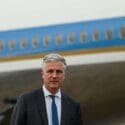
Two US hostages held by Houthi rebels in Yemen have been released, seemingly as part of a large prisoner exchange. US national security adviser Robert O'Brien. Photo: AFP Sandra Loli, a humanitarian worker held for about three years, and businessman Mikael Gidada, held for about one, were freed on Wednesday (local time), US officials said. The remains of a third US captive, Bilal Fateen, were repatriated as well. It comes after the Houthis reported receiving more than 200 Yemenis from Oman, where many had been stranded after receiving medical treatment. A much-anticipated swap between Yemen's internationally recognised, Saudi-backed government and the Houthi rebels had been expected to take place on Thursday. In a statement, the US state department welcomed the release of Loli and Gidada, and extended its condolences to the family of Fateen. US national security adviser Robert O'Brien thanked Sultan Haitham bin Tariq of Oman and King Salman of Saudi Arabia for their assistance, and credited President Donald Trump for his support. A Houthi spokesperson, Mohammed Abdulsalam, earlier tweeted that the 240 or so Yemenis who returned to the Yemeni capital, Sanaa, included either people who had been stranded or who were injured and had travelled to the Omani capital Muscat to receive medical treatment. Abdulsalam added that they included casualties who had travelled to the Gulf state during UN-brokered peace talks between the warring parties in Stockholm in 2018. "The United Nations did not bring [them] back" in line with the agreement reached, he said. Abdulsalam also thanked Oman for its "humanitarian efforts" but did not mention the release of US hostages. The Wall Street Journal, which broke the news about the US hostages, said the state department had been working urgently to secure the deal because Loli was in ill-health. It reported the deal also included delivery of medical aid for Yemen. The operation was reportedly overseen by the International Committee of the Red Cross. Yemen has been devastated by a conflict that escalated in March 2015, when the rebels seized control of much of the west of the country and forced President Abdrabbuh Mansour Hadi to flee abroad. The civil war has also triggered the world's worst humanitarian disaster, with thousands of civilians dying from preventable causes, including malnutrition, disease and poor health. - BBC
Donald Trump's Son Tests Positive For Covid-19

Donald Trump's son tests positive for Covid-19

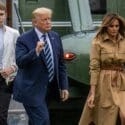
US first lady Melania Trump says her 14-year-old son Barron tested positive for coronavirus but has since returned a negative result. Photo: AFP Melania Trump says she also has now tested negative for Covid-19. The White House initially said Barron Trump had tested negative after both his parents tested positive earlier this month. However Melania Trump said on Wednesday subsequent test results showed Barron had also come down with Covid-19 but showed no symptoms. "Luckily he is a strong teenager and exhibited no symptoms," Melania Trump said in a statement. Melania Trump said her symptoms were "minimal" and that she hoped to resume her duties as first lady "as soon as I can". "I experienced body aches, a cough and headaches, and felt extremely tired most of the time," she said. "I chose to go a more natural route in terms of medicine, opting more for vitamins and healthy food," Melania Trump said. Donald Trump spent three nights in a military hospital after announcing on 2 October that he and Melania had tested positive. To treat the virus, he received an experimental dual antibody therapy developed by Regeneron Pharmaceuticals Inc and Gilead Sciences Inc's antiviral remdesivir, as well as the steroid dexamethasone. "In one way I was glad the three of us went through this at the same time so we could take care of one another and spend time together," Melania Trump said. Meanwhile, President Donald Trump is no longer capable of actively spreading Covid-19 and has been given the all clear to attend an upcoming town hall interview with NBC News without putting others at risk. Top American public health official Anthony Fauci says he and a colleague at the National Institute of Health have reviewed the Covid tests taken by the president to reach the conclusion that the president is not contagious. - Reuters
Back To Top